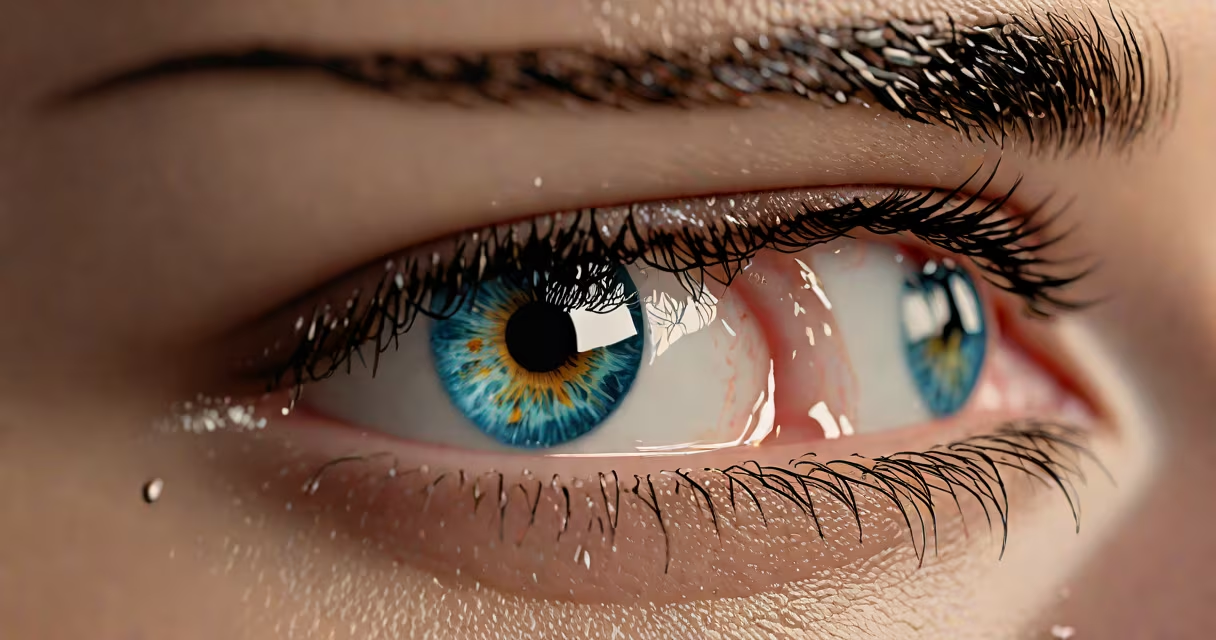
What makes my eyes water is excessive tear production triggered by irritation, dryness, environmental factors, or underlying medical conditions. Tears aren't just emotional-they're a protective response to threats like dust, wind, or eye surface damage.
The lacrimal glands produce tears continuously to keep the eye surface lubricated. When something disrupts this balance-like a foreign particle, bright light, or dry patches on the cornea-the brain signals increased tear secretion. This reflex is normal, but persistent watering may indicate an imbalance in tear quality or volume.
According to the American Academy of Ophthalmology, abnormal tearing affects about 1 in 10 adults at some point. It's not always due to sadness-it's often a sign the eyes are trying to fix a problem.
Tears are made of three layers: oil, water, and mucus. The oil layer prevents evaporation. The watery layer cleans and nourishes the eye. The mucus layer spreads tears evenly across the surface. When any layer fails, the eye becomes irritated.
If the outer oil layer is thin or absent, tears evaporate too quickly. This leads to dry spots on the cornea. The eye responds by producing more tears-often too many. These extra tears lack proper composition and don't protect well, creating a cycle of dryness and overflow.
A 2021 study in *Ophthalmology* found that 68% of patients with chronic eye watering had meibomian gland dysfunction, a condition where oil-producing glands in the eyelid fail. This shows that what looks like "too many tears" is often a symptom of poor tear quality.
Eye watering can stem from multiple sources. Some are temporary; others signal ongoing issues.
| Trigger Type | Examples | Key Mechanism |
|---|---|---|
| Environmental | Wind, smoke, bright sunlight, air conditioning | Direct irritation to cornea or conjunctiva |
| Dry Eye Syndrome | Screen time, aging, hormonal changes | Insufficient tear film stability → compensatory overproduction |
| Allergies | Pollen, pet dander, mold spores | Immune response releases histamine → inflammation and tearing |
| Eye Infections | Bacterial conjunctivitis, viral keratitis | Infected tissue produces inflammatory fluid that mimics tears |
| Anatomical Issues | Blocked tear ducts, inverted eyelashes (trichiasis) | Physical obstruction prevents normal drainage |
For example, someone working long hours on a computer may develop dry eye from reduced blinking. As the cornea dries, the brain orders more tears. But because the tear film lacks oil, they evaporate fast. The result? Watery eyes despite dryness.
Another common mistake: assuming all watery eyes come from allergies. A 2020 review in *The Journal of Allergy and Clinical Immunology* noted that only 30% of patients with eye watering had confirmed allergic triggers. Many were misdiagnosed initially.
People often confuse eye watering with crying. But emotional tears differ in composition. They contain higher levels of stress hormones like cortisol and prolactin. Physical tearing lacks those markers.
Also, some assume watery eyes always mean "wet." In reality, dry eye syndrome causes the opposite-dryness that triggers excess tears. This paradox is why testing tear breakup time (TBUT) is standard in eye exams. A TBUT below 10 seconds indicates unstable tear film.
I once saw a patient who reported constant watering during meetings. She'd wipe her eyes repeatedly. After a slit-lamp exam, we found severe meibomian gland dysfunction. Her tears evaporated in under 5 seconds. The watering wasn't emotion-it was a failed defense system.
Watery eyes are usually harmless if brief. But if they last more than a week, occur with pain, redness, blurred vision, or discharge, see an ophthalmologist.
Chronic watering can lead to skin irritation around the eyes or recurrent infections. In rare cases, blocked tear ducts require probing or surgery. The American Academy of Ophthalmology recommends evaluation if tearing interferes with daily tasks.
Underlying conditions like Sjögren's syndrome or thyroid disease can cause dryness and secondary tearing. If you have joint pain, dry mouth, or fatigue alongside eye symptoms, consider testing for autoimmune disorders.
What makes my eyes water is rarely just one thing. It's a signal. Whether from dryness, allergy, injury, or systemic illness, the eyes respond to imbalance. Understanding the difference between true moisture and reflexive overflow helps avoid misdiagnosis.
Don't ignore persistent watering. It's not just a nuisance-it's a clue. Addressing the root cause prevents discomfort and protects vision.