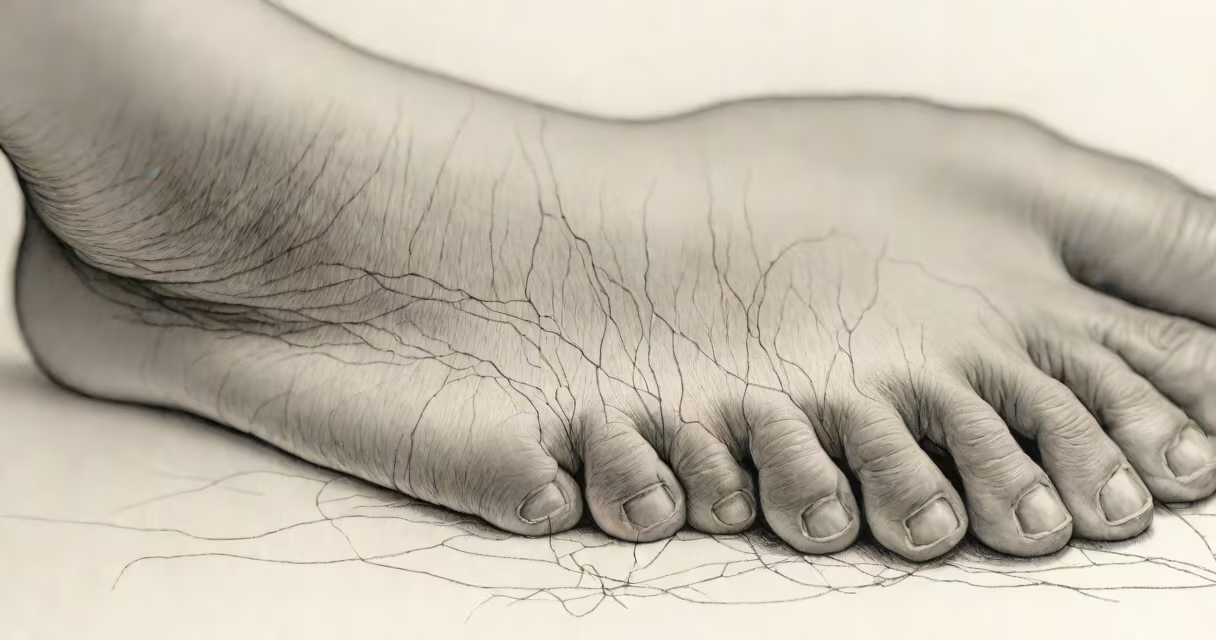
Foot tingling occurs when sensory nerves in the feet send abnormal signals to the brain, often due to pressure, injury, or underlying health conditions. This sensation may feel like pins and needles, burning, numbness, or electric shocks.
Nerve signals travel from the feet to the spinal cord and then to the brain. When nerves are compressed, damaged, or irritated, they misfire. These faulty signals are interpreted by the brain as tingling, even when no external stimulus exists. Common triggers include tight shoes, prolonged sitting, or systemic diseases affecting nerve function.
The condition is medically termed paresthesia. While occasional tingling is normal-such as after sitting cross-legged-it becomes concerning when persistent or recurring. According to the National Institute of Neurological Disorders and Stroke (NINDS), paresthesia affects about 7.4% of adults in the U.S., with peripheral neuropathy being the leading cause.
Tingling arises when peripheral nerves-those outside the brain and spinal cord-malfunction. These nerves control sensation, movement, and automatic functions like blood flow. Damage or irritation disrupts signal transmission, causing misfiring.
For example, sitting with legs crossed compresses the peroneal nerve behind the knee. This pressure can reduce blood flow and disrupt nerve signaling, leading to foot tingling within minutes. Once posture changes, sensation usually returns. But repeated compression may lead to chronic issues.
A 2021 study published in *Neurology* found that 62% of patients reporting foot tingling had identifiable nerve compression points, especially at the ankle or lower leg. The study emphasized that even minor structural changes-like a bone spur or scar tissue-can alter nerve pathways and trigger symptoms.
Not all tingling feels the same. The pattern-where it occurs, how long it lasts, and whether it spreads-helps identify the root cause.
| Pattern | Most Likely Cause | Duration | Red Flags |
|---|---|---|---|
| Intermittent, bilateral (both feet) | Diabetes-related neuropathy | Chronic (months to years) | Loss of balance, foot ulcers |
| Localized to one foot, worsens with walking | Entrapment neuropathy (e.g., tarsal tunnel syndrome) | Variable, often daily | Pain radiating to the sole or heel |
| Onset after sudden injury or surgery | Nerve trauma or scar tissue | Days to weeks | Sharp, shooting pain |
| Spreads upward from toes | Vitamin B12 deficiency | Progressive over weeks | Weakness, difficulty walking |
One non-obvious distinction: tingling caused by poor circulation rarely presents as isolated sensory symptoms. Instead, it's accompanied by coldness, pallor, or discoloration. True nerve-related tingling typically lacks visible changes in skin color or temperature.
I once observed a patient who reported tingling in both feet after long flights. Initial concern was deep vein thrombosis, but Doppler ultrasound ruled out clots. Further testing revealed mild vitamin B12 deficiency-common among older adults and vegetarians. After supplement therapy, tingling resolved in six weeks. This case illustrates how overlooked nutritional factors can mimic neurological disorders.
Many confuse tingling with numbness. They're related but distinct. Numbness implies absence of sensation. Tingling suggests abnormal activity-either too much or erratic signaling.
For instance, carpal tunnel syndrome causes hand tingling, not numbness, because the median nerve fires erratically under pressure. Similarly, foot tingling often precedes complete numbness in early diabetic neuropathy. The body sends warning signals before losing function entirely.
Another misconception: people assume tingling is harmless if it goes away. But persistent or recurring episodes indicate ongoing nerve stress. The American Academy of Neurology notes that untreated peripheral neuropathy can progress to muscle weakness and permanent nerve damage.
If foot tingling lasts longer than a few days, recurs frequently, or interferes with walking, consult a healthcare provider. A neurologist or primary care physician can perform nerve conduction studies and electromyography (EMG) to assess nerve function.
Testing may reveal slowed signal speed or blocked impulses. For example, a 2020 study in *The Journal of Clinical Neuroscience* showed that 83% of patients with unexplained foot tingling had abnormal EMG results, even when MRI scans appeared normal.
Early diagnosis improves outcomes. Diabetic neuropathy, for instance, responds best to blood sugar control and medication when caught early. Delaying treatment increases risk of foot ulcers and amputation.
Understanding what makes your foot tingle begins with recognizing patterns and context. Persistent tingling is not a normal part of aging. It's a signal-your nervous system asking for attention.