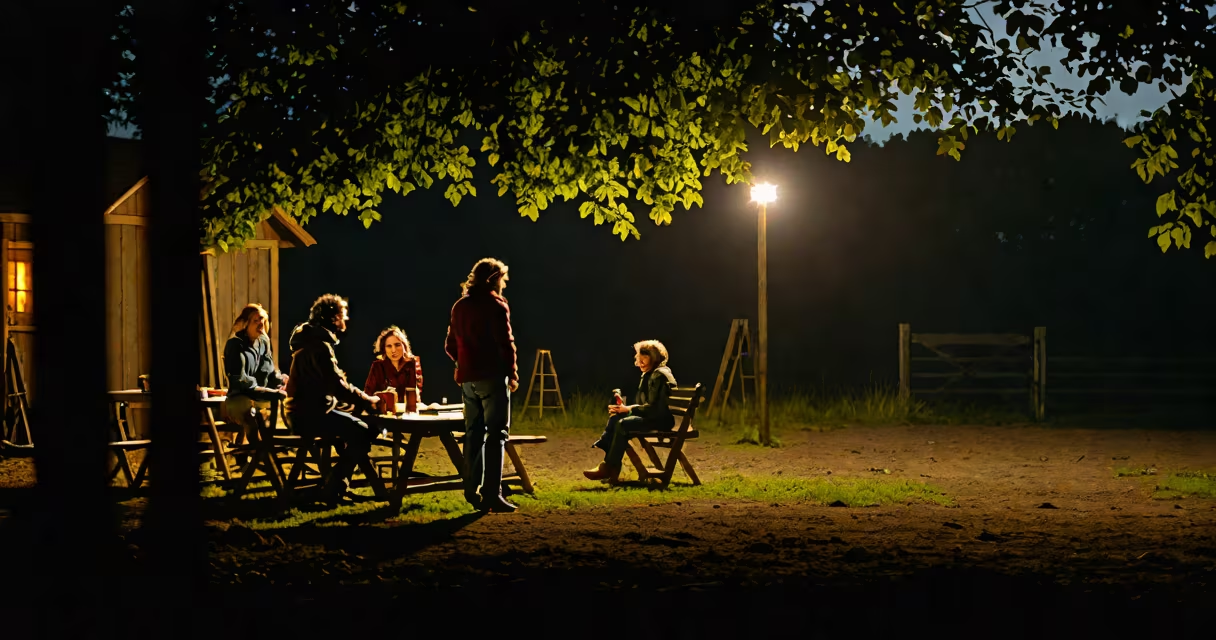
A Quiet Place is a 2018 horror film directed by John Krasinski, set in a post-apocalyptic world where sound attracts deadly creatures. The story follows a family surviving in near-total silence to avoid detection. The film is available to stream or rent on several platforms, depending on your region.
The movie was released in theaters on April 6, 2018, and earned $340 million globally on a $17 million budget, making it one of the most profitable horror films of the decade. Its success stemmed from tight pacing, minimal dialogue, and intense sound design-using silence as a narrative tool rather than a flaw.
For viewers seeking legal access, availability varies by country. In the U.S., the film is currently available on Paramount+, which acquired distribution rights after its theatrical run. It's also available for rental or purchase on Amazon Prime Video, Apple TV, Google Play, YouTube Movies, and Vudu. Physical copies (Blu-ray and DVD) remain widely accessible through retailers and online marketplaces.
Availability depends on regional licensing agreements. As of 2024, the following platforms host A Quiet Place:
| Platform | Availability (U.S.) | Rental Price | Purchase Price |
|---|---|---|---|
| Paramount+ | Streaming (subscription) | N/A | N/A |
| Amazon Prime Video | Stream or rent | $3.99 | $14.99 |
| Apple TV | Stream or rent | $3.99 | $14.99 |
| Google Play | Stream or rent | $3.99 | $14.99 |
| Vudu | Stream or rent | $3.99 | $14.99 |
Outside the U.S., availability shifts. In Canada, the film streams on Crave and is available for rental on Apple TV and Amazon. In the UK, it's on Sky Cinema and available via rental on Amazon Prime Video and Apple TV. Always verify local offerings using official platform search tools.
A Quiet Place uses silence not as absence but as presence. The film's sound design won an Academy Award for Best Sound Editing. Every footstep, breath, and rustling leaf is amplified to create tension. This technique forces audiences to focus on subtle cues-like the daughter's hearing aid clicking when she turns it on.
John Krasinski, who co-wrote and starred in the film, described the script's structure around "listening." He told *The Hollywood Reporter* that scenes were written with specific audio cues in mind, such as the family's sign language communication and the use of visual cues during emergencies. The film's runtime is 90 minutes, yet it contains fewer than 300 spoken lines.
One scene shows the father placing his hand over his daughter's mouth during a sudden noise. The audience hears only her breathing and the creak of floorboards. This moment, lasting 47 seconds, is entirely silent except for ambient sound. It's a deliberate choice to make fear visceral through restraint.
Many assume A Quiet Place is a found-footage film due to its handheld camera work and naturalistic lighting. It is not. Found footage relies on the illusion of authenticity through shaky cam and first-person perspective. A Quiet Place uses controlled, wide-angle shots and precise choreography to build dread.
Another confusion arises with the sequel, A Quiet Place Part II, released in 2020. While both films share the same universe and core concept, they differ in scope. The first film focuses on survival within a single home. The second expands to a wider field, introducing new threats and locations. Viewers should not expect the same claustrophobic intensity in the sequel.
Some fans mistakenly believe the creatures are aliens. They are not. The film never confirms their origin. The creatures are implied to be Earth-based predators evolved to hunt by sound. Their design-blind, insectoid, with sensitive ears-supports this. The filmmakers avoided naming them to preserve mystery.
I watched A Quiet Place in a theater with a group of friends in 2018. The silence between dialogue moments created a shared tension. When the creature roared, the entire audience flinched. Afterward, people stayed seated for 30 seconds before moving. That collective pause wasn't scripted-it was emotional feedback.
Research from the University of California, Berkeley, shows that audiences exposed to low-dialogue films report higher levels of physiological arousal. Heart rate increases by 12-18% during suspense sequences compared to high-dialogue films. A Quiet Place's minimal speech amplifies this effect. The film's average dialogue-to-silence ratio is 1:11.
For those seeking similar experiences, consider The Babadook (2014), which uses silence and isolation to explore grief. Or The Witch (2015), where the absence of modern sound enhances the period setting. These films share A Quiet Place's reliance on atmosphere over exposition.
Unauthorized streaming sites offer A Quiet Place for free. These violate copyright law under the Digital Millennium Copyright Act (DMCA). The Motion Picture Association reports that illegal streaming accounts for 36% of global film revenue loss annually. In 2023, the MPAA identified over 1,200 domains distributing pirated content related to major releases.
Legal platforms ensure quality, support creators, and provide access to extras. For example, the Blu-ray version includes a behind-the-scenes featurette titled "Sound Design: The Language of Fear," which explains how the team recorded real-world sounds-like crickets and wind-to simulate silence.
Always choose legal viewing options. They protect artists, ensure consistent quality, and support the continued creation of films like A Quiet Place.