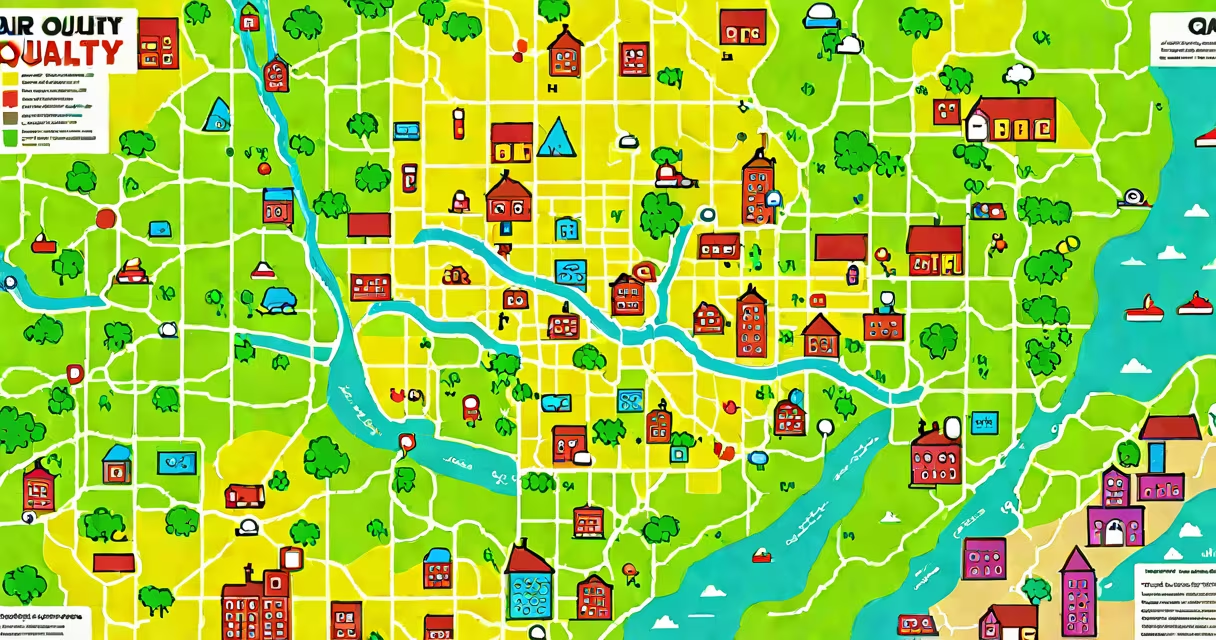
The air quality numbers meaning refers to the Air Quality Index (AQI), a standardized scale developed by the U.S. Environmental Protection Agency (EPA) that converts pollutant concentrations into a single number from 0 to 500. This number reflects current air quality and potential health impacts, with higher values indicating greater risk.
The AQI translates measurements of five major pollutants-ground-level ozone, particle pollution (PM2.5 and PM10), carbon monoxide, sulfur dioxide, and nitrogen dioxide-into a color-coded system. Each value corresponds to a specific level of health concern, guiding actions such as limiting outdoor activity or using masks during high pollution events.
For example, an AQI of 100 means the air quality is moderate, posing minimal risk to most people. An AQI above 150 signals unhealthy conditions, especially for sensitive groups like children, older adults, and those with respiratory issues. Values above 300 indicate hazardous air quality, requiring evacuation or strict indoor sheltering.
The EPA calculates the AQI based on real-time monitoring data collected from federal and state air quality stations. These sensors measure ambient levels of each pollutant and convert them into a concentration value. That value is then mapped to a corresponding AQI category using established breakpoints.
Each pollutant has its own breakpoint table. For instance, the AQI for PM2.5 (fine particulate matter) uses a different set of thresholds than ozone. The highest individual AQI value among all measured pollutants determines the AQI reported for a location.
If a city reports an AQI of 180 due to elevated ozone levels, it means the air contains enough ozone to trigger respiratory symptoms in sensitive individuals. Even if PM2.5 levels are low, the AQI is driven by the worst pollutant.
The EPA divides the AQI into six categories, each with a distinct color and health advisory:
| AQI Range | Color | Health Impact | Recommended Action |
|---|---|---|---|
| 0-50 | Green | Good | No action needed. Normal outdoor activity safe. |
| 51-100 | Yellow | Moderate | Low risk. Sensitive groups may want to limit prolonged exertion outdoors. |
| 101-150 | Orange | Unhealthy for Sensitive Groups | Sensitive individuals should reduce outdoor exertion. General population may experience mild irritation. |
| 151-200 | Red | Unhealthy | Everyone may experience health effects. Sensitive groups should avoid outdoor activity. |
| 201-300 | Purple | Very Unhealthy | Health warnings issued. Everyone should avoid outdoor activity. Indoor exposure should be minimized. |
| 301-500 | Maroon | Hazardous | Emergency conditions. Evacuation may be required. All outdoor activity should be suspended. |
These categories are not arbitrary. They're derived from scientific research linking pollutant levels to measurable health outcomes. A 2019 study published in *Environmental Health Perspectives* found that hospital admissions for asthma and heart attacks rise sharply when the AQI exceeds 100, particularly in urban populations.
One non-obvious fact: the AQI does not account for long-term exposure. A person living in a city with consistently moderate AQI (70-90) may face cumulative health risks over years, even though daily alerts don't trigger concern. The index is designed for short-term decision-making, not chronic risk assessment.
Many assume the AQI measures "cleanliness" or "freshness" of air. That's incorrect. The index tracks pollution levels, not subjective perception. On a clear day with low humidity, air can feel fresh but still have high PM2.5 from nearby wildfires or traffic.
Another frequent error is equating AQI with weather. High AQI values often coincide with stagnant air masses, which trap pollutants. But temperature and wind speed are not direct inputs. A cold, calm day may have poor air quality regardless of temperature.
Some users confuse the AQI with local air quality apps that display "real-time" readings without context. For example, a sensor in a parking garage might report an AQI of 120 due to vehicle emissions-but that doesn't reflect outdoor conditions. Always verify whether the reading is from a monitored outdoor station.
When the AQI reaches 150 or higher, sensitive groups should stay indoors, close windows, and avoid strenuous activity. If you have COPD, asthma, or heart disease, follow CDC guidelines to carry rescue inhalers and monitor symptoms closely.
Even healthy individuals should pay attention. A 2022 EPA report showed that prolonged exposure to AQI levels above 100 correlates with reduced lung function in otherwise fit adults, especially over time.
Understanding air quality numbers meaning isn't about fear-it's about informed choice. The AQI turns invisible pollutants into visible, actionable data. You don't need to be a scientist to use it. Just check the number, match it to the color, and act accordingly.