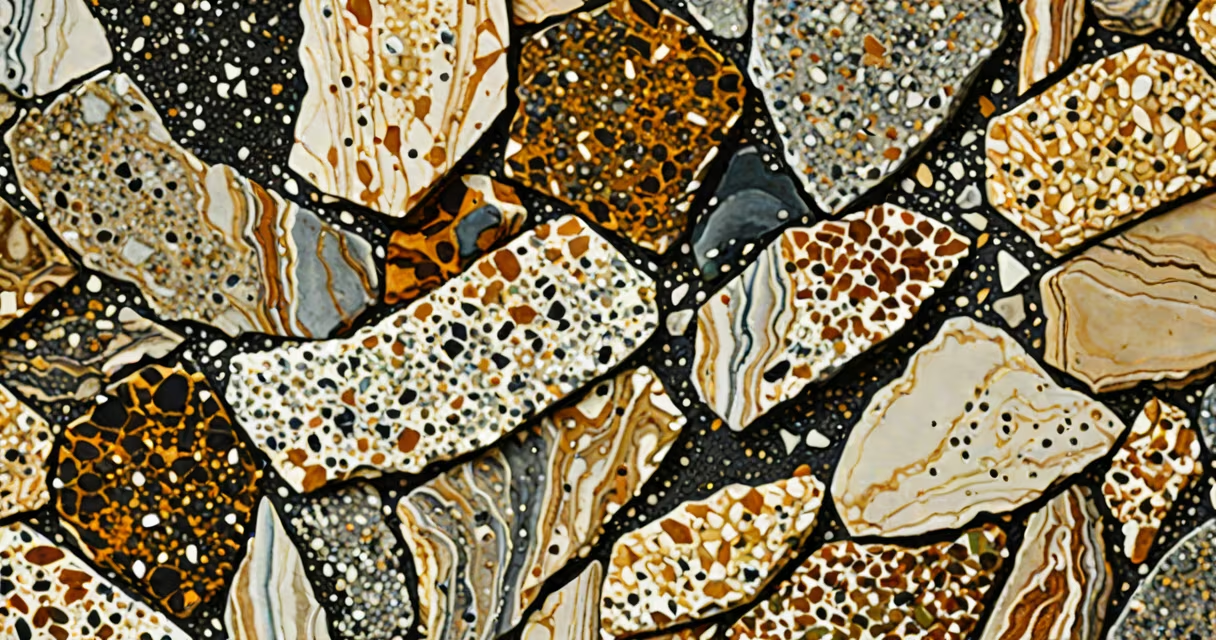
All natural stone is rock extracted from the earth through quarrying, used in construction and design without synthetic additives or industrial processing. It includes granite, marble, limestone, sandstone, and slate-each formed over millions of years through geological processes.
Natural stone originates from igneous, sedimentary, or metamorphic rock types. Igneous stones like granite form from cooled magma deep underground. Sedimentary rocks such as limestone accumulate from compressed sediments. Metamorphic varieties like marble result from heat and pressure altering existing rock. These formations develop distinct textures, colors, and durability based on mineral composition and formation conditions.
Unlike engineered stone-which combines crushed stone with resins-natural stone retains its original structure. No synthetic binders are added during extraction or shaping. This preserves the material's inherent properties, including thermal mass, resistance to wear, and long-term stability. The term "all natural stone" emphasizes purity: no artificial ingredients, no lab-created components, and no surface treatments beyond basic polishing or sealing.
Geological time shapes all natural stone. Granite, for example, crystallizes slowly beneath the Earth's crust over 10 million to 100 million years. Its strength comes from interlocking quartz, feldspar, and mica crystals. Limestone forms from marine deposits-shells, coral, and calcite-rich silt-compressed under water pressure over tens of thousands of years. These processes create unique patterns and densities that define each stone's performance.
Quarrying involves extracting large blocks using diamond wire saws or hydraulic splitters. After removal, blocks are cut into slabs or tiles using precision equipment. Minimal processing preserves the stone's integrity. Most all natural stone is finished with a honed, polished, or brushed surface. Sealing may occur to reduce porosity, but this is optional and doesn't alter the stone's natural origin.
Major global producers include India (granite), Italy (marble), Spain (limestone), and Brazil (slate). Quarry sites often operate under environmental regulations. For example, the Indian government requires mining permits and reclamation plans under the Mines Act. In Europe, the EU's Environmental Product Declaration (EPD) system tracks carbon footprint and resource use across stone production.
Different all natural stone types serve specific roles due to variation in hardness, porosity, and appearance. The table below compares key types by durability, cost, and typical uses.
| Type | Hardness (Mohs scale) | Porosity | Typical Use | Cost Range (per sq ft) |
|---|---|---|---|---|
| Granite | 6-7 | Low | Flooring, countertops, exterior cladding | $40-$100 |
| Marble | 3-5 | Medium-high | Interior walls, flooring, sculptures | $50-$150 |
| Limestone | 3-4 | High | Facade, paving, interior accents | $30-$80 |
| Sandstone | 6-7 | High | Landscaping, walkways, garden features | $25-$60 |
| Slate | 5-6 | Very low | Roofing, flooring, fireplace surrounds | $45-$120 |
Granite dominates high-traffic areas due to its scratch and heat resistance. A kitchen countertop made from 2cm thick black granite can withstand boiling water and knife cuts without damage. Marble, while elegant, is prone to etching from acidic liquids like lemon juice-making it unsuitable for kitchens unless sealed regularly.
Sandstone and limestone are popular in outdoor settings. Their porous nature allows moisture absorption, which can lead to freeze-thaw spalling in cold climates. However, this trait also makes them effective in passive cooling systems. In desert regions, buildings with sandstone walls maintain stable internal temperatures due to thermal inertia.
Consumers frequently confuse "all natural stone" with "natural stone." The difference lies in processing. All natural stone implies minimal intervention-quarried, cut, and finished with no added materials. Engineered stone, like quartz composite, contains 90% ground stone and 10% resin binder. Though marketed as "natural," it fails the "all natural" standard because of synthetic additives.
A common misconception is that all natural stone is environmentally neutral. While it avoids industrial chemicals, quarrying disrupts ecosystems and consumes energy. According to the U.S. Geological Survey, stone extraction accounts for 1.2% of total U.S. energy use in construction materials. Transporting stone over long distances adds carbon emissions. A slab shipped from India to New York generates approximately 1.8 kg CO₂ per square meter.
Another error is assuming all natural stone is durable. Limestone, despite being widely used in historic buildings, erodes under acid rain. The Parthenon in Athens shows visible degradation from centuries of exposure. Modern preservation efforts use lime-based mortars and protective coatings-but these are not part of the original stone. This highlights that "natural" doesn't equal "indestructible."
In 2022, a homeowner in Portland, Oregon, replaced a vinyl kitchen backsplash with 12 square feet of locally sourced basalt stone. Basalt is a volcanic igneous rock with fine grain and dark color. It was quarried from a site within 150 miles of the city, reducing transport emissions.
The project team measured the stone's compressive strength at 120 MPa-well above the 50 MPa threshold for indoor wall applications. They installed it using a thin-set mortar compatible with natural stone. No sealant was applied, relying on the stone's low porosity (0.5%) to resist moisture.
After one year, the installation showed no cracking, staining, or discoloration. The homeowner reported improved indoor air quality compared to previous synthetic materials. The project demonstrated that all natural stone can meet functional needs while supporting local sourcing and reduced environmental impact.
When selecting all natural stone, verify the source and processing method. Look for certifications like ISO 14025 for environmental labeling or Cradle to Cradle certification for material safety. Avoid products labeled "natural" without disclosure of additives.