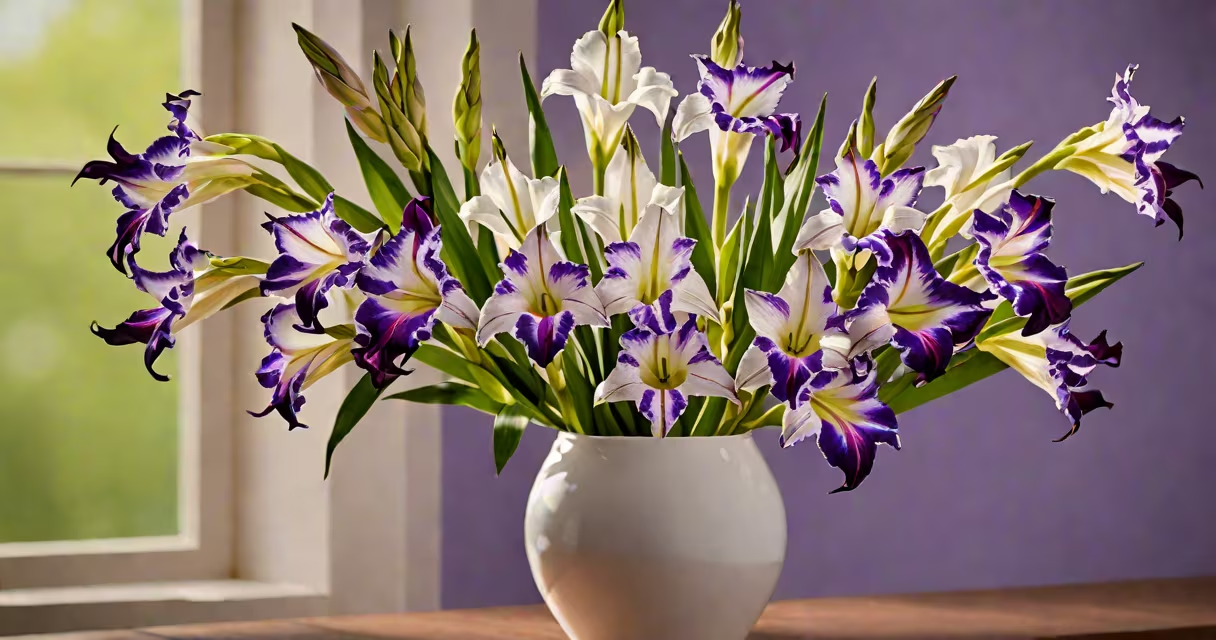
The August flower birth month is represented by the gladiolus, a tall, sword-like bloom known for its striking spikes of colorful petals. This flower symbolizes strength, integrity, and remembrance, making it a meaningful choice for those born in August.
Gladiolus belongs to the iris family and originates in southern Africa, though it has been cultivated globally since the 18th century. Its name comes from the Latin word *gladius*, meaning "sword," referring to the narrow, upright leaves that resemble blades. The flower grows on a central stem, often reaching 3 to 6 feet tall, with 6 to 20 blossoms arranged in a spiral along the stalk.
Each petal features a distinct pattern, often with contrasting colors in the center. Common hues include deep purples, soft pinks, creamy whites, and vivid reds. The most popular variety in the U.S. is the 'Princess' series, prized for its long-lasting blooms and strong stems ideal for cut arrangements.
Birth flowers were formalized in the early 20th century by the National Association of Flower Arrangers, which linked each month to a specific bloom based on tradition, symbolism, and seasonal availability. August was assigned the gladiolus due to its summer peak bloom time and cultural significance in European floral symbolism.
While the gladiolus is now the official birth flower for August, historical references show that roses and marigolds were sometimes associated with the month in older traditions. The modern list, however, is standardized by organizations such as the American Society of Florists and the National Retail Federation.
According to the National Garden Bureau, the gladiolus is particularly favored in late summer weddings and anniversary gifts because of its dramatic height and lasting freshness-often staying viable in a vase for 10 to 14 days.
Gladiolus species vary widely in size, color, and blooming habits. The most common types grown commercially are hybrids derived from *Gladiolus gandavensis* and *G. byzantinus*. These are grouped into classes based on bloom size and color patterns.
| Type | Bloom Size | Common Colors | Best For |
|---|---|---|---|
| Grandiflorus | Largest (3-4 inches) | Purple, pink, white, red | Floral arrangements, garden displays |
| Primulinus | Medium (2-3 inches) | Yellow, orange, cream | Early-season gardens, borders |
| Miniature | Small (1-1.5 inches) | Blue, violet, bicolor | Pot plants, rock gardens |
For home gardeners, planting gladiolus corms in May ensures blooms by late July through August. They thrive in well-drained soil with full sun and require staking for taller varieties. A single corm can produce multiple stems, with each stem bearing 6 to 12 flowers.
In Victorian-era flower language, the gladiolus conveyed messages of strength, honor, and sincerity. Its sword-shaped leaves reinforced associations with courage and resilience. In Japanese culture, gladiolus is linked to perseverance and endurance, often used in funerary wreaths.
A lesser-known fact: the gladiolus is the national flower of South Africa, where it grows wild in grasslands and mountain slopes. The country's official emblem includes a stylized gladiolus, reflecting its role in indigenous art and identity.
Contrary to popular belief, the gladiolus is not a member of the lily family. Despite similar trumpet shapes and overlapping growing seasons, genetic analysis confirms it belongs to the Iridaceae family, sharing lineage with irises and crocuses.
Many assume the gladiolus is a tropical plant due to its bold appearance. In reality, it is hardy in USDA zones 7-10 and requires cold dormancy. In colder regions, corms must be dug up and stored indoors during winter to survive.
Another confusion arises between the gladiolus and the calla lily. While both have tall, upright stems and funnel-shaped flowers, the calla lily (*Zantedeschia*) is a member of the Araceae family and blooms in spring and early summer. Gladiolus blooms later, typically in August.
There's also a myth that gladiolus flowers are toxic to pets. According to the ASPCA, gladiolus is mildly toxic to cats and dogs-causing vomiting and diarrhea if ingested-but not fatal in small amounts. Still, it's wise to keep them out of reach of curious animals.
I once designed a birthday bouquet for a client born in August. She wanted something elegant yet meaningful. I selected a mix of deep purple and white gladiolus, paired with eucalyptus and baby's breath. The arrangement stood 24 inches tall and lasted 12 days in a vase.
She later told me her mother had passed away in August, and the gladiolus reminded her of her mother's strength and grace. The flower's symbolic weight-honoring memory and resilience-made it far more than decorative. It became a personal tribute.
This illustrates how the August flower birth month connects to deeper emotional resonance. The gladiolus isn't just a seasonal bloom-it's a vessel for memory, legacy, and personal meaning.
Understanding the August flower birth month reveals more than botany-it uncovers layers of history, emotion, and cultural significance. The gladiolus stands as a symbol of enduring strength, rooted in tradition and still relevant today.