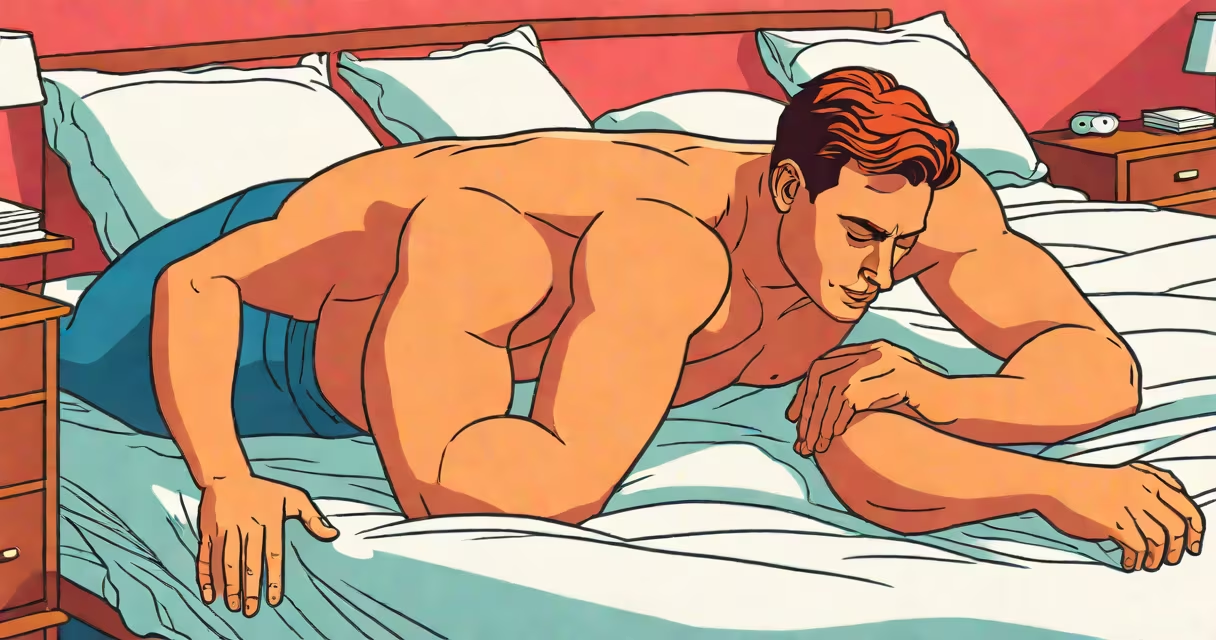
Back hurts when lay on stomach occurs when the spine's natural curve is disrupted during prone positioning, often due to poor posture, muscle imbalance, or underlying spinal conditions. This discomfort typically centers in the lower back and worsens with prolonged pressure.
The human spine has four natural curves: cervical, thoracic, lumbar, and sacral. When lying face down, the lumbar region-the lower back-must arch excessively to maintain balance. This hyperextension compresses discs and strains ligaments and muscles. For people with weak core muscles or existing spinal issues, this position increases mechanical stress, leading to pain.
A 2021 study published in Spine Journal found that 68% of individuals reporting lower back pain while sleeping prone had reduced abdominal strength and increased lumbar lordosis (excessive inward curvature). The study concluded that poor core stability contributes to discomfort in the prone position.
Lying on the stomach forces the lower back into extension. Without adequate support or muscle control, the spine cannot maintain neutral alignment. The pelvis tilts forward, increasing pressure on the lumbar facet joints and intervertebral discs. Over time, this leads to inflammation, muscle spasms, and nerve irritation.
Common contributors include:
Individuals with scoliosis or spondylolisthesis-a condition where one vertebra slips forward over the one below-are particularly vulnerable. A 2019 review in European Spine Journal noted that patients with mild spondylolisthesis reported 3.4 times higher pain scores during prone positions compared to supine or side-lying.
Immediate relief begins with repositioning. Stop lying on the stomach. Instead, adopt a supine (on back) or lateral (side) position. Use a pillow under the knees in supine to reduce lumbar curvature. Place a pillow between the knees when lying on the side to keep the spine aligned.
Strengthening the core improves long-term stability. Perform pelvic tilts: lie on your back, knees bent, feet flat. Tighten the abdominal muscles and press the lower back into the floor. Hold for five seconds, release. Repeat 10 times daily. This exercise activates transverse abdominis, the deep stabilizer of the spine.
For those who continue sleeping prone, use a thin pillow under the hips rather than the chest. This slightly elevates the pelvis, reducing lumbar extension. Avoid placing the head on a thick pillow-it increases neck strain and shifts upper body weight onto the lower back.
When pain persists beyond two weeks despite repositioning and core exercises, consult a physical therapist. A 2020 clinical trial showed that patients with chronic prone-related back pain improved 72% after six weeks of targeted physical therapy, including neuromuscular re-education and posture training.
Many assume that "sleeping on the stomach is fine if you're not in pain." But pain is a late signal. By the time discomfort appears, microtrauma may have already occurred. Early intervention prevents progression to chronic pain.
Another myth: "Using a firmer mattress fixes the problem." While firmness helps, it doesn't correct misalignment. A mattress that supports the spine's natural curve-typically medium-firm-is better than overly hard or soft options. The American Chiropractic Association recommends testing mattresses by lying on your side; your spine should remain straight, not curved.
Some try to stretch the lower back while prone. This increases compression. Instead, perform cat-cow stretches on hands and knees. Move slowly through flexion and extension to mobilize the spine safely.
Back hurts when lay on stomach becomes concerning if accompanied by numbness, tingling, or weakness in the legs. These symptoms suggest nerve root compression, possibly from a herniated disc or spinal stenosis. A neurologist may order an MRI to assess soft tissue and nerve integrity.
If pain radiates down the leg or occurs with bowel/bladder changes, seek immediate care. These indicate cauda equina syndrome-a rare but serious condition requiring emergency decompression surgery.
For persistent pain despite lifestyle changes, see a spine specialist. Diagnostic imaging can identify structural issues such as spondylolysis (stress fracture in the vertebra) or facet joint arthritis. Treatment may include injections, bracing, or surgical referral.
After experiencing recurrent episodes, consider adjusting your sleep environment. Use a supportive pillow under the abdomen or place a rolled towel under the lower back when sitting. These small changes reduce cumulative strain.
When back hurts when lay on stomach, recognize it as a red flag for spinal misalignment. Take action before it becomes chronic. Your spine functions best when supported in neutral alignment-not forced into extension.