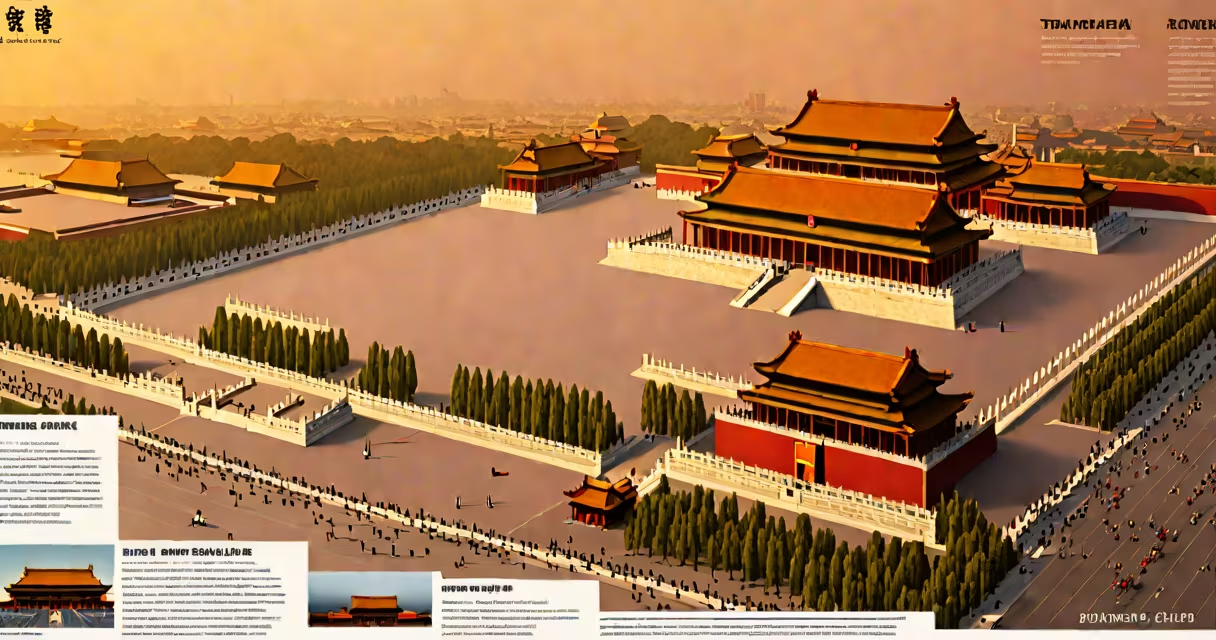
A Beijing travel guide provides curated information on top attractions, transportation, accommodations, dining, and cultural etiquette for travelers visiting China's capital. It covers seasonal considerations, entry requirements, and practical logistics to maximize time and minimize confusion.
Beijing is home to over 70 million people and serves as China's political, academic, and cultural center. Its urban layout reflects centuries of imperial planning, with major sites arranged along a central north-south axis. A well-structured Beijing travel guide includes details on going through the city's extensive subway system, understanding visa rules for foreign nationals, and knowing when to visit popular spots to avoid crowds.
The city's climate features hot summers and cold winters. Spring (April-May) and autumn (September-October) offer the most comfortable temperatures for sightseeing. Summer months see high humidity and frequent rain, while winter brings snow and freezing conditions. A good Beijing travel guide accounts for these patterns when suggesting itineraries.
Beijing's top sites include the Forbidden City, Temple of Heaven, Great Wall at Mutianyu, and Summer Palace. These are not just tourist stops-they are preserved historical zones governed by strict access rules. Entry requires timed tickets, often sold online in advance through official platforms like the "Beijing Tourism" app.
The Forbidden City, built between 1406 and 1420 during the Ming Dynasty, spans 72 hectares and contains over 9,000 rooms. Visitors must pass through security checks and follow designated paths. Audio guides are available in multiple languages, but photography is restricted in certain halls due to preservation concerns.
At the Great Wall, the Mutianyu section offers better-preserved stone walls and fewer crowds than the more commercialized Badaling. Tickets cost ¥45 per person, and visitors must climb approximately 1,000 steps to reach the highest watchtower. The wall's elevation ranges from 600 to 900 meters above sea level, making it physically demanding for those unaccustomed to hiking.
Beijing's subway system operates from 5:00 AM to midnight daily. Lines 1, 2, and 13 connect major hubs like Beijing West Railway Station, Wangfujing, and the airport terminals. Fares start at ¥3 and increase based on distance traveled. Most stations have multilingual signage and ticket machines that accept Chinese bank cards and mobile payments via Alipay or WeChat Pay.
Taxis are widely available and metered. Fares begin at ¥13 for the first 3 kilometers, then rise by ¥2.3 per kilometer. Drivers may refuse trips if the destination is outside the city's core area. Ride-hailing apps like Didi Chuxing are faster and cheaper than traditional taxis, especially during peak hours.
For long-distance travel, Beijing Capital International Airport (PEK) handles over 100 million passengers annually. The airport's Terminal 3 has a dedicated rail link to the city center, taking 30 minutes and costing ¥25. Domestic flights depart from Terminal 2, which is served by the Airport Express train.
Beijing is known for Peking duck, a dish prepared by roasting ducks over fruitwood fire. The meat is sliced thin and wrapped in pancakes with scallions and hoisin sauce. A full meal at a reputable restaurant like Quanjude costs around ¥300 per person and includes four servings.
Street food vendors near hutongs (traditional alleyways) sell jianbing-savory crepes made with egg, scallions, and chili paste. Prices range from ¥8 to ¥15. These stalls operate early morning until late afternoon and are often closed on Sundays.
When visiting temples or shrines, remove shoes before entering. Avoid pointing at religious figures with your finger. Bow slightly when greeting elders. Speak softly in public spaces. Loud conversations on subways or in parks are discouraged and may draw disapproving glances.
Many assume Beijing is entirely modern and industrial. In reality, the city blends ancient architecture with high-tech infrastructure. The National Centre for the Performing Arts, shaped like a giant egg, sits adjacent to the Forbidden City. Its glass dome reflects sunlight and casts shadows across the surrounding lake.
Another myth is that all locals speak English. While many young professionals in business districts understand basic phrases, most residents do not. Signage in public areas is primarily in Chinese. A reliable translation app like Google Translate or Pleco is essential for navigation.
Some travelers believe they can enter the Forbidden City without a reservation. This is false. Over 10 million visitors attempt to enter each year. Without a timed ticket, entry is denied at the gate. Official reservations must be made at least 24 hours in advance via the government-run website www.bjly.gov.cn.
Day 1: Arrive at Beijing Capital Airport. Take the Airport Express to Dongsi District. Check into a hotel near the Drum Tower. Evening walk through Houhai Lake, dinner at a local restaurant serving hot pot.
Day 2: Morning visit to the Forbidden City (tickets booked online at 8:00 AM). Afternoon at the Summer Palace, including a boat ride on Kunming Lake. Dinner at a nearby teahouse offering regional dishes.
Day 3: Full-day trip to the Great Wall at Mutianyu. Return to the city by private car or shuttle bus. Evening at the National Museum of China, located near Tiananmen Square.
Day 4: Visit the Temple of Heaven Park. Walk the circular altar path. Attend a morning tai chi session. Afternoon at the 798 Art District, featuring contemporary galleries and street art.
Day 5: Shopping at Wangfujing Street. Buy souvenirs such as silk scarves or porcelain figurines. Departure from the airport via taxi or shuttle.
| Site | Entry Fee (¥) | Best Time to Visit | Duration |
|---|---|---|---|
| Forbidden City | 60 | April-October, 8:30 AM-11:00 AM | 3-4 hours |
| Great Wall (Mutianyu) | 45 | Weekdays, 9:00 AM-1:00 PM | 4-5 hours |
| Summer Palace | 30 | September-November, 7:30 AM-5:00 PM | 3 hours |
| Temple of Heaven | 15 | March-May, 6:00 AM-7:00 PM | 2 hours |
I once spent a week in Beijing using only a paper map and a phrasebook. I missed my train to Mutianyu because I misread the station name. That mistake taught me the value of downloading offline maps and learning basic Mandarin phrases like "dào nà lǐ?" (Where is that?) and "xièxiè" (Thank you).
Beijing travel guide resources should include official websites, local tour operators, and community forums. Always verify information against primary sources such as the Beijing Municipal Government's tourism portal or the China National Tourism Administration's guidelines.