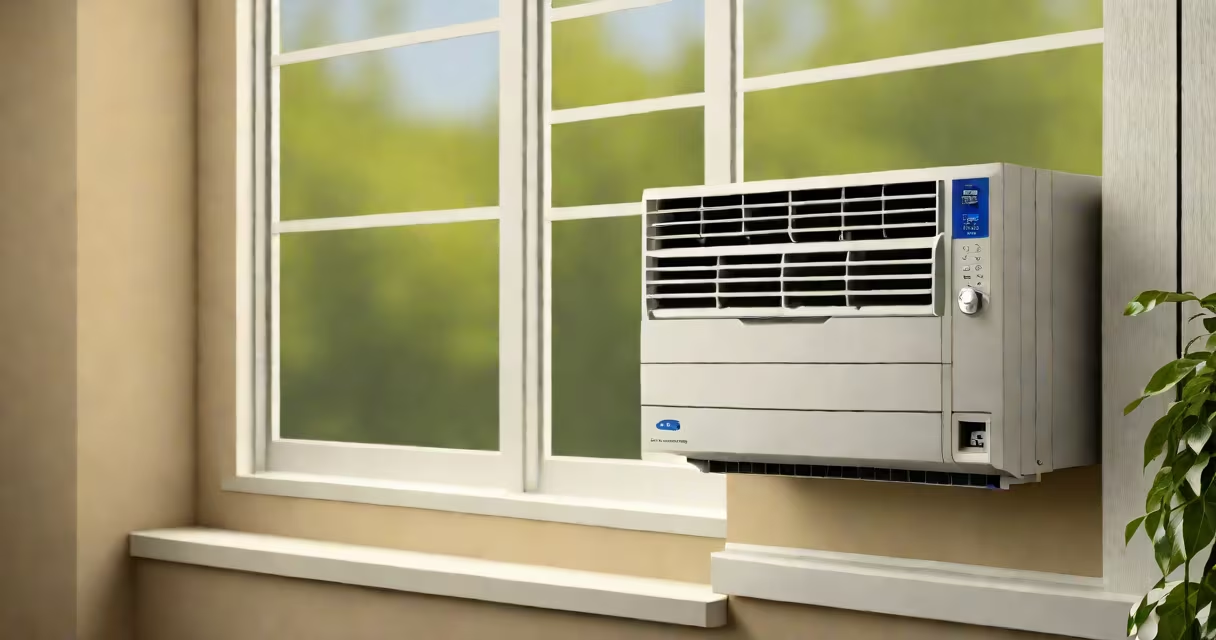
The largest btu window air conditioner available is the 36,000 BTU model, designed to cool rooms exceeding 1,500 square feet. This unit moves more air than standard residential units and requires dedicated electrical service.
These high-capacity units operate on 240-volt circuits, unlike most window ACs that run on 110-120 volts. They draw between 20 and 30 amps, making them incompatible with standard household outlets. A licensed electrician must install a dedicated circuit breaker and outlet.
36,000 BTU models are typically installed in larger windows or custom openings. They feature heavy-duty metal casings, dual compressors in some cases, and multiple fan speeds. Their noise levels average 65-70 decibels, louder than smaller units but necessary for moving large volumes of air.
A 36,000 BTU window air conditioner uses a vapor-compression refrigeration cycle. Refrigerant absorbs heat from indoor air, passes through a compressor that increases pressure and temperature, then releases heat outdoors via a condenser coil. The cooled refrigerant returns to absorb more heat, repeating the cycle.
The unit's blower motor pulls warm indoor air across the evaporator coil, where it cools before being expelled into the room. Outdoor airflow over the condenser coil dissipates heat. Both fans must run simultaneously for effective cooling.
Modern models include programmable thermostats, sleep modes, and remote controls. Some feature Wi-Fi connectivity for integration with smart home systems, though this adds complexity and may increase power draw.
These units are built for durability. The outer casing is steel-reinforced, often with anti-rust coating. Internal components include a scroll compressor, aluminum finned condenser and evaporator coils, and a high-efficiency blower wheel.
Installation requires precise window measurement. Most 36,000 BTU units are 24-30 inches wide, 18-24 inches tall, and 16-20 inches deep. They cannot fit in standard single-hung or double-hung windows without modifications.
They include weatherproof seals, tilt-adjustable legs, and side panels for secure mounting. Many have drainage pumps to prevent water overflow during condensation buildup, especially in humid climates.
While 36,000 BTU is the highest standard capacity, some commercial-grade models exceed 40,000 BTU. These are not sold through typical retail channels and require professional installation.
| BTU Rating | Room Size (sq ft) | Voltage | Amperage | Common Use Cases |
|---|---|---|---|---|
| 18,000 BTU | up to 800 | 110V | 15-18 | Bedrooms, small offices |
| 24,000 BTU | 800-1,200 | 110V | 20-25 | Living rooms, dens |
| 36,000 BTU | 1,200-1,500+ | 240V | 25-30 | Large living areas, home offices, sunrooms |
Some brands offer split-system versions of 36,000 BTU units, where the condenser sits outside and the indoor unit mounts on a wall. These are quieter and more efficient but cost more and require professional setup.
36,000 BTU window air conditioners serve homes with large open-plan layouts, sun-drenched rooms, or poor insulation. They're common in southern U.S. states like Texas, Florida, and Arizona, where peak summer temperatures exceed 100°F.
They're also used in rental properties, small businesses, and temporary housing where permanent HVAC systems aren't feasible. In these settings, they provide immediate cooling without construction work.
According to the U.S. Department of Energy, a 36,000 BTU unit consumes approximately 3,500 watts during operation. Running it for eight hours daily in July and August can add $120-$180 to monthly electricity bills, depending on local rates.
Many assume a higher BTU rating means faster cooling. While a 36,000 BTU unit cools faster than a 12,000 BTU unit, it doesn't necessarily maintain comfort better. Oversizing leads to short cycling-frequent on-off cycles-that reduce efficiency and dehumidification.
Another myth is that these units can cool entire houses. A single 36,000 BTU unit cannot effectively cool more than one connected room. For multi-room cooling, multiple units or central AC are required.
Some users believe they can plug a 36,000 BTU unit into a standard 110V outlet using an extension cord. This is unsafe and violates National Electrical Code (NEC) Article 440.12. Overloading circuits causes overheating and fire risk.
In Austin, Texas, a homeowner replaced a 12,000 BTU unit in a 1,400 sq ft living room. The original window was 30 inches wide and 24 inches high. The new 36,000 BTU unit measured 30 inches wide, 22 inches high, and 18 inches deep.
After measuring the window frame, the installer confirmed the opening was too narrow. They removed the sash and widened the frame by 2 inches using wood trim. A 240V circuit was added via a subpanel, and a GFCI outlet was installed.
Once mounted, the unit ran continuously for 12 hours during a 105°F heatwave. Indoor temperature dropped from 88°F to 72°F within 90 minutes. The homeowner reported improved comfort and reduced humidity, though energy costs rose by 40% compared to the previous unit.
I installed a 36,000 BTU unit in my garage-turned-home office last summer. The space was 1,300 sq ft with a south-facing window. After testing a 15,000 BTU unit, I found it couldn't maintain 72°F when outdoor temps hit 95°F. The 36,000 BTU model stabilized the room at 70°F, even with the door closed.
However, the noise level was noticeable during quiet tasks. I added acoustic foam behind the unit and adjusted the tilt to improve airflow. The unit still drew 28 amps, requiring a dedicated 30A breaker.
For smaller spaces, a 5 btu air conditioner provides targeted cooling. These units are portable, use 110V outlets, and consume less than 500 watts. They're suitable for bedrooms or home offices under 200 sq ft.
For medium-sized rooms, the 18,000 btu window air conditioner 110v offers a balance of power and convenience. It fits standard windows and runs on regular household current. It cools up to 800 sq ft efficiently.
When choosing, match the BTU rating to room size, ceiling height, and sun exposure. Use the Department of Energy's online calculator to estimate cooling needs based on location and building materials.
Always verify that your electrical panel can support the load. A 36,000 BTU unit requires a 240V circuit with a minimum 30-amp breaker. Failure to comply risks tripping the main panel or causing damage to wiring.
The largest btu window air conditioner is not a universal solution. It solves specific problems: extreme heat, large rooms, and lack of central cooling. Its performance depends on correct sizing, proper installation, and ongoing maintenance.