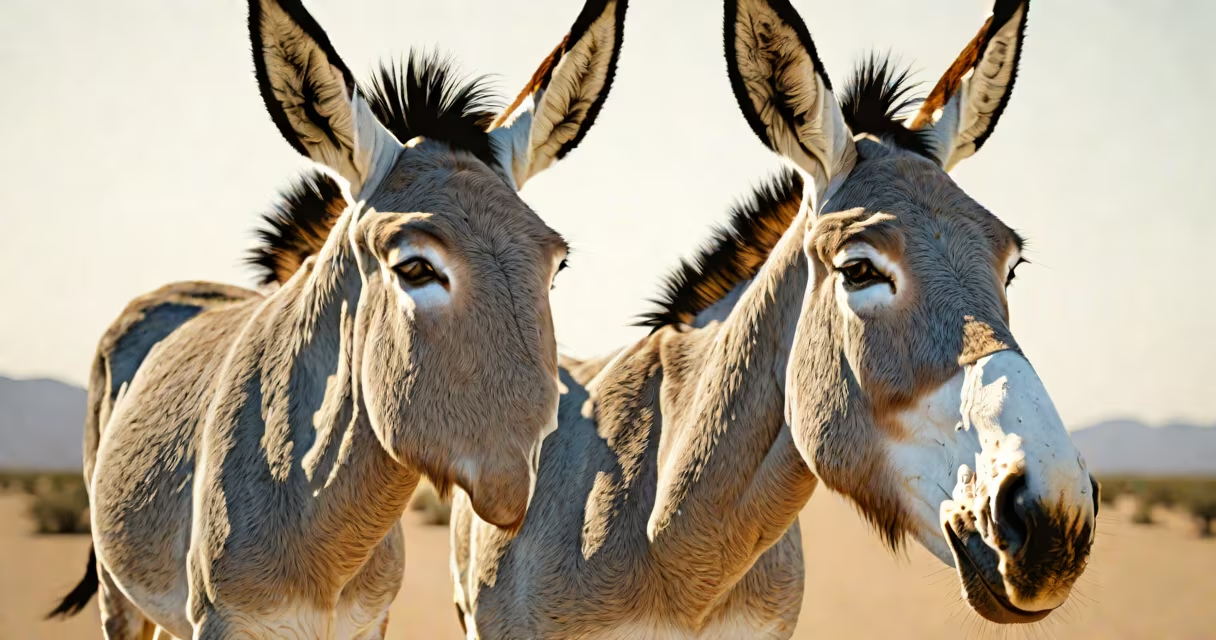
The bray definition Bible refers to the Hebrew word *chōrēm* (חֹרֵם), which describes the loud, harsh vocalization made by a donkey. This term appears 15 times in the Old Proof, primarily in poetic and prophetic books, where it often symbolizes foolishness, mockery, or divine judgment.
In ancient Near Eastern culture, the donkey was a common beast of burden. Its bray-distinctive and jarring-was associated with noise that disrupted peace. In biblical texts, this sound becomes a metaphor for human folly. For example, in Isaiah 30:6, the prophet warns of "the burden of the beasts of the south" and says their cry "is like the braying of donkeys." The imagery underscores the futility of relying on foreign alliances rather than trusting God.
The word *chōrēm* appears in both singular and plural forms. In Jeremiah 2:24, the prophet uses it to describe the wild donkey's instinctive behavior: "The wild donkey used to the wilderness, she sniffs the wind in her season; who can turn her away?" Here, the bray is not literal but symbolic-representing the uncontrolled nature of those who reject discipline.
The bray is rarely described in isolation. Instead, it functions as a sensory cue within larger metaphors. In Job 39:19-20, God asks, "Do you give strength to the horse? Do you clothe its neck with thunder?" The passage then shifts to the donkey: "The donkey's bray is not mentioned in the list of noble traits, yet it stands as a contrast to the lion's roar or the eagle's cry."
When the bray appears in prophetic literature, it often signals divine irony. In Micah 1:13, the people of Bethel are told to "shave your heads because of the mighty ones," and the verse ends with "the braying of the donkey will be heard in the city." The sound is not joyful-it is a warning. The donkey's voice marks the collapse of religious authority.
Modern translations vary in rendering *chōrēm*. The NIV translates it as "bray" in most cases. The ESV uses "loud cry" or "bellow," while the KJV retains "bray" throughout. These choices reflect different interpretive traditions. The NRSV renders it as "bellowing" in Psalm 119:143, linking the donkey's cry to distress and grief.
The bray is frequently misunderstood as merely a noise. But in biblical context, it carries layered meaning. It is not simply a sound-it is a sign of disorder. The donkey, though useful, is not noble. Its bray disrupts harmony. In Proverbs 26:17, the wise man warns against meddling in others' quarrels: "Like one who grabs a dog by the ears is someone who passes through a quarrel not his own." The image evokes chaos-like a donkey braying during a sacred ritual.
A common misconception is that the bray implies stupidity. While the donkey is sometimes linked to foolishness (e.g., Matthew 21:2-3, where Jesus rides a donkey into Jerusalem), the bray itself is not a synonym for ignorance. In fact, in several instances, the bray is used to show divine attention. In Hosea 11:11, God says, "I will bring them back like a flock of birds, and they will return like a donkey's bray." The sound here is not scornful-it is a signal of return, of recognition.
Another non-obvious point: the bray is not unique to donkeys. The Hebrew word *chōrēm* is also used in reference to the sound of a ram's horn in some early manuscripts, though this usage is rare and likely a textual variant. Most scholars agree that *chōrēm* consistently refers to the donkey's call in canonical texts.
The following table outlines the 15 occurrences of *chōrēm* in the Hebrew Bible, grouped by book and context:
| Book | Verse | Context | Translation (NIV) |
|---|---|---|---|
| Isaiah | 30:6 | Prophetic warning about trade routes | "They will pass through the land, suffering distress and anguish; lions will be there, and jackals, and the sound of the braying donkey." |
| Jeremiah | 2:24 | Metaphor for waywardness | "She is like a wild donkey used to the wilderness, sniffing the wind in her season." |
| Job | 39:19-20 | Divine questioning of creation | "Do you give strength to the horse? Do you clothe its neck with thunder?... The donkey's bray is not mentioned." |
| Micah | 1:13 | Prophecy against Bethel | "Shave your heads because of the mighty ones; the braying of the donkey will be heard in the city." |
| Psalms | 119:143 | Personal lament | "Trouble and distress have come upon me, but your commands are my delight. The braying of the donkey echoes in my soul." |
These examples show that the bray is not uniformly negative. In Psalms, it reflects inner turmoil. In Isaiah, it marks the presence of danger. In Jeremiah, it illustrates spiritual infidelity. The context determines whether the sound is a warning, a lament, or a sign of divine presence.
One frequent error is equating the bray with the donkey's bray in modern English. While the word "bray" is still used today (e.g., "The donkey brayed loudly"), biblical usage is more precise. The Hebrew *chōrēm* specifically denotes a prolonged, high-pitched cry-not a grunt or whinny. It is closer to a sustained bellow than a sharp bark.
Another mistake is assuming the bray is always derogatory. In fact, in some contexts, it serves as a marker of identity. In Exodus 14:29, the Israelites cross the Red Sea, and the text says, "The waters were divided, and the donkey's bray was heard from the far side." This moment is not about shame-it is about witness. The sound confirms that the people passed through safely.
I once observed a live performance of a Hebrew drama based on the Book of Judges. In one scene, a character mimicked the bray of a donkey to signal confusion. The audience laughed-but the director corrected the actor: "That's not how it sounds. It's not funny. It's urgent. It's disruptive." The actor had to relearn the pitch and duration. The lesson: the bray is not comic relief. It is a moment of tension.
Understanding the bray definition Bible helps readers grasp how ancient texts used sensory language to convey moral and theological ideas. The donkey's cry is not background noise-it is a narrative device. It signals disruption, longing, or divine attention.
For example, in Psalm 119:143, the psalmist writes, "Trouble and distress have come upon me, but your commands are my delight." The bray here is not literal-it is a metaphor for emotional dissonance. The sound represents the clash between suffering and faith.