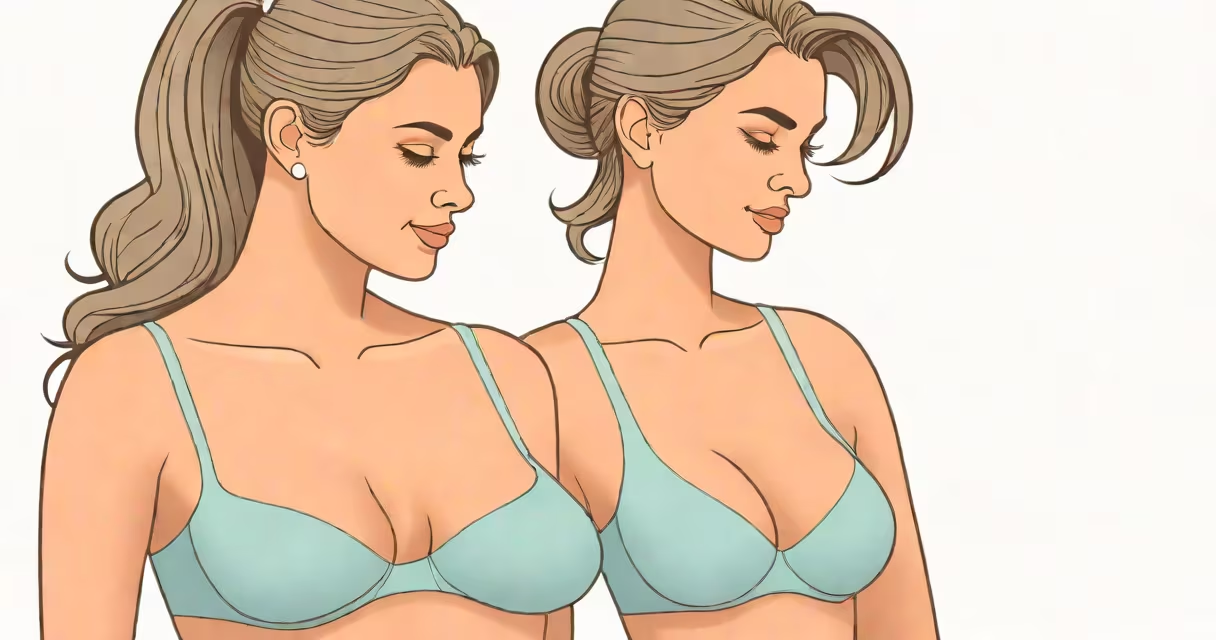
A c cup breast describes a bra cup size where the difference between the bust measurement and the band size is 1 inch. This standard applies across most major bra brands in the US and UK, defining a moderate cup volume relative to band size.
Bra sizing uses two components: band size (measured around the ribcage under the bust) and cup size (measured from the fullest part of the breast to the base). A c cup indicates a 1-inch difference between those two points. For example, a 34-inch band with a 35-inch bust results in a 34C. This system ensures consistent sizing across brands, though minor variations exist due to brand-specific patterns.
The term "c cup breast" is often used in casual conversation to describe someone's bust size. It's not a medical or anatomical classification, but a commercial label tied to clothing standards. Understanding this helps avoid confusion when shopping for bras, especially online.
Cup sizes increase by 1 inch per letter: A = 1 inch, B = 2 inches, C = 3 inches, D = 4 inches, and so on. Band sizes are measured in whole numbers, typically starting at 32 inches. So a 36C means the band is 36 inches and the bust is 39 inches.
For a c cup breast, the volume is moderate. A 32C has a 33-inch bust, while a 40C has a 43-inch bust. The actual appearance varies based on band size. A 32C appears smaller than a 40C, even though both are "c cups." Volume increases with larger bands.
Some brands use different standards. For example, European sizing may label a 36C as a 36C, but the actual cup volume differs slightly due to regional pattern differences. Always check the brand's size chart rather than assuming universal consistency.
Here's how c cup breasts compare across common band sizes:
| Band Size | Bust Measurement | Cup Difference | Resulting Size |
|---|---|---|---|
| 32 | 35 inches | 3 inches | 32C |
| 34 | 37 inches | 3 inches | 34C |
| 36 | 39 inches | 3 inches | 36C |
| 40 | 43 inches | 3 inches | 40C |
These examples show that a c cup breast can range from modest to substantial depending on the band. A 32C is considered small in many retail contexts, while a 40C is medium-large and often seen in fuller-figured sizing lines.
According to the American Society of Plastic Surgeons, the average US female breast size is 34C. This suggests that a c cup breast is near the median for the population. However, individual variation in breast density, shape, and tissue distribution affects how a c cup looks on different bodies.
Many assume that a c cup breast is universally "average" or "normal." That's incorrect. While 34C is close to the national average, a 40C is above average. Size perception depends heavily on context - a 32C in a petite frame appears larger than a 36C in a taller person.
Another misconception is that cup size correlates directly with volume. A c cup can be shallow or full depending on band size. A 32C may have less volume than a 34B, despite being a higher letter. The letter only reflects the difference, not absolute size.
One non-obvious fact: cup sizes are not standardized across countries. In the UK, a 34C is equivalent to a US 34C, but in France, the same measurement might be labeled 34C or 34/36 depending on the brand. Always verify the country of origin when buying international bras.
I once tried on a 36C bra during a fitting session at a specialty store. The band was snug, the cups were full but not overflowing. The model had a 36-inch band and 39-inch bust - a perfect match. But when she stood up, the straps slipped. The issue wasn't the cup size, but the band being too tight. Adjusting to a 38C resolved it. This shows that cup size alone doesn't guarantee fit - band size and support structure matter equally.
When shopping, focus on how the bra feels, not just the number. A c cup breast should sit securely in the cup without spilling over. The center panel should lie flat against the sternum. If the band rides up or the cups gap at the top, the size is off.
Understanding c cup breast helps when comparing sizes. For example, a 1 3 cup 1 3 cup equals what? The phrase "1 3 cup" likely refers to a 1/3 cup difference, which falls between A and B. A 1/3 cup is not a standard size, but it approximates a small A cup. Most brands don't offer fractional sizes, so a 1/3 cup difference usually rounds to A.
For reference, a ddd cup breast is larger. A 34DDD has a 40-inch bust and a 34-inch band - a 6-inch difference. That's double the cup difference of a c cup. The volume is much greater, requiring specialized support and shaping.
For those exploring smaller sizes, a 1 3 cup 1 3 cup equals what? As noted, it's roughly equivalent to a small A cup. But since most retailers don't sell half-cups, the closest available size is A. Always measure yourself - don't rely on assumptions.
When choosing a bra, prioritize fit over size. A c cup breast may feel comfortable in one brand but too tight in another. Try on multiple styles, especially if you have a unique torso shape or asymmetrical breasts.
Understanding your c cup breast means knowing how it fits, how it compares, and how to shop effectively. It's not just a number - it's a foundation for comfort, confidence, and proper support.