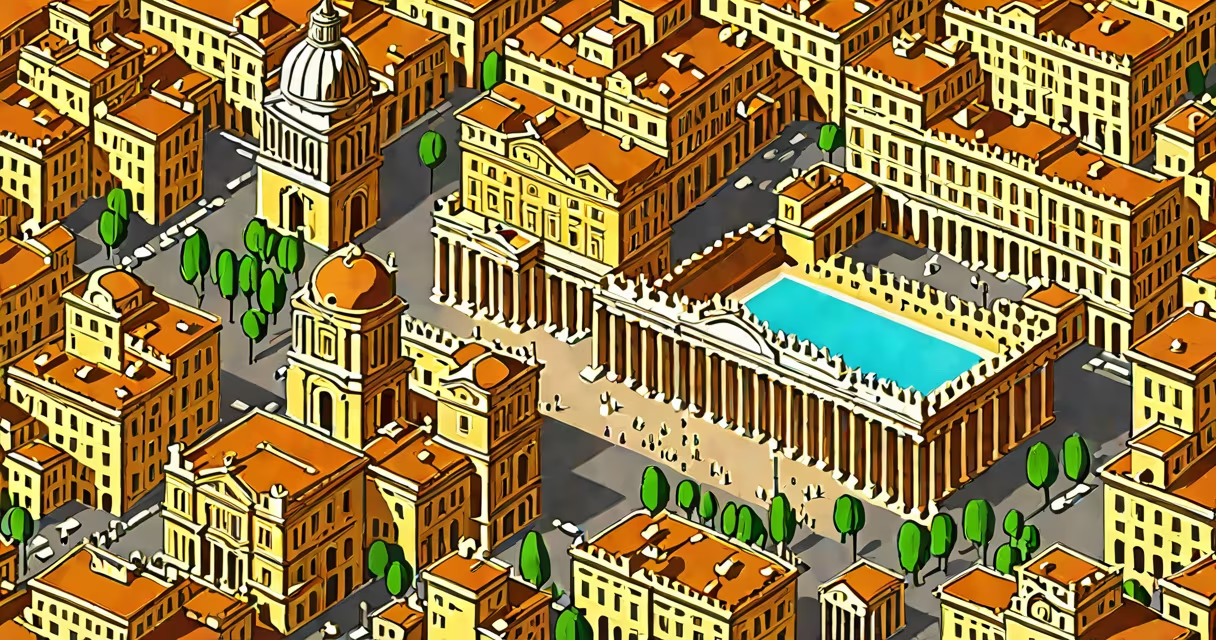
City breaks to Rome are short, typically 2-4 day trips to Italy's capital that focus on cultural immersion, historical sites, and urban experiences without requiring long-term travel commitments. These trips prioritize access to major attractions like the Colosseum, Vatican City, and Trastevere, often using low-cost flights or regional rail connections.
Rome's compact historic core allows visitors to walk between most major sights. A typical city break spans 72 hours or less, making it ideal for travelers with limited time. Most return within a weekend, reducing travel fatigue while maximizing exposure to art, architecture, and local life. The city's central location in Italy makes it accessible from major European hubs via budget airlines or high-speed trains.
According to the World Tourism Organization, Rome consistently ranks among the top 10 global destinations by international arrivals, with 9.3 million visitors in 2023. This volume reflects the city's appeal for both leisure and business travelers seeking brief yet meaningful visits. The average cost for a three-day city break to Rome-including round-trip flight, accommodation, and meals-is $750-$1,100 USD, depending on season and booking timing.
These trips rely on efficient transportation and strategic planning. Many travelers book flights from London, Paris, or Berlin to Fiumicino Airport (FCO), which offers direct services from over 50 European cities. Budget carriers like Ryanair and EasyJet operate frequent routes, with fares starting below $60 one-way during off-peak months.
Once in Rome, guests use the metro, buses, or taxis to reach central districts. The city's public transit system covers key areas including Termini Station, the Spanish Steps, and Piazza Navona. Walking remains the most effective way to explore the historic center, where 80% of top-rated attractions lie within a 15-minute walk of each other.
A sample itinerary for a 3-day city break includes: Day 1 - Arrival, check-in near Termini, evening stroll through Trastevere; Day 2 - Morning visit to the Colosseum and Roman Forum, afternoon at the Vatican Museums and St. Peter's Basilica; Day 3 - Morning at the Pantheon and Trevi Fountain, lunch in Campo de' Fiori, departure in late afternoon. This schedule maximizes sightseeing while minimizing travel time.
Successful city breaks depend on three core elements: proximity to attractions, flexible scheduling, and curated experiences. Rome's compact layout reduces transit time, allowing more time for exploration. Most accommodations are located within walking distance of major sites, reducing reliance on transport.
Popular accommodation options include budget hotels, boutique guesthouses, and short-term rentals in neighborhoods like Monteverde, Prati, and San Lorenzo. These areas offer access to local markets, pizzerias, and nightlife. For example, staying in Trastevere puts guests within 10 minutes of the Tiber River, the Church of Santa Maria in Trastevere, and dozens of family-run restaurants serving traditional Roman dishes like cacio e pepe and supplì.
Travelers often combine sightseeing with food experiences. A typical meal in central Rome costs $15-$25 per person, including antipasti, pasta, and espresso. Visitors may also book guided walks focused on specific themes-such as "Rome's Hidden Churches" or "Street Food of the Jewish Ghetto"-to deepen understanding beyond standard tourist routes.
City breaks to Rome vary by duration, focus, and traveler profile. The following table outlines common formats:
| Type | Duration | Focus | Best For | Avg. Cost (USD) |
|---|---|---|---|---|
| Weekend Escape | 2 days | Major sights, central neighborhoods | Business travelers, last-minute planners | $750-$900 |
| Cultural Deep Dive | 3-4 days | Museums, ancient ruins, art galleries | History buffs, art lovers | $900-$1,200 |
| Food & Lifestyle Trip | 3 days | Local markets, cooking classes, cafés | Culinary enthusiasts, solo travelers | $800-$1,000 |
| Day Trip Extension | 2 days | Outskirts: Tivoli, Ostia Antica, or Castel Gandolfo | Those wanting to see beyond the city center | $600-$850 |
Each format balances time, cost, and experience. Weekend escapes emphasize efficiency, while cultural deep dives allow extended museum visits and guided tours. Food-focused trips prioritize hands-on activities such as pasta-making workshops or wine tastings in nearby vineyards.
City breaks to Rome are popular among professionals, students, and retirees seeking short escapes. The city's accessibility, safety, and wealth of free or low-cost attractions make it ideal for spontaneous travel. According to Eurostat, 62% of EU citizens aged 25-44 have taken at least one city break in the past five years, with Rome ranking second behind Barcelona in frequency.
Travelers use these trips to recharge, explore new cultures, or celebrate milestones. A friend recently returned from a three-day trip to Rome after a promotion. She booked a stay in a small apartment near the Pantheon, visited the Capitoline Museums, and enjoyed an impromptu dinner at a trattoria in the Prati district. She described the experience as "refreshing, immersive, and entirely manageable in under 72 hours."
Rome's popularity stems from its layered history. The city was founded in 753 BCE and has served as the capital of the Roman Republic, the Roman Empire, and the Papal States. Today, it hosts over 200 museums, 120 churches, and 300 archaeological sites. This density of heritage makes it one of the few cities where a single visit can span millennia of human achievement.
Many assume city breaks to Rome require expensive stays or complex planning. In reality, many travelers book last-minute flights and hostels for under $60 per night. The city's extensive network of free walking tours-run by local guides who accept tips-provides access to historical insights without upfront fees.
Another misconception is that Rome is unsafe for tourists. Data from the Italian Ministry of Interior shows that violent crime rates in central Rome dropped 18% between 2020 and 2022. Pickpocketing remains a concern in crowded areas like the Colosseum and Termini Station, but simple precautions-keeping bags zipped and avoiding flashy jewelry-reduce risk.
A lesser-known fact: Rome's underground tunnels and catacombs are open to the public. The Catacombs of San Callisto, for example, hold over 500,000 burial sites and are accessible via guided tours lasting 90 minutes. These spaces offer a quiet contrast to the city's bustling surface and provide insight into early Christian practices.
City breaks to Rome are not the same as luxury holidays, extended vacations, or pilgrimage tours. They differ from a week-long stay in Tuscany or a multi-city tour of southern Italy. Unlike religious pilgrimages to the Vatican, city breaks prioritize sightseeing, dining, and casual exploration over spiritual or ritualistic elements.
They also aren't synonymous with "Rome in a day" packages sold online. These often include rushed itineraries, group tours with limited interaction, and hidden fees. A genuine city break emphasizes flexibility, personal choice, and local engagement-not rigid schedules or bundled services.
For example, a traveler who booked a "Rome in 24 Hours" package reported being led through the Colosseum in 45 minutes with no time for photos or commentary. In contrast, someone who planned their own three-day break spent 90 minutes exploring the Forum's ruins, read inscriptions in Latin, and discussed the site's role in Roman politics with a local historian.
When considering a city break to Rome, prioritize experiences over checklists. Visit a neighborhood market, sit at a sidewalk café, or wander without a map. These moments often leave deeper impressions than visiting every famous landmark.