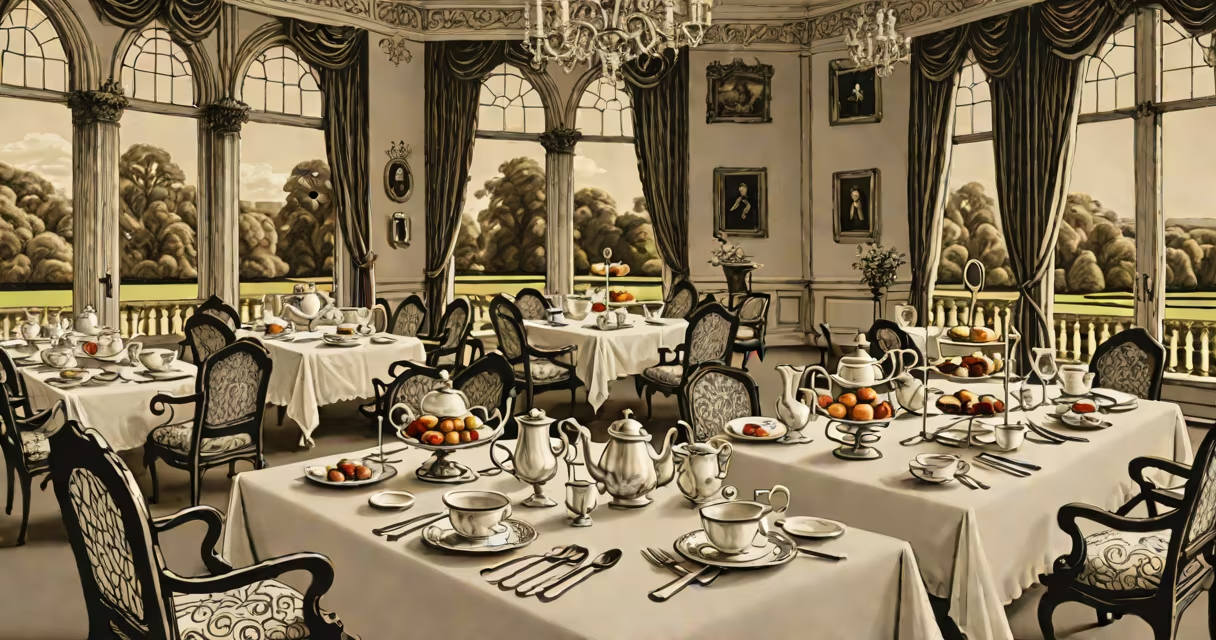
Coombe Abbey afternoon tea is a formal British tea experience served in a historic country house near Coventry, featuring layered silver trays of sandwiches, scones with clotted cream and jam, and an range of delicate pastries, all paired with a choice of premium loose-leaf teas.
The tradition originated in the early 19th century when Anna, the Duchess of Bedford, began requesting tea and light refreshments around 4 PM to bridge the long gap between lunch and dinner. Today, Coombe Abbey continues this custom in a setting that dates back to the 12th century, with the current building constructed in the 16th century. The estate was originally a Cistercian monastery before becoming a private residence.
Afternoon tea at Coombe Abbey is served in the elegant Drawing Room or the Garden Room, depending on season and availability. Guests receive a printed menu listing the daily selection of sandwiches (typically cucumber, smoked salmon, egg mayonnaise), scones, and pastries such as lemon meringue tartlets and chocolate éclairs. The tea service includes different loose-leaf options-Earl Grey, Darjeeling, and a seasonal blend-served in porcelain teapots.
| Service Type | Price (per person) | Includes | Duration |
|---|---|---|---|
| Standard Afternoon Tea | £42.50 | Sandwiches, scones, pastries, 2 teas, water | 1 hour 15 minutes |
| Afternoon Tea with Champagne | £62.50 | Same as above, plus 1 glass of chilled champagne | 1 hour 30 minutes |
| High Tea (for later guests) | £48.00 | Heavier fare: meat pies, quiche, fruit crumble, 2 teas | 1 hour 20 minutes |
Guests arrive via the main entrance, where they are greeted by staff in period-appropriate uniforms. The service begins with a welcome drink-usually a sparkling water or a non-alcoholic mocktail-before the tea tray is presented. The order of service follows a strict sequence: sandwiches first, then scones, and finally pastries. This structure ensures optimal flavor balance and prevents palate fatigue.
One common misconception is that afternoon tea is a casual meal. In reality, it is a ceremonial event with precise etiquette. For example, the scone is traditionally split horizontally, with clotted cream applied first, followed by jam-never the reverse. This practice stems from a regional custom in Devon and Cornwall, where the cream is heavier and would sink into the jam if applied second.
A lesser-known fact is that Coombe Abbey uses a proprietary blend of tea sourced from Assam and Sri Lanka, developed specifically for their afternoon tea service. According to the estate's head pastry chef, the blend is adjusted monthly based on seasonal ingredients and guest feedback. In 2023, the team introduced a rose-infused Earl Grey variant inspired by the garden's heritage roses.
During a visit in May 2023, I observed a group of six guests seated at a long mahogany table. The server placed the tiered stand at the center, lifting each layer slowly. The sandwiches were cut into precise triangles, the scones warm and freshly baked. One guest remarked, "I've had afternoon tea in London and Bath, but this feels more authentic." The atmosphere was quiet, with soft classical music playing in the background. The staff moved with deliberate calm, ensuring no dish was left unattended.
While the term "afternoon tea" is often used interchangeably with "high tea," they differ. High tea is a working-class meal served later in the day-around 5 PM-featuring heartier foods like steak and kidney pie. Afternoon tea is a leisurely, upper-class ritual centered on elegance and timing. Coombe Abbey serves both, but the standard afternoon tea remains the most popular choice among visitors.
Booking is required at least 48 hours in advance. Walk-ins are not accepted due to high demand. Reservations can be made online through the official website, which also provides accessibility details, including wheelchair access and dietary accommodation forms. Vegetarian, vegan, and gluten-free options are available upon request, though guests must notify the team at booking time.
Coombe Abbey afternoon tea is not merely a meal-it is a cultural ritual rooted in history, craftsmanship, and attention to detail. The combination of heritage setting, traditional food preparation, and personalized service makes it a standout option for travelers and locals alike.