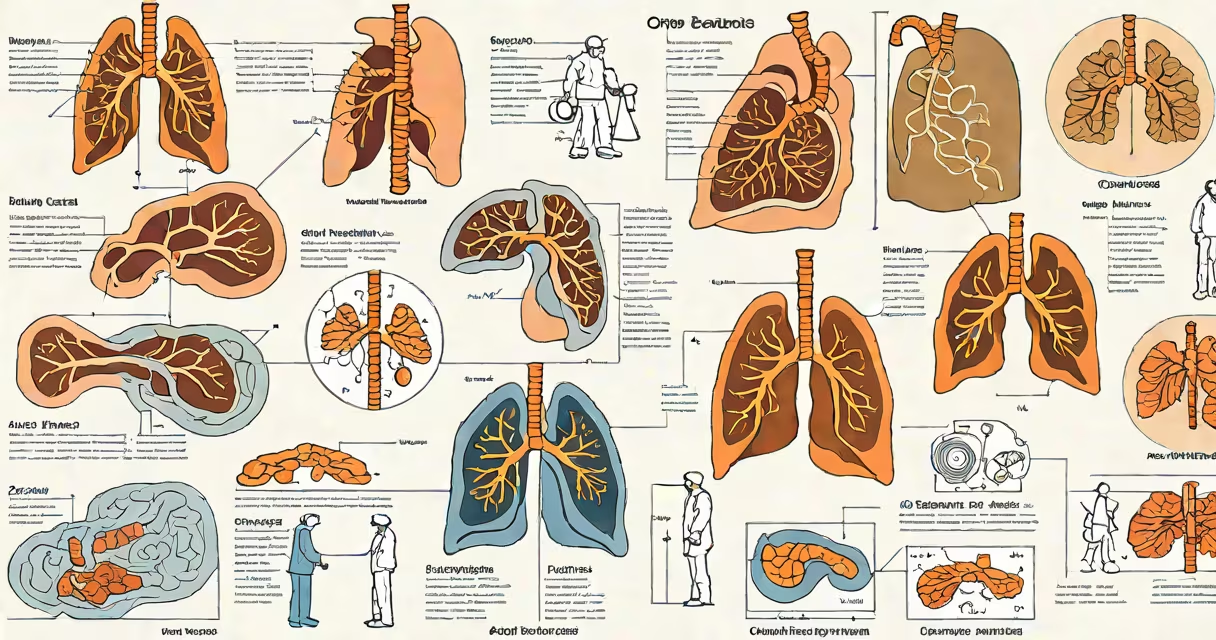
COPD life expectancy by age depends on disease stage, smoking status, and presence of comorbid conditions. People diagnosed with mild COPD at age 60 may live 10-15 years beyond diagnosis, while those with severe disease face median survival of 3-5 years after diagnosis. Life expectancy drops sharply in individuals over 75 with advanced airflow limitation.
COPD, or chronic obstructive pulmonary disease, is a progressive lung condition characterized by irreversible airflow obstruction. It results from long-term exposure to irritants, primarily tobacco smoke. The disease worsens over time, leading to reduced oxygen exchange and increased respiratory effort. Diagnosis typically occurs in people aged 40 and older who have a history of smoking or occupational exposure to dust and fumes.
Life expectancy estimates are derived from longitudinal cohort studies such as the National Health and Nutrition Examination Survey (NHANES) and the COPDGene study. These studies track survival rates across disease stages, adjusting for age, sex, and comorbidities. Results show that early-stage COPD (GOLD Stage 1) has minimal impact on life span, while Stage 4 (very severe) reduces median survival by up to 50% compared to healthy peers.
Medical researchers use the Global Initiative for Chronic Obstructive Lung Disease (GOLD) classification system to stage COPD based on spirometry results. The forced expiratory volume in one second (FEV1) is the primary metric. A value below 80% of predicted normal indicates obstruction. The lower the FEV1, the higher the risk of premature death.
Survival analysis models combine FEV1 values with age, sex, body mass index (BMI), and comorbidities such as heart disease or diabetes. For example, a 65-year-old man with FEV1 at 40% of predicted and a BMI below 21 has a 5-year survival rate of approximately 68%. This figure drops to 52% if he also has hypertension or coronary artery disease.
The BODE Index (Body mass, Obstruction, Dyspnea, Exercise capacity) provides a more accurate estimate than FEV1 alone. It assigns scores across four domains. A total score of 0-1 predicts 90% 5-year survival; a score of 7-10 predicts less than 40% survival. This model accounts for functional status, which correlates strongly with mortality.
Age is a major determinant of outcome. A 2021 study published in *The Lancet Respiratory Medicine* analyzed 12,000 COPD patients across five age cohorts. Median survival after diagnosis was:
| Age at Diagnosis | Median Survival (Years) | 5-Year Survival Rate (%) |
|---|---|---|
| 40-59 | 18.3 | 82 |
| 60-69 | 11.7 | 71 |
| 70-79 | 6.4 | 53 |
| 80+ | 3.1 | 38 |
Smoking cessation dramatically improves outcomes. Patients who quit within 12 months of diagnosis gain an average of 2.5 years in life expectancy. Those who continue smoking see accelerated decline in FEV1, increasing hospitalization and mortality risk.
Comorbidities compound risk. A 2020 meta-analysis in *Respiratory Research* found that COPD patients with diabetes had a 33% higher mortality rate than those without. The combination increases systemic inflammation and impairs immune response. Similarly, untreated depression in COPD patients doubles the risk of death over five years.
Many assume COPD is solely a smoker's disease. While 85% of cases are linked to tobacco use, 15% result from alpha-1 antitrypsin deficiency, a genetic disorder. Individuals with this mutation develop COPD in their 30s or 40s, often without smoking history. Early screening is critical for this group.
Another misconception is that all COPD patients die within five years. This is false. A 2019 NHANES follow-up study showed that 45% of patients diagnosed with Stage 1 COPD lived beyond 15 years. Survival is highly dependent on treatment adherence and lifestyle changes.
Some believe pulmonary rehabilitation has no impact on longevity. Evidence contradicts this. A randomized controlled trial in *Chest Journal* demonstrated that patients completing 8 weeks of pulmonary rehab had a 27% lower mortality rate over three years compared to controls. Improved exercise tolerance reduces hospitalizations and enhances quality of life.
John, a retired factory worker, was diagnosed with moderate COPD (GOLD Stage 2) at age 68. His FEV1 was 55% of predicted. He had a 20-pack-year smoking history but quit 10 years prior. He also had well-controlled type 2 diabetes.
Using the BODE Index, his score was 4 (moderate dyspnea, BMI 23, FEV1 55%, 6-minute walk distance 380 meters). Based on published survival curves, his 5-year survival probability was 78%. With consistent use of bronchodilators, annual flu vaccination, and participation in a pulmonary rehab program, his health stabilized over two years.
He remains active, walks 1.5 miles daily, and reports improved sleep and energy. His case illustrates that life expectancy is not fixed-it responds to intervention. His doctor noted that patients like John often outlive initial projections by 3-5 years.
Early diagnosis through spirometry is essential. The American Thoracic Society recommends screening for adults over 40 with respiratory symptoms or risk factors. Delayed diagnosis leads to irreversible lung damage and poorer outcomes.
Patients should work with pulmonologists to manage exacerbations. Each acute episode increases long-term mortality risk by 15%. Preventive measures include influenza and pneumococcal vaccines, inhaler adherence, and avoiding air pollution.
For those living with advanced COPD, palliative care improves both survival and quality of life. A 2022 study in *JAMA Internal Medicine* found that early palliative care integration extended median survival by 1.8 years in Stage 4 patients. It also reduced emergency department visits by 40%.
Understanding COPD life expectancy by age requires context. Prognosis is not a single number-it reflects a changing interplay of biology, behavior, and medical support. A 70-year-old with Stage 3 COPD and heart failure faces different odds than a 60-year-old with Stage 1 and no comorbidities.
COPD life expectancy by age is not destiny. Treatment, lifestyle changes, and timely interventions can extend life and improve function. Regular monitoring and patient engagement are central to long-term success.