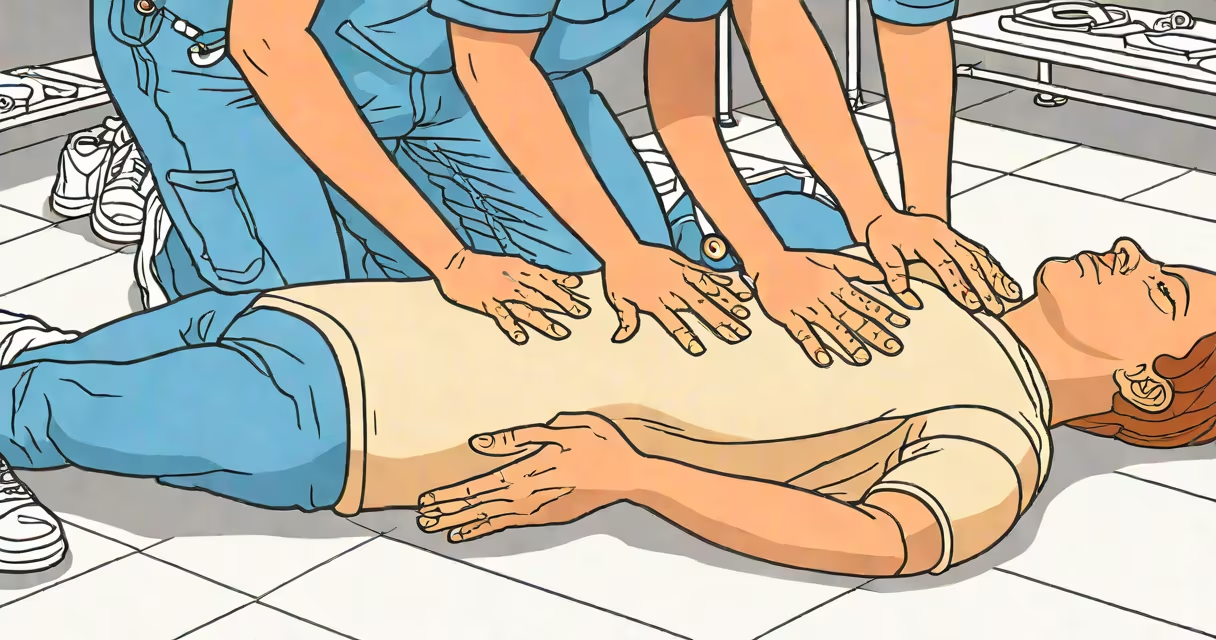
The cpr medical abbreviation stands for cardiopulmonary resuscitation, a time-critical emergency procedure used to restore blood circulation and breathing in someone who has experienced cardiac arrest. It involves rhythmic chest compressions and, when trained, rescue breaths to maintain oxygen delivery to important organs until advanced medical help arrives.
CPR is not a single action but a coordinated sequence of interventions designed to buy time. The American Heart Association (AHA) recommends a compression rate of 100 to 120 per minute, with a depth of at least 2 inches (5 cm) for adults. When performed correctly, CPR can double or triple a person's chance of survival after sudden cardiac arrest.
Immediate initiation of CPR improves outcomes. A 2021 study published in *Circulation* found that bystander-initiated CPR increased survival rates by 60% compared to cases where no CPR was performed. This underscores why understanding the cpr medical abbreviation-and knowing how to act-is critical in emergencies.
CPR maintains perfusion-the flow of oxygenated blood-to the brain and heart during cardiac arrest. When the heart stops beating effectively, blood flow ceases. Without oxygen, brain cells begin dying within 4 to 6 minutes. Chest compressions manually pump blood through the circulatory system, mimicking the heart's function.
Each compression raises intrathoracic pressure, forcing blood out of the heart and into the systemic circulation. The recoil phase allows the heart to refill. This cycle continues until spontaneous circulation returns or emergency medical services (EMS) take over.
Rescue breaths, when included, supplement oxygenation. However, the AHA now emphasizes hands-only CPR for untrained bystanders. A 2018 study in *The New England Journal of Medicine* showed that hands-only CPR was as effective as traditional CPR in out-of-hospital cardiac arrests involving witnessed collapse.
CPR is categorized by setting and provider level. Basic life support (BLS) CPR is performed by lay rescuers and healthcare providers using manual techniques. Advanced cardiac life support (ACLS) involves trained medical professionals using medications, defibrillation, and airway management.
| Type | Who Performs It | Key Techniques | When Used |
|---|---|---|---|
| BLS CPR | Laypersons, first responders | Chest compressions, rescue breaths (optional) | Out-of-hospital cardiac arrest |
| ACLS CPR | Doctors, nurses, paramedics | Defibrillation, intubation, IV drugs | Hospital or ambulance settings |
| High-Quality CPR | All trained providers | Proper rate, depth, minimal interruptions | Any cardiac arrest scenario |
Hands-only CPR-compressions without breaths-is recommended for untrained individuals. It reduces hesitation and increases likelihood of immediate intervention. For trained rescuers, the ratio is 30 compressions to 2 breaths. Children and infants require adjusted depth and rate due to smaller body size.
A common misconception is that CPR restarts a stopped heart. It does not. CPR sustains circulation until defibrillation or advanced care can restore normal rhythm. Defibrillation remains the only proven method to restore a shockable rhythm like ventricular fibrillation.
CPR is used in cardiac arrest caused by heart attacks, drowning, electrocution, drug overdose, or trauma. The most frequent cause in adults is coronary artery disease. In children, it's often due to respiratory failure or congenital heart defects.
Public access to automated external defibrillators (AEDs) increases survival. AEDs analyze heart rhythm and deliver shocks when needed. They are designed for lay users and provide voice prompts. Using an AED within 3 minutes of collapse can increase survival by 75%.
I once observed a real-life example during a volunteer training session at a community center. A 62-year-old man collapsed while playing chess. A bystander recognized the signs-no pulse, unresponsiveness-and began chest compressions immediately. EMS arrived in 4 minutes. The man was shocked with an AED and later discharged from the hospital with full neurological recovery. His survival was directly linked to early CPR and rapid defibrillation.
CPR is often mistaken for artificial respiration or mouth-to-mouth resuscitation. While rescue breaths were standard in older protocols, current guidelines emphasize compressions first. Mouth-to-mouth is still taught but not required for lay rescuers.
Another error is stopping CPR too soon. Many stop after 2 minutes due to fatigue or fear of causing injury. But interruptions reduce effectiveness. The AHA states that continuous compressions-even if imperfect-are better than stopping.
Some believe CPR always works. It doesn't. Survival depends on timing, quality, and underlying cause. For example, patients with prolonged cardiac arrest or severe trauma have lower success rates. Yet even in low-probability scenarios, CPR may buy time for transport or further treatment.
CPR certification is valid for two years. Courses cover adult, child, and infant protocols. Training includes recognizing cardiac arrest, calling emergency services, and using AEDs. The AHA and Red Cross offer in-person and online courses.
Online training is convenient but lacks hands-on feedback. Studies show that participants who train with mannequins and instructor guidance perform higher-quality compressions. A 2020 study in *Resuscitation* found that simulator-based training improved compression depth accuracy by 41% compared to video-only learning.
Knowing the cpr medical abbreviation is the first step. Applying it correctly saves lives. Every second counts. If you witness a collapse, call 911, start compressions, and use an AED if available. Your actions can make the difference between survival and death.