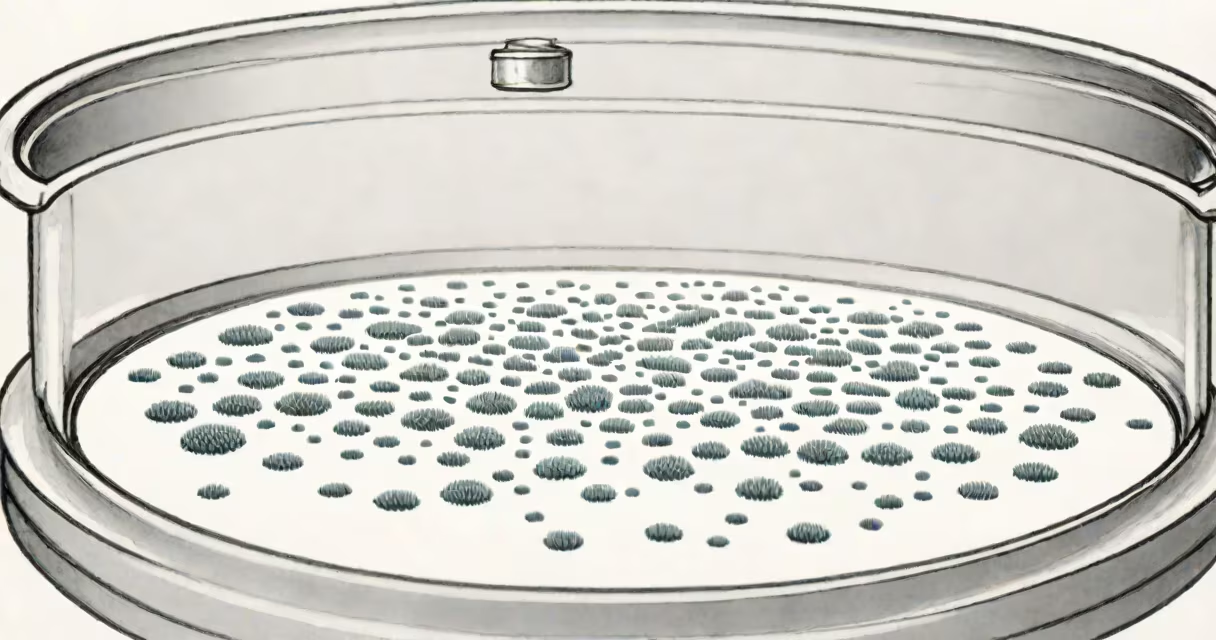
Culture microbiology definition describes the process of growing microorganisms such as bacteria, fungi, or viruses in a controlled environment using nutrient-rich media to observe growth, behavior, and characteristics. This method enables scientists to isolate, identify, and study microbes for diagnostic, research, and industrial purposes.
Microbial cultures begin with a sample-such as sputum, blood, or soil-and are transferred to a growth medium under sterile conditions. The medium provides nutrients, moisture, and optimal pH to support replication. After incubation at specific temperatures (e.g., 37°C for human pathogens), visible colonies form within 24-72 hours. These colonies are then analyzed through morphology, staining, and biochemical tests.
The core principle of culture microbiology lies in isolation and controlled growth. Without this, identifying a single pathogen among mixed microbes is impossible. For example, a urine sample from a patient with a suspected UTI may contain multiple bacterial species. Only by culturing it on selective media-like MacConkey agar, which inhibits Gram-positive organisms-can clinicians pinpoint Escherichia coli as the causative agent.
Each step in culture microbiology follows strict protocols to prevent contamination. The process begins with specimen collection using sterile swabs or tubes. Samples are transported quickly to maintain viability. Upon arrival, they undergo inoculation-the transfer of a small amount of material onto a solid or liquid medium.
For solid media, such as agar plates, the inoculum is spread evenly using a sterile loop. Liquid media, like broth, are inoculated via pipette. Incubation follows at precise temperatures and durations. Bacteria typically grow in 24 hours; fungi may take days. Environmental controls include CO₂ levels for fastidious organisms like Neisseria gonorrhoeae.
After growth, colonies are examined for size, color, shape, and texture. A typical E. coli colony appears as a shiny, green-tinged circle on MacConkey agar due to lactose fermentation. This visual cue guides further testing. Subculturing-transferring a colony to fresh medium-confirms purity and allows genetic or antibiotic susceptibility analysis.
Microbiologists select media based on the target organism's nutritional needs and growth preferences. The table below outlines common types:
| Type | Use Case | Example Organism | Key Feature |
|---|---|---|---|
| General-purpose agar | Initial screening | Bacteria, yeast | Supports broad growth; e.g., nutrient agar |
| Selective media | Isolate specific microbes | E. coli, Staphylococcus aureus | Contains inhibitors; e.g., MacConkey agar blocks Gram-positive growth |
| Differential media | Distinguish between similar species | Salmonella, Shigella | Changes color based on metabolic activity; e.g., blood agar shows hemolysis patterns |
| Enrichment media | Boost rare organisms | Legionella pneumophila | Contains nutrients to favor slow growers; e.g., buffered charcoal yeast extract (BCYE) |
Some media combine both functions. Blood agar, for instance, supports diverse growth while revealing hemolytic patterns-alpha (greenish), beta (clear), or gamma (no change)-which help differentiate Streptococcus species.
Culture microbiology remains central to clinical diagnosis. In a 2021 study published in *Clinical Microbiology Reviews*, researchers found that culture-based identification correctly diagnosed 89% of bloodstream infections when combined with molecular testing. This highlights that culture is not obsolete-it complements newer technologies.
In public health, cultures track outbreaks. During the 2015 Listeria outbreak linked to contaminated cantaloupe, CDC labs isolated the strain from patient samples and food products using selective media. This confirmed the source and enabled rapid recalls.
Industrial applications include vaccine development. The polio vaccine was grown in monkey kidney cells using culture techniques established in the 1950s. Today, cell cultures still produce viral vaccines, including those for influenza and HPV.
Many assume culture microbiology is outdated because of rapid PCR and mass spectrometry. But culture remains essential for antibiotic sensitivity testing. A 2022 report from the World Health Organization emphasized that resistance profiles derived from culture data remain the gold standard for guiding treatment.
Another misconception is that all microbes can be cultured. In reality, over 99% of environmental bacteria resist cultivation under standard lab conditions. These "unculturable" organisms were only recently studied using metagenomics-analyzing DNA directly from samples without growing them.
A critical but often overlooked point: contamination during culture can lead to false positives. A 2019 study in *Journal of Clinical Microbiology* found that 12% of reported positive blood cultures were actually due to skin contaminants like coagulase-negative staphylococci. Proper technique-especially sterile inoculation and handling-is important.
I once observed a student mislabel a culture plate during a teaching lab. They placed a swab from a throat sample onto a blood agar plate but failed to mark the time of inoculation. After 48 hours, a large, translucent colony appeared. The student assumed it was Group A Streptococcus, based on appearance. However, upon review, the colony showed no beta-hemolysis-ruling out S. pyogenes. Further testing revealed it was a contaminant from the lab bench.
This mistake underscores that culture results require context. Visual cues alone are insufficient. Correct identification demands additional steps: Gram staining, catalase test, and, when needed, automated systems like MALDI-TOF MS.
Culture microbiology is not synonymous with microbial detection. It is not the same as antigen testing or nucleic acid amplification. While PCR detects genetic material rapidly, culture confirms live organisms capable of causing disease. A positive PCR for MRSA in a nasal swab doesn't prove infection-only culture showing growth of methicillin-resistant Staphylococcus aureus does.
Also, culture microbiology does not replace genomic sequencing. Instead, it provides biological validation. When a new variant emerges, culture isolates allow functional testing-how well it spreads, how resistant it is to drugs. This integration of old and new methods strengthens scientific accuracy.