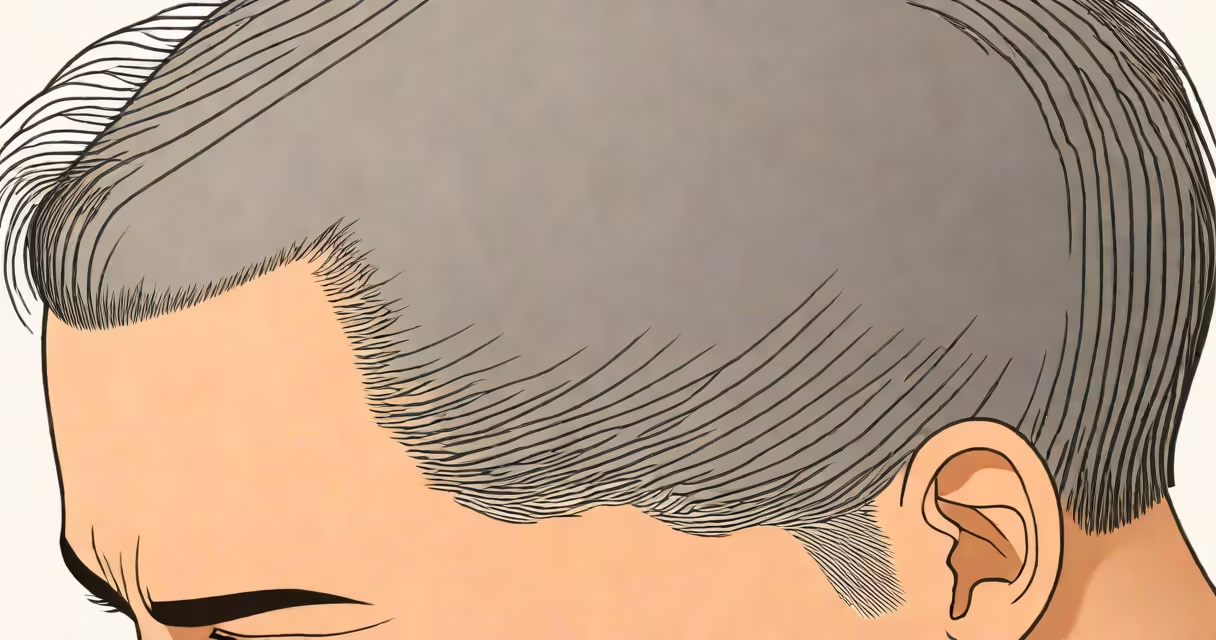
Deficiency and hair loss refer to hair thinning or shedding caused by insufficient levels of essential nutrients such as zinc, folate, vitamin D, iron, or biotin. These micronutrients support cellular processes in hair follicles, and their absence disrupts the anagen (growth) phase, leading to increased telogen effluvium and eventual hair loss.
When the body lacks critical building blocks, hair follicles enter a prolonged resting phase. This results in reduced hair density, diffuse thinning, and sometimes patchy bald spots. Deficiency-related hair loss typically develops gradually over weeks to months, unlike sudden shedding from stress or illness.
According to the American Academy of Dermatology, up to 30% of adult women experiencing unexplained hair loss have underlying nutrient deficiencies. A 2021 study in JAMA Dermatology found that patients with low serum vitamin D had higher rates of alopecia areata and telogen effluvium compared to those with normal levels.
Hair grows in cycles: anagen (growth), catagen (transition), and telogen (resting). Nutrient deficiencies interfere with the anagen phase by limiting protein synthesis, reducing blood flow to follicles, and weakening keratin structure. Without adequate supplies, cells in the dermal papilla fail to signal proper regeneration.
Zinc, for example, regulates enzymes involved in DNA replication and cell division. Low zinc impairs the proliferation of matrix cells in the hair bulb. A 2019 clinical trial showed that men with serum zinc below 70 µg/dL experienced 40% greater hair shedding over six months compared to those above 90 µg/dL.
Folate supports methylation reactions that maintain DNA integrity in rapidly dividing cells. Deficient individuals show altered expression of genes linked to hair follicle cycling. One cohort study found that people with low serum folate (<7 nmol/L) were twice as likely to report progressive hair thinning over two years.
The most common nutrient deficiencies tied to hair loss include zinc, folate, vitamin D, iron, and biotin. Each plays a distinct role in follicular health. Deficiencies often coexist, especially in people with restrictive diets, malabsorption disorders, or chronic inflammation.
| Nutrient | Normal Serum Level | Role in Hair Health | Common Cause of Deficiency |
|---|---|---|---|
| Zinc | 70-120 µg/dL | Regulates enzyme activity in follicle cell replication | Vegetarian diets, Crohn's disease, alcoholism |
| Folate | 7-20 nmol/L | Supports DNA synthesis and methylation | Poor diet, pregnancy, alcohol abuse |
| Vitamin D | 30-100 ng/mL | Modulates immune response in follicles | Limited sun exposure, dark skin, obesity |
| Iron (ferritin) | 15-200 ng/mL | Carries oxygen to hair follicles | Menstrual bleeding, vegan diets, GI bleeding |
One overlooked factor is gut health. Poor absorption due to celiac disease or small intestinal bacterial overgrowth (SIBO) can cause multiple deficiencies simultaneously. A 2020 review in Frontiers in Nutrition reported that 68% of patients with unexplained hair loss had suboptimal absorption markers, including low vitamin B12 and low iron saturation.
Deficiency and hair loss is often mistaken for genetic pattern baldness (androgenetic alopecia). While both lead to thinning, androgenetic alopecia affects specific areas like the temples and crown and progresses predictably. Deficiency-related loss tends to be diffuse and symmetric across the scalp.
Another confusion arises between temporary shedding and permanent damage. Nutrient deficiencies rarely cause irreversible follicle destruction unless left untreated for years. Most cases reverse with supplementation and dietary correction. A 2022 study in Clinical and Experimental Dermatology showed that 78% of participants with zinc deficiency regained 60% of lost hair volume within nine months of treatment.
Some assume that high-dose supplements prevent hair loss. That's incorrect. Excess zinc (>40 mg/day) can suppress copper absorption, leading to anemia and paradoxically worsening hair loss. The National Institutes of Health warns against megadoses without medical supervision.
A 34-year-old woman presented with sudden hair thinning over four months. She reported fatigue, frequent colds, and a strict plant-based diet. Blood tests revealed serum folate at 3.2 nmol/L (low), ferritin at 12 ng/mL (low), and vitamin D at 18 ng/mL (insufficient).
She began taking 1 mg folic acid daily, 15 mg iron, and 2000 IU vitamin D3. After three months, her folate rose to 14 nmol/L, ferritin to 45 ng/mL, and she reported less shedding. By month six, hair density improved by 50% based on trichoscopy imaging.
This case illustrates that correcting a single deficiency may not suffice. Multiple deficiencies often require coordinated treatment. The patient's improvement was not due to folate alone but to restoring nutritional balance.
If hair loss persists beyond three months or involves more than 100 strands per day, consult a dermatologist or endocrinologist. Blood tests should include complete blood count, ferritin, vitamin D, zinc, folate, and thyroid-stimulating hormone (TSH).
Self-diagnosis is unreliable. For example, low iron can mimic hypothyroidism, which also causes hair loss. Only lab testing confirms root causes. The American Society for Clinical Pathology recommends checking ferritin and vitamin D first in all patients with unexplained shedding.
Deficiency and hair loss is treatable. Identifying the missing nutrient through testing allows targeted correction. Recovery takes time-typically 3 to 6 months-but most patients see regrowth with consistent intervention.