Natural selection is the evolutionary mechanism by which traits that improve survival and reproduction become more common in successive generations of a population. It operates when individuals with certain heritable characteristics are more likely to survive and reproduce in a given environment, passing those traits to offspring. This process shapes species over time, leading to adaptation.
Charles Darwin and Alfred Russel Wallace independently proposed natural selection as the core explanation for how life diversifies. It is not random-it favors traits that improve an organism's fitness, defined as reproductive success relative to others in the population. Natural selection acts on variation within populations, favoring alleles that increase the likelihood of passing on genetic material.
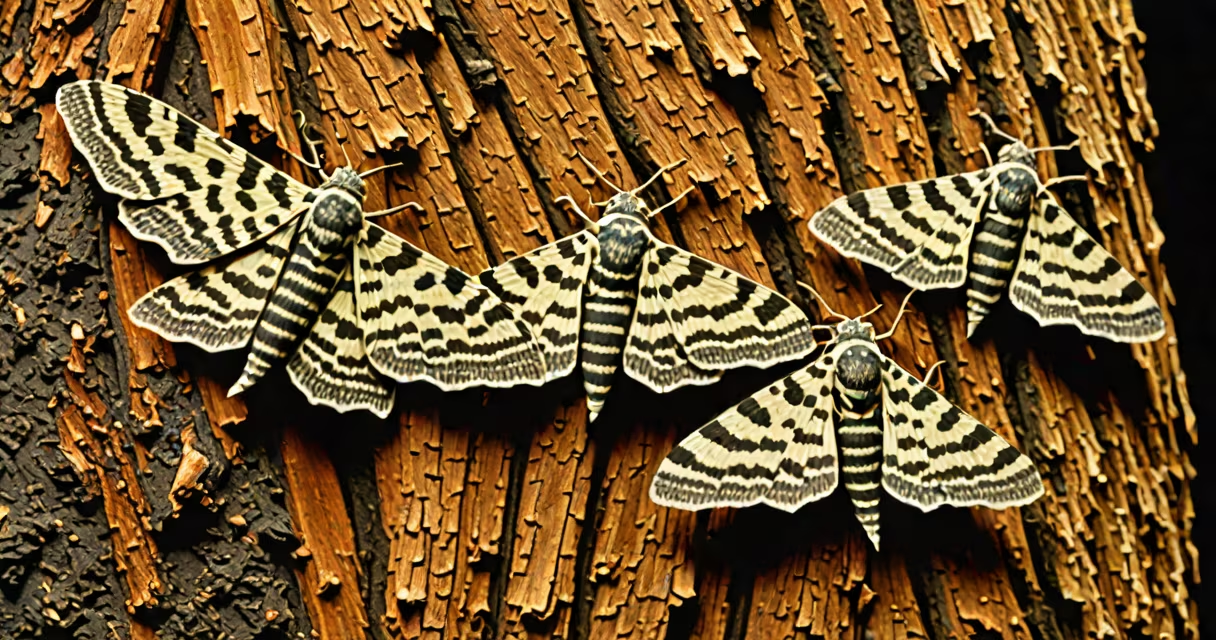
For example, during the Industrial Revolution in England, dark-colored peppered moths (Biston betularia) became more common than light-colored ones. Tree bark darkened due to soot, making light moths more visible to birds. Dark moths survived better and reproduced more, increasing the frequency of the dark allele. This shift was documented by scientists and remains a classic demonstration of natural selection in action.
Natural selection requires three conditions: variation in traits, heritability of those traits, and differential reproductive success based on trait differences. Without variation, there is nothing for selection to act upon. Without heritability, advantageous traits cannot be passed on. And without differences in survival or reproduction, selection cannot occur.
Consider a population of beetles with color variation-some green, some brown. If brown beetles blend better into soil and avoid bird predators, they are more likely to live long enough to mate. Their offspring inherit the brown color. Over generations, brown beetles dominate the population. This is not intentional-it is a consequence of environmental pressure acting on existing variation.
Selection can be directional (favoring one extreme), stabilizing (favoring intermediate forms), or disruptive (favoring both extremes). In humans, sickle cell anemia illustrates balancing selection: carriers of one sickle cell allele have resistance to malaria, giving them a survival advantage in malarial regions. This maintains the harmful allele in the population because heterozygotes are more fit than either homozygote.
While the term "natural selection" refers to the process, different patterns emerge depending on environmental pressures. These patterns describe how selection alters trait distributions over time.
| Type | Description | Example |
|---|---|---|
| Directional | Favors one extreme of a trait distribution | Antibiotic resistance in bacteria after drug exposure |
| Stabilizing | Favors intermediate phenotypes | Baby birth weight: very low or high weights reduce survival |
| Disruptive | Favors both extremes over intermediates | Beak size in finches during drought-small and large beaks outperform medium-sized ones |
A common misconception is that natural selection leads to "perfect" organisms. It does not. Selection improves fitness in current environments, not future ones. Traits persist if they work well enough under present conditions-not because they are optimal. A giraffe's long neck evolved not for elegance, but because it allowed access to higher foliage during food shortages.
Another misunderstanding is equating natural selection with evolution. Evolution is the change in allele frequencies over time. Natural selection is one mechanism that causes evolution. Other mechanisms include genetic drift, gene flow, and mutation. Natural selection is unique because it is non-random and adaptive.
"Survival of the fittest" is often misattributed to Darwin. He never used the phrase. Herbert Spencer coined it, and Darwin later adopted it in later editions of *On the Origin of Species*. But "fitness" in evolutionary biology means reproductive success, not physical strength. A small, slow lizard that avoids predators and mates successfully has higher fitness than a fast one that dies young.
Many assume natural selection implies progress toward complexity. But simpler organisms like bacteria thrive in diverse environments. Natural selection favors traits that increase survival and reproduction, regardless of complexity. A parasite that lives inside a host and reproduces rapidly may be more successful than a complex predator.
Genetic variation is essential. Without it, selection cannot act. Mutation introduces new variation, but most mutations are neutral or harmful. Beneficial mutations are rare but can spread quickly if they confer a reproductive advantage. For example, a single mutation in the CCR5 gene provides resistance to HIV and is found at higher frequency in populations historically exposed to plague.
Scientists have documented natural selection in real time. Peter and Rosemary Grant studied Galápagos finches on Daphne Major Island between 1973 and 2012. During a severe drought, larger-beaked birds had better success cracking tough seeds. After the drought, average beak size increased in the population-a measurable shift driven by selection.
Antibiotic resistance in bacteria is another direct observation. When antibiotics are applied, susceptible strains die. Resistant mutants survive and reproduce. Within years, resistant strains dominate. This is not speculation-it is recorded in clinical microbiology reports and hospital infection data.
I once observed natural selection while hiking in the Rocky Mountains. A patch of alpine flowers grew near a snowfield. Some plants had shorter stems and compact growth forms. Others were taller and more upright. In spring, snowmelt caused wind and ice abrasion. The shorter plants survived better. By summer, the population showed reduced height variation-selection had acted.
According to the National Center for Science Education, natural selection is supported by fossil records, biogeography, comparative anatomy, and molecular genetics. The human genome shares ~98.8% sequence identity with chimpanzees, consistent with shared ancestry and gradual divergence via selection. Fossil sequences show transitional forms, such as Tiktaalik, a fish with limb-like fins, bridging aquatic and terrestrial vertebrate evolution.