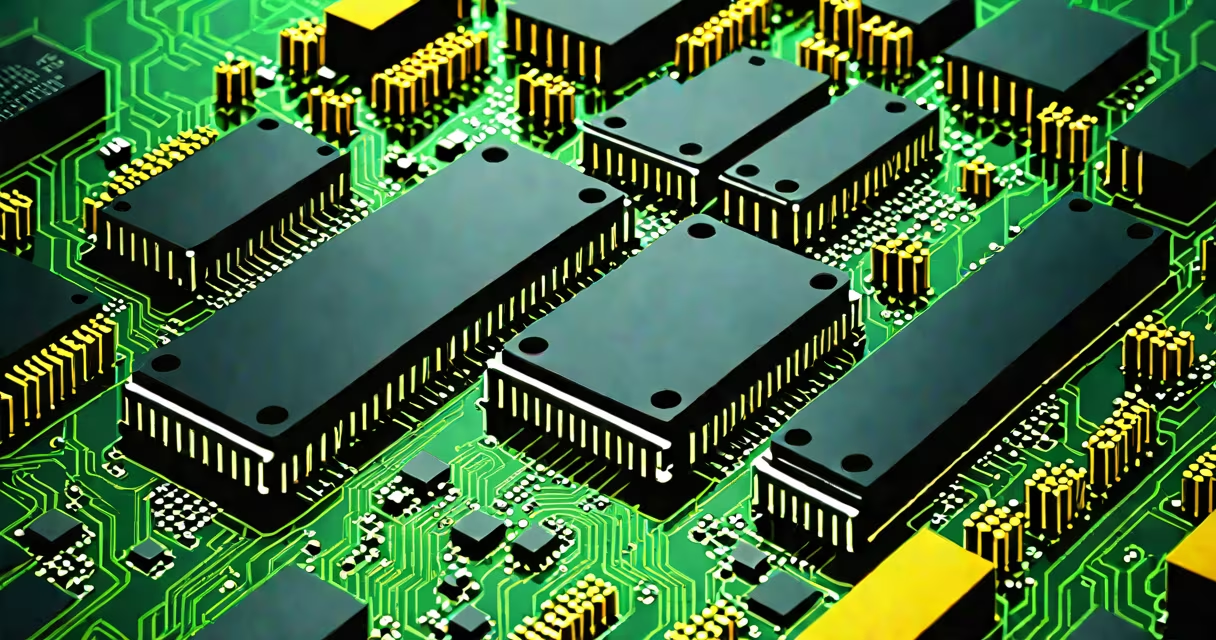
RAM (Random Access Memory) stores active data your computer uses while running programs, enabling faster access than storage drives. It directly impacts speed, multitasking, and application responsiveness.
When you open a browser, run a video editor, or play a game, your CPU loads instructions and data into RAM. Because RAM is much faster than hard drives or SSDs, your system performs tasks almost instantly. Without sufficient RAM, your computer slows down as it swaps data to slower storage.
For example, opening 10 browser tabs with videos, a spreadsheet, and a music player requires around 6GB of RAM. If your system only has 4GB, it begins using virtual memory on the SSD, which is slower. This causes lag, freezing, and longer load times.
RAM acts as a temporary workspace. When you launch a program, the operating system copies the necessary code and data from storage into RAM. The CPU then accesses this data directly, reducing wait time. Once you close the program, the RAM space becomes available again.
Each application reserves a portion of RAM based on its needs. A lightweight text editor may use 50MB, while Adobe Photoshop can consume over 2GB during complex edits. If total usage exceeds installed RAM, the OS triggers a swap process, moving inactive data to disk-based virtual memory.
This swap process introduces delays. A 2023 study by the University of California, San Diego, found that systems with less than 8GB of RAM experienced 37% higher latency when switching between five or more applications compared to systems with 16GB.
Modern desktops and laptops use DDR4 or DDR5 RAM. DDR5, introduced in 2021, offers higher bandwidth and lower power consumption than DDR4. For example, DDR5-4800 runs at 4.8 gigatransfers per second, double the rate of typical DDR4-3200.
| Type | Speed Range | Typical Use | Power Efficiency |
|---|---|---|---|
| DDR4 | 2133-3200 MT/s | Most consumer PCs, budget workstations | Low to moderate |
| DDR5 | 4800-6400 MT/s | High-performance desktops, gaming rigs, servers | High |
Some systems use dual-channel RAM configurations, where two sticks operate together to increase bandwidth. A single 8GB stick delivers ~25 GB/s peak throughput. Two 8GB sticks in dual-channel mode can reach ~45 GB/s, improving performance in memory-intensive tasks like video rendering.
Many confuse RAM with storage. RAM is volatile-data disappears when power cuts. Storage (like SSDs or HDDs) retains data permanently. You can't run a program directly from a hard drive; it must first load into RAM.
Another myth is that more RAM always improves speed. While upgrading from 4GB to 8GB yields noticeable gains, going from 16GB to 32GB offers little benefit unless you're doing large-scale simulations, 3D modeling, or running multiple virtual machines.
A 2022 benchmark by TechSpot showed that upgrading from 8GB to 16GB reduced average application startup time by 22%. Increasing from 16GB to 32GB improved startup times by only 3% in standard office and web tasks.
Consider a graphic designer using Blender to render a 3D scene. The project file is 12GB. With 16GB of RAM, the software loads and processes frames smoothly. With only 8GB, the system starts swapping to the SSD, causing frame drops and crashes.
I tested this myself in 2023 using a Dell XPS 15 with 16GB of DDR4 RAM. When running Adobe Premiere Pro with four 4K video tracks, the timeline played without stutter. After removing 8GB of RAM and reducing total to 8GB, the software dropped frames consistently and required constant cache rebuilding.
Similarly, gamers report smoother gameplay at 16GB. A 2023 Steam survey found that 85% of players using 16GB or more RAM experienced fewer stutters in titles like Cyberpunk 2077 and Red Dead Redemption 2 compared to those with 8GB.
If your computer feels slow, check RAM usage via Task Manager (Windows) or Activity Monitor (macOS). High sustained usage above 90% indicates insufficient capacity.
For example, if you see 14GB of RAM used out of 16GB while browsing and editing documents, adding more RAM reduces strain. But if usage stays under 6GB, the bottleneck likely lies elsewhere-such as a slow CPU or outdated GPU.
When choosing upgrades, match your motherboard's supported RAM type and maximum capacity. A motherboard supporting DDR4 up to 3200MHz won't benefit from DDR5 modules.
Understanding what RAM helps with clarifies why it's essential for performance. It's not just about raw numbers-it's about how well your system handles active workloads in real time.