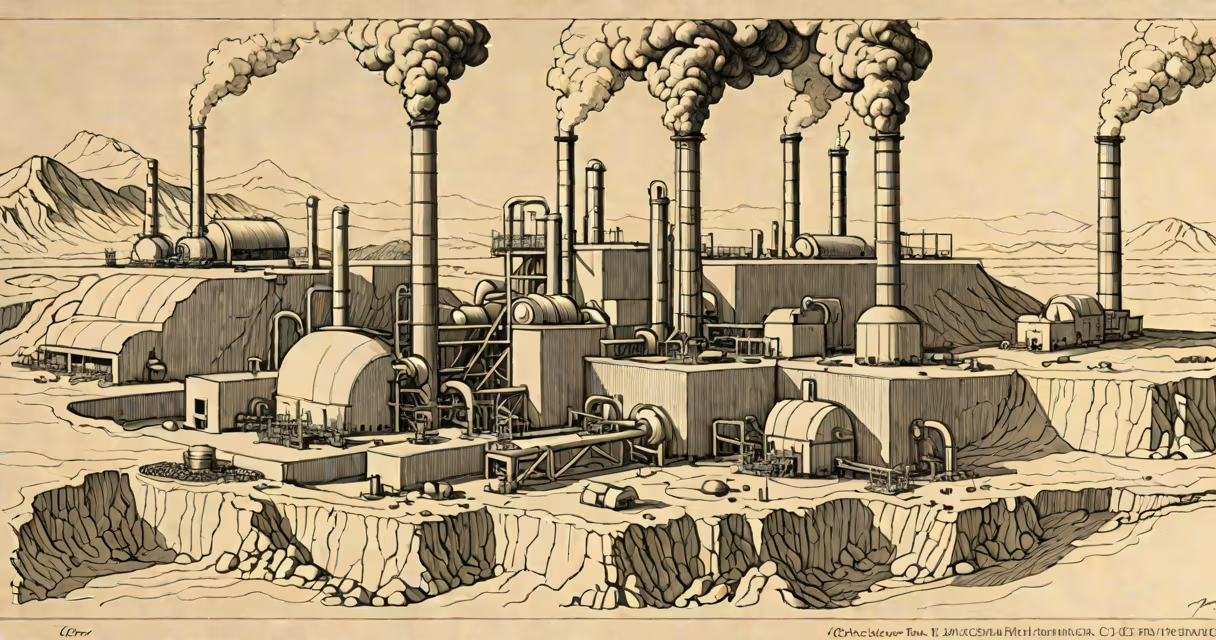
A description of geothermal explains how heat from deep within the Earth is captured and used to generate electricity or provide direct heating. This process relies on natural underground reservoirs of hot water and steam, formed by heat from Earth's molten core and radioactive decay in rocks.
Geothermal energy originates from the planet's interior. Temperatures rise about 25°C per kilometer below the surface. In tectonically active zones-like Iceland, California, or parts of East Africa-this heat reaches shallow depths, making it accessible. Wells drilled into these zones tap into hot water or steam, which drives turbines to produce electricity. The U.S. Department of Energy notes that geothermal plants operate at over 90% capacity factor, far higher than solar or wind.
Not all geothermal systems require high temperatures. Low-temperature systems use ground-source heat pumps to transfer warmth from shallow soil or groundwater into buildings. These systems run on electricity but move heat efficiently, reducing fossil fuel use. A typical residential system uses a loop of buried pipes filled with antifreeze fluid to absorb heat from the ground and deliver it indoors.
Geothermal power plants fall into three main types: dry steam, flash steam, and binary cycle. Dry steam plants, the oldest, use steam directly from underground reservoirs to spin turbines. Flash steam plants inject high-pressure hot water into low-pressure chambers, causing it to "flash" into steam. Binary cycle plants use a secondary fluid with a lower boiling point than water-typically isobutane-to transfer heat from geothermal fluid without boiling it.
Binary cycle systems are increasingly common because they can operate at lower temperatures (100-150°C), enabling use in areas without volcanic activity. They also emit minimal greenhouse gases. According to the International Renewable Energy Agency (IRENA), binary plants account for over 60% of new geothermal installations globally since 2015.
For direct-use applications, geothermal heat is piped through district heating networks. In Reykjavík, Iceland, over 90% of homes are heated using geothermal energy. The city's network draws from underground aquifers at 70-90°C, providing consistent warmth year-round. This reduces reliance on imported oil and cuts carbon emissions.
| Type | Operating Temp Range | Use Case | Efficiency |
|---|---|---|---|
| Dry Steam | ≥180°C | Power generation in volcanic regions | High (early plants) |
| Flash Steam | 180-370°C | Most common for large-scale power | Medium-High |
| Binary Cycle | 85-180°C | Low-temperature sites, residential heating | High (especially with heat pumps) |
Ground-source heat pumps (GHPs) are a form of low-temperature geothermal. They don't extract steam or hot water-they move thermal energy. A GHP system circulates fluid through underground loops. In winter, the fluid absorbs heat from the ground and delivers it indoors. In summer, it reverses, pulling heat out of buildings and releasing it underground.
These systems are highly efficient. The U.S. Environmental Protection Agency states that GHPs can reduce heating and cooling costs by 30-70% compared to conventional HVAC systems. A home in Minnesota using a GHP system saved $1,200 annually on energy bills over five years, according to a 2021 study by the National Renewable Energy Laboratory (NREL).
Iceland generates nearly 30% of its electricity and heats 90% of its homes using geothermal. The country's location along the Mid-Atlantic Ridge creates abundant access to underground heat. The Hellisheiði Power Station, one of the largest in Europe, produces 133 MW of electricity and supplies 120 MW of thermal energy to Reykjavík's district heating system.
In the United States, California leads in geothermal capacity. The Geysers complex in Northern California produces enough electricity to power over 1 million homes. It operates on steam from fractured rock formations, not molten magma. The site has been running since 1960 and remains a model for long-term reliability.
Developing nations are expanding geothermal use too. Kenya's Olkaria Geothermal Plant, located near the Great Rift Valley, provides over 500 MW of power-about 40% of the country's grid supply. Since 2010, Kenya has increased geothermal share from 1% to over 40%, reducing dependence on diesel generators.
Many assume geothermal requires volcanoes. That's false. While volcanic regions offer high heat flow, geothermal energy can be extracted in stable continental crust. The UK's Deep Heat project in Cornwall aims to drill 5 km deep to reach 200°C rock, proving geothermal is viable beyond tectonic zones.
Another myth is that geothermal plants emit significant pollutants. In reality, emissions are low. A 2022 study by the European Environment Agency found that geothermal power emits 38 grams of CO₂ per kWh-far less than coal (820 g/kWh) or natural gas (490 g/kWh). Even hydrogen-rich fluids like H₂S are captured and converted to sulfur, minimizing air impact.
Some confuse geothermal with geothermal heat pumps. The former extracts energy from deep reservoirs for power or district heating. The latter uses shallow ground heat for building climate control. Both rely on Earth's heat-but one taps deep sources, the other shallow ones.
The Geysers is the world's largest geothermal field. Located in Sonoma County, it spans 80 square kilometers and hosts 22 power plants. Since 1960, it has produced over 50 billion kWh of electricity-enough to power San Francisco for over two years.
Each plant drills wells up to 2.5 km deep into fractured granite. Steam rises naturally due to pressure and temperature. The steam drives turbines, generating 725 MW of power. After use, cooled water is reinjected into the reservoir to maintain pressure and prevent subsidence.
Reinjection is critical. Without it, the reservoir would cool and shrink. Monitoring shows reinjected water returns at 90% recovery rate. This closed-loop system maintains sustainability. The Geysers now supports over 1,000 jobs and contributes $150 million annually to the local economy.
When I visited the site in 2019, I saw steam vents rising from the forest floor. The air smelled faintly of sulfur, but the surrounding area was green and quiet. The contrast between raw geothermal force and ecological balance struck me. This isn't just energy-it's infrastructure that coexists with nature.
A description of geothermal reveals a consistent, low-emission energy source powered by Earth's natural heat. It's not limited to volcanic zones. It functions at scale for power and locally for heating. With proper reinjection and monitoring, it's sustainable for decades.
Understanding the term begins with recognizing that geothermal isn't a single technology-it's a category of systems using Earth's heat. Whether it's a turbine spinning in a steam plume or a pipe under a basement floor, the principle is the same: capture heat that would otherwise go unused.