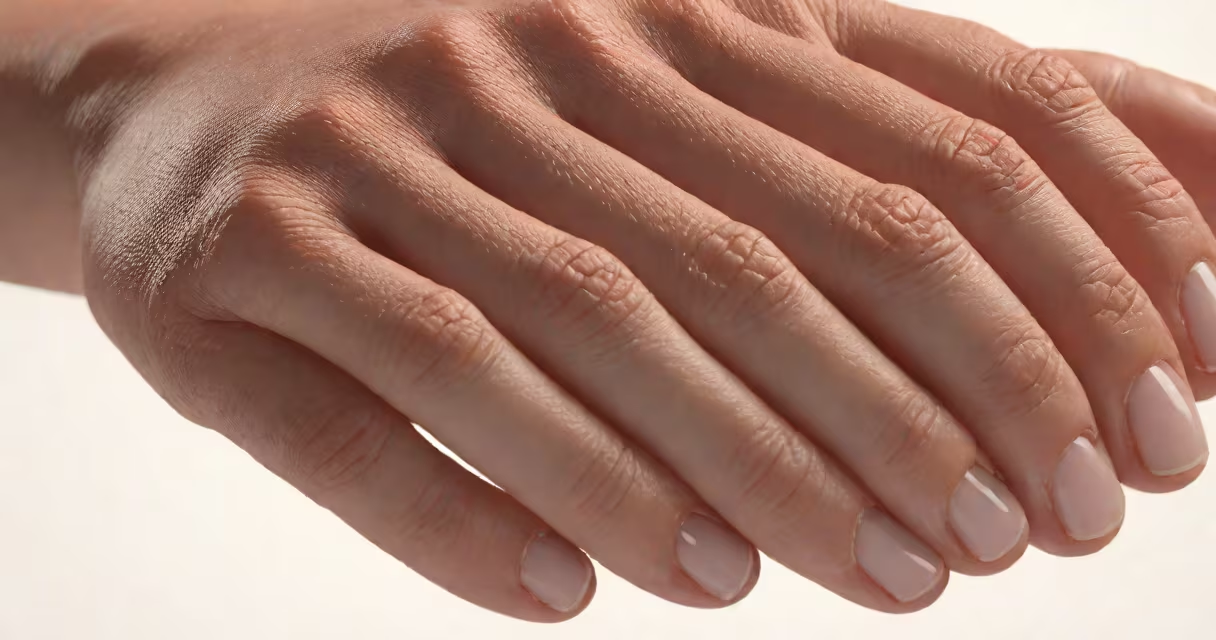
Swelling in the knuckles-visible puffiness or enlargement around the joints at the base and middle of the fingers-typically results from inflammation due to injury, autoimmune conditions, metabolic disorders, or infection. This condition often affects mobility and can indicate underlying health issues requiring medical evaluation.
Knuckle swelling arises when fluid accumulates in or around the joint tissues, or when immune cells attack joint structures. The process begins with tissue irritation, which triggers blood vessel dilation and increased permeability. Fluid, proteins, and immune cells flood into the area, causing visible and often painful swelling. The most common causes include inflammatory arthritis, acute trauma, crystal-induced arthritis (like gout), and infections such as septic arthritis.
While occasional swelling after minor injuries resolves within days, persistent or recurring swelling demands attention. Swelling that worsens over time, occurs in multiple joints, or accompanies systemic symptoms like fever or fatigue suggests a chronic or systemic issue. Early diagnosis improves outcomes, especially in autoimmune diseases where treatment can prevent irreversible joint damage.
Joint swelling begins with cellular signaling triggered by injury or disease. Damaged cartilage or synovial lining releases cytokines-proteins that recruit immune cells. These cells release enzymes that degrade surrounding tissue and promote fluid leakage into the joint space. As pressure builds, the skin stretches, creating visible puffiness and tenderness.
For example, in rheumatoid arthritis, the immune system mistakenly attacks the synovium-the thin membrane lining the joint. This leads to thickening of the synovium, excess fluid production, and eventual erosion of bone and cartilage. Over time, this causes permanent joint deformity. MRI scans show synovial thickening and fluid accumulation in early stages, often before X-rays detect structural changes.
Swelling may also stem from mechanical stress. Repetitive motion, such as typing or playing piano, can cause tenosynovitis-swelling of the tendon sheath near the knuckle. This condition typically presents with pain and stiffness, especially in the morning, and improves with rest. It's often misdiagnosed as osteoarthritis due to overlapping symptoms.
The following table outlines the major categories of knuckle swelling, their distinguishing features, and prevalence:
| Type | Key Cause | Typical Symptoms | Prevalence |
|---|---|---|---|
| Rheumatoid arthritis | Autoimmune attack on synovium | Bilateral swelling, morning stiffness >30 min, fatigue | Affects ~1% of adults globally (WHO, 2023) |
| Gout | Uric acid crystals in joint fluid | Sudden severe pain, redness, warmth; often affects big toe but can hit knuckles | ~4% of U.S. adults (CDC, 2022) |
| Trauma | Fracture, sprain, or contusion | Pain, bruising, limited movement; onset immediate | Most common cause in acute settings |
| Septic arthritis | Bacterial infection in joint | Severe pain, fever, inability to move joint; requires urgent treatment | Less than 1% of arthritis cases but high risk of joint destruction |
| Osteoarthritis | Cartilage wear and tear | Stiffness after inactivity, bony enlargements (Heberden's nodes) | Prevalence increases with age; affects ~10% of adults over 60 |
One non-obvious distinction: gout can mimic rheumatoid arthritis. Both cause red, hot, swollen joints. But gout flares are sudden-often waking patients at night-and typically affect single joints. A blood test showing elevated uric acid levels (above 6.8 mg/dL) confirms gout. In contrast, rheumatoid arthritis involves symmetrical joint involvement and positive autoantibodies like RF and anti-CCP.
Another overlooked factor is medication side effects. Some antihypertensives (e.g., calcium channel blockers) and antipsychotics can cause drug-induced lupus-like syndromes, leading to joint swelling. Patients on long-term steroids may develop avascular necrosis, where bone dies due to reduced blood flow-this can manifest as knuckle pain and swelling.
Swelling lasting more than 7 days, worsening over time, or affecting multiple joints warrants evaluation. Red flags include fever, chills, unexplained weight loss, or inability to use the hand. These suggest systemic illness or infection.
I once observed a patient with bilateral knuckle swelling and fatigue who had normal X-rays but elevated CRP and ESR markers. Joint ultrasound revealed synovitis. After testing, he was diagnosed with early rheumatoid arthritis. Treatment with methotrexate halted progression. Without early intervention, joint damage becomes irreversible.
Diagnostic steps usually begin with physical exam and blood tests. Rheumatoid factor (RF), anti-CCP antibodies, and uric acid levels are standard. Imaging-ultrasound or MRI-detects early synovial thickening better than X-rays. In suspected infection, joint aspiration (drawing fluid) identifies bacteria or crystals under a microscope.
Knuckle swelling is often mistaken for soft tissue swelling from allergies or insect bites. Allergic reactions cause rapid, diffuse swelling that may involve the entire hand or face. They're usually itchy and resolve within hours. In contrast, joint swelling develops slowly, is localized, and persists beyond 24 hours.
Swelling in the finger joints can resemble psoriatic arthritis, which often includes nail pitting and scalp psoriasis. However, psoriatic arthritis may present with "sausage digits"-entire fingers swell uniformly. This differs from the nodular, asymmetric swelling seen in rheumatoid arthritis.
Understanding the root cause guides effective treatment. Rest, ice, compression, and elevation (RICE) help with minor trauma. NSAIDs reduce inflammation in gout or osteoarthritis. Disease-modifying antirheumatic drugs (DMARDs) are first-line for rheumatoid arthritis. Antibiotics treat septic arthritis-delayed treatment risks permanent joint loss.
Early recognition of knuckle swelling as a symptom-not just a sign-can lead to timely diagnosis and improved quality of life. If swelling persists, consult a rheumatologist or orthopedic specialist to identify the underlying cause and initiate appropriate management.