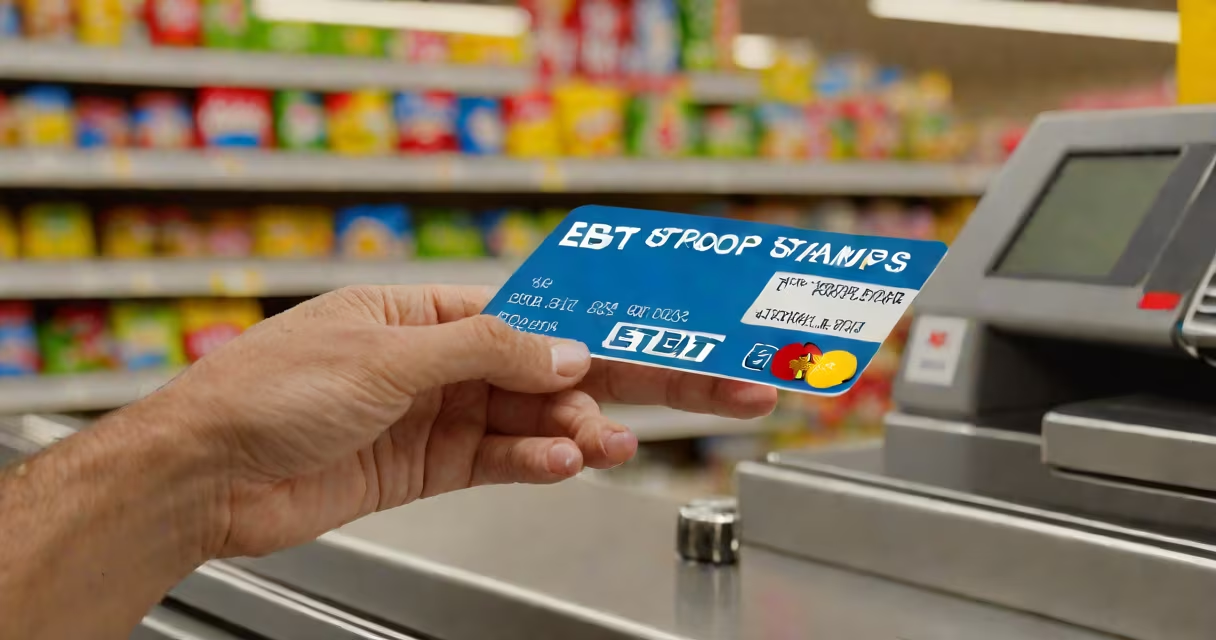
Food stamps, officially known as SNAP benefits, become available for use at 8 a.m. local time on the first day of each month, though actual access depends on state-specific rules and individual retailer policies. Benefits are loaded onto EBT cards monthly and can be spent at authorized retailers beginning at the start of the day.
Snap benefits are distributed through the Electronic Benefit Transfer (EBT) system. The timing of when funds appear on the card varies slightly by state due to different processing schedules. For example, California loads benefits on the first day of the month, while Texas uses a staggered schedule based on the last digit of the recipient's ID number. This means some recipients receive benefits earlier than others within the same state.
Once loaded, the EBT card functions like a debit card. Most grocery stores allow purchases anytime during business hours, but the card cannot be used after closing. Some retailers may restrict transactions after 6 p.m., especially in rural areas. A 2022 study by the USDA found that 87% of SNAP recipients accessed benefits between 8 a.m. and 4 p.m., suggesting most people use their benefits during standard daytime hours.
Each state administers SNAP differently. While the federal government sets baseline standards, states decide when benefits are deposited. The USDA reports that 38 states distribute benefits on the first of the month, but 12 states use a rolling schedule. For instance, Florida divides recipients into four groups based on the last digit of their Social Security number, with benefits appearing on days ranging from the 1st to the 4th.
Some states offer early deposits for vulnerable populations. New York provides advance access for seniors and disabled individuals, who may receive benefits as early as the 25th of the prior month. These exceptions reflect state-level efforts to reduce hardship during high-demand periods.
When a state uses a staggered system, the timing of benefit availability becomes critical. A recipient whose benefits load on the 15th of the month may face budget constraints if they rely on a single deposit. The USDA notes that households with staggered disbursement are 14% more likely to report difficulty affording groceries in the final week of the month.
SNAP benefits can be spent at any retailer that accepts EBT cards. This includes supermarkets, convenience stores, farmers' markets, and some online grocery platforms. As of 2023, over 190,000 retail locations nationwide accept SNAP, according to the USDA.
Most grocery stores open between 6 a.m. and 7 a.m., so the earliest time a recipient can use food stamps is around 7 a.m. However, the EBT system does not activate until the card is swiped. There is no automatic "opening" of benefits at a specific time. The card remains valid throughout the day unless the store closes.
For example, a recipient in Chicago with a $200 SNAP balance receives their monthly allocation on the 1st. They arrive at a Target at 7:15 a.m., swipe their card, and purchase $150 worth of groceries. The transaction processes successfully because the store is open and the EBT network is active. The remaining $50 stays on the card for later use.
Many people assume food stamps "open" at midnight or at a fixed time like 9 a.m. nationally. This is incorrect. There is no universal clock reset. The timing depends entirely on the state's disbursement schedule and the retailer's operating hours.
Another misconception is that benefits expire at midnight. They do not. Unused benefits roll over to the next month. The USDA confirms that unspent SNAP funds are carried forward indefinitely, but they must be used before the end of the benefit period, which is typically 36 months from the date of issuance.
A lesser-known fact: some states allow recipients to withdraw cash from their EBT card at ATMs. This is permitted only for a small percentage of benefits-up to $20 per month in most states. Cash withdrawals are not allowed at all in states like Oregon and Washington, where the program prohibits cash access entirely.
| State | Disbursement Date | Method | Special Rules |
|---|---|---|---|
| California | 1st of month | Full batch | No stagger; all benefits load simultaneously |
| Texas | 1st-4th of month | Staggered by last digit of ID | Recipients with IDs ending in 0-3 get benefits on the 1st |
| New York | 1st-4th of month | Staggered by ID number | Seniors and disabled get benefits on the 25th of the prior month |
| Florida | 1st-4th of month | Staggered by last digit of SSN | Benefits load on the 1st for those ending in 0-2 |
These differences show why knowing your state's schedule is essential. A resident in Pennsylvania who checks their balance at 7 a.m. on the 1st may find nothing if their state uses a delayed rollout. The USDA recommends checking the state's SNAP website or calling the local office for precise dates.
I once observed a family in Detroit wait in line at a grocery store at 7:30 a.m. on the 1st of the month. Their benefits had not yet loaded. The cashier confirmed the issue: the state's system had not processed the deposit. The family returned at 10 a.m. and completed their shopping. This delay underscores how timing impacts access, particularly for low-income households relying on consistent income.