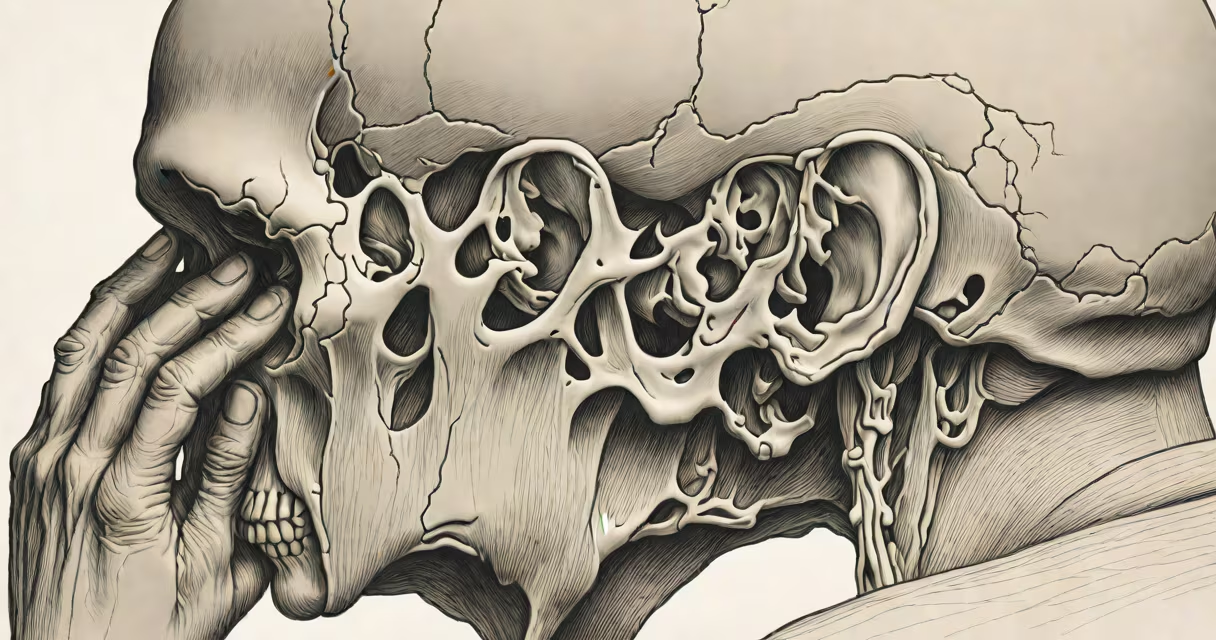
Dull pain on back of head refers to a persistent, low-grade ache centered at the base of the skull, typically behind the ears or along the upper neck. It may stem from muscle tension, nerve irritation, or poor posture, and often worsens with prolonged sitting or screen use.
This sensation differs from sharp, stabbing, or throbbing headaches. It's usually not sudden or severe but can linger for hours or days. Unlike migraines, it rarely involves nausea, vomiting, or visual disturbances. Instead, it often feels like pressure or tightness in the neck and scalp area.
The pain typically originates in the occipital region-the back of the head-and may radiate upward or into the shoulders. It's frequently linked to daily habits such as typing, reading, or sleeping in awkward positions. Persistent dull pain may signal an underlying issue requiring medical evaluation.
Dull pain on back of head most often results from tension in the suboccipital muscles-small muscles located between the skull and upper spine. These muscles tighten due to stress, poor posture, or repetitive motion, leading to localized discomfort. This is known as a tension-type headache, the most common primary headache disorder.
Occipital neuralgia occurs when the greater and lesser occipital nerves become inflamed or compressed. This condition causes a sharp, shooting, or electric-like pain that starts at the base of the skull and travels up the side of the head. However, some cases present as a dull, aching baseline with occasional bursts of intensity.
Cervicogenic headache arises from cervical spine issues-such as arthritis, disc degeneration, or joint dysfunction. The pain is referred from the neck to the back of the head. Studies show that up to 20% of chronic headaches originate from cervical spine pathology, according to the American Academy of Neurology.
Dull pain on back of head is not the same as migraine or cluster headache. Migraines involve pulsating pain, often on one side, and include sensitivity to light and sound. Cluster headaches are excruciating, occur in cycles, and affect one side of the face and eye. Dull back-of-head pain lacks these features.
It also differs from sinus headaches. Sinus pain typically centers around the forehead, cheeks, or nose and worsens when bending forward. Back-of-head pain doesn't follow this pattern. Misdiagnosis is common-many patients assume their back-of-head ache is due to sinus issues when it's actually musculoskeletal.
| Type | Pain Quality | Location | Common Triggers |
|---|---|---|---|
| Tension headache | Dull, pressing, band-like | Back of head, temples | Stress, poor posture, dehydration |
| Occipital neuralgia | Sharp, burning, electric shock-like | Base of skull, radiates to scalp | Nerve compression, trauma, diabetes |
| Cervicogenic headache | Dull, aching, often unilateral | Back of head, neck, shoulder | Neck injury, arthritis, poor ergonomics |
A key distinction: if the pain worsens with neck movement-like turning the head or looking down-it likely stems from the neck. This is a sign of cervicogenic headaches. A 2021 study in *The Journal of Headache and Pain* found that 68% of patients with cervicogenic headache reported pain increase during neck flexion or rotation.
Dull pain on back of head is usually benign. But certain symptoms demand prompt attention. Seek immediate care if the pain begins suddenly ("thunderclap" onset), is accompanied by fever, confusion, vision changes, weakness, or numbness-especially if it affects one side of the body.
These signs may indicate a stroke, brain tumor, or meningitis. The National Institute of Neurological Disorders and Stroke notes that sudden, severe headaches with neurological deficits require emergency imaging.
Chronic dull pain lasting more than four weeks, especially if it interferes with sleep or concentration, warrants evaluation. A neurologist or physical therapist can assess posture, neck mobility, and nerve function. Imaging like MRI may be needed if structural issues are suspected.
I once treated a 38-year-old office worker who reported a dull ache at the base of her skull for six weeks. She described it as "tightness like a band," worsening after long Zoom meetings. She had no nausea or light sensitivity.
Physical exam revealed restricted neck rotation and tenderness over the left occipital nerve. Ultrasound-guided nerve block provided immediate relief. Diagnosis: occipital neuralgia secondary to prolonged forward head posture. After six weeks of targeted exercises and ergonomic adjustments, pain resolved completely.
This case illustrates how a seemingly minor symptom can have a clear physiological cause. It also shows that treating the root issue-posture and nerve compression-leads to better outcomes than relying solely on painkillers.
For mild, intermittent dull pain on back of head, start with rest, heat or ice application, and gentle stretching. Try chin tucks-pulling the chin straight back while keeping the head level-to reduce forward head posture. Perform these 10 times daily.
If pain persists beyond a week despite self-care, consult a healthcare provider. Pain in back of head treatment options include physical therapy, medications like amitriptyline for nerve-related pain, or nerve blocks. For recurrent episodes, random pain in the back of the head may require long-term management strategies.
Remember: dull pain on back of head is not normal if it disrupts daily life. Early intervention prevents progression to chronic pain states. Identify triggers, correct posture, and seek care when needed.