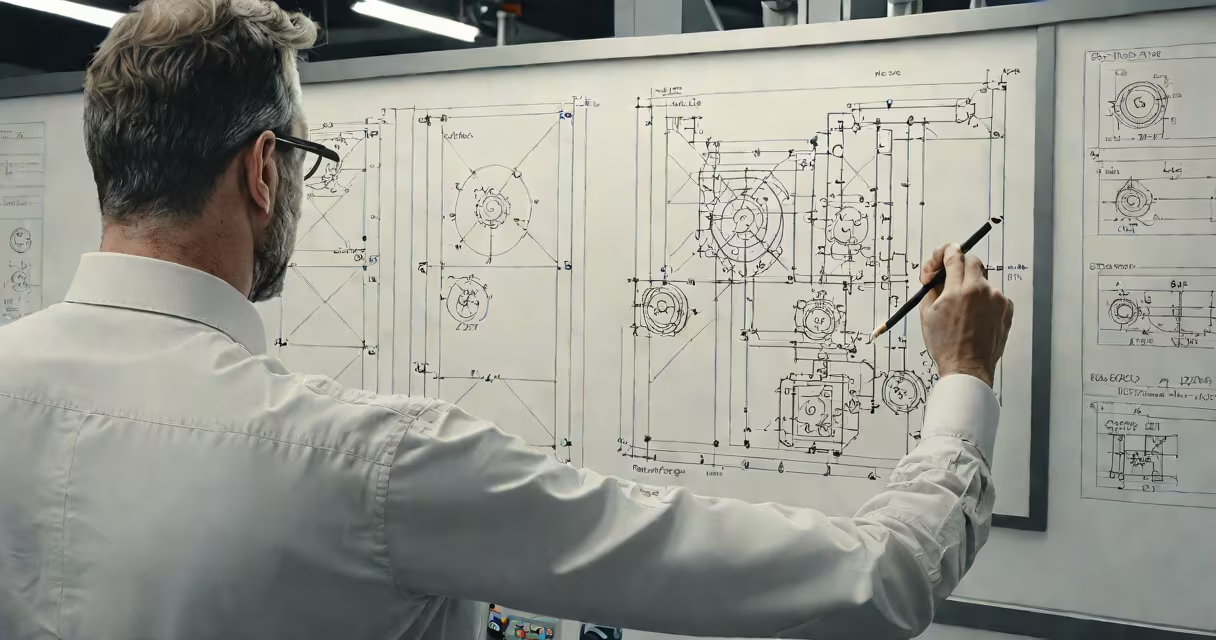
MS manufacturing engineering is a graduate-level degree focused on optimizing industrial processes, integrating automation and data analytics into production systems, and improving efficiency, quality, and scalability in manufacturing environments.
This field combines mechanical engineering principles with systems thinking, materials science, and digital tools to solve real-world problems in factories and supply chains. It builds on undergraduate training in engineering fundamentals but adds specialized skills in simulation, lean methodologies, and smart factory technologies.
Graduates work in roles such as process engineer, automation specialist, or operations manager, often leading teams that implement Industry 4.0 solutions. The program typically takes 1.5 to 2 years full-time and includes coursework in advanced manufacturing systems, statistical process control, and robotics integration.
At its core, MS manufacturing engineering applies scientific and mathematical models to predict, monitor, and improve physical production processes. Engineers analyze every stage-from raw material input to finished product output-using data collected from sensors, machines, and human workflows.
A typical project involves reducing defects in a high-volume assembly line. An MS manufacturing engineer might deploy a statistical model to identify variation patterns in weld strength across 10,000 units. By isolating variables like temperature, pressure, and robot arm calibration, they adjust parameters to reduce defect rates from 2.1% to under 0.3% within six weeks.
The discipline relies heavily on simulation software such as Siemens Tecnomatix or Rockwell FactoryTalk. These platforms allow engineers to test changes virtually before implementing them on live equipment, minimizing downtime and risk.
MS manufacturing engineering programs offer concentrations that reflect current industry demands. Common tracks include:
| Type | Focus Areas | Typical Applications |
|---|---|---|
| Advanced Automation | Robotics programming, PLC integration, vision systems | Automated car assembly lines, semiconductor wafer handling |
| Lean & Six Sigma | Process mapping, DMAIC methodology, waste reduction | Pharmaceutical packaging, food processing plants |
| Smart Manufacturing | IoT sensor networks, predictive maintenance, digital twins | Wind turbine blade production, aerospace component fabrication |
One non-obvious distinction: while many associate manufacturing engineering with factory floors, modern MS programs emphasize decision-making at the enterprise level. A graduate may lead a cross-functional team responsible for aligning production capacity with global demand forecasts, using AI-driven models trained on historical sales and supply chain data.
For example, a student at the University of Michigan completed a capstone project modeling battery cell output at a Tesla gigafactory. They used time-series analysis to correlate ambient temperature fluctuations in Nevada with electrode coating uniformity. Their model reduced scrap rates by 14% during seasonal shifts.
Manufacturing engineering is not synonymous with industrial engineering, though both fields overlap. Industrial engineering focuses broadly on workflow efficiency, labor allocation, and system-wide optimization. Manufacturing engineering centers specifically on the transformation of materials into products-how machines shape, join, and finish parts.
Another frequent confusion: MS manufacturing engineering is not the same as a master's in mechanical engineering. While mechanical engineering covers design, dynamics, and thermodynamics, manufacturing engineering emphasizes production execution, tooling, and repeatability. A mechanical engineer might design a gear; a manufacturing engineer ensures it can be produced consistently at 10,000 units per day with minimal variation.
Some assume the degree leads only to factory jobs. In reality, graduates increasingly work in consulting, tech development, or product lifecycle management. A recent survey by the Society of Manufacturing Engineers (SME) found that 63% of MS manufacturing engineering graduates in 2023 were employed in roles involving software integration, data analytics, or digital twin implementation-not traditional shop-floor positions.
I once observed a team at a Midwest automotive supplier using an MS manufacturing engineering graduate to redesign a stamping line. The original setup required manual alignment of dies every 48 hours, causing 12-minute delays per cycle. The engineer introduced a closed-loop feedback system using laser displacement sensors and automated actuator adjustments. After six weeks of testing, the line ran continuously for 14 days without manual intervention-boosting throughput by 18% and reducing energy consumption by 9%.
Entry-level roles typically require a bachelor's in engineering, but an MS manufacturing engineering degree opens doors to leadership and innovation positions. Salaries start around $85,000 annually in the U.S., rising to $120,000+ for those managing multi-site production systems or leading digital transformation initiatives.
Employers value the ability to bridge technical depth with business impact. An MS manufacturing engineering graduate doesn't just fix broken processes-they anticipate failures, redesign systems proactively, and measure success through KPIs like first-pass yield, cycle time reduction, and total cost of ownership.
With rapid adoption of AI, robotics, and sustainable practices, MS manufacturing engineering remains essential for industries aiming to scale efficiently and responsibly.