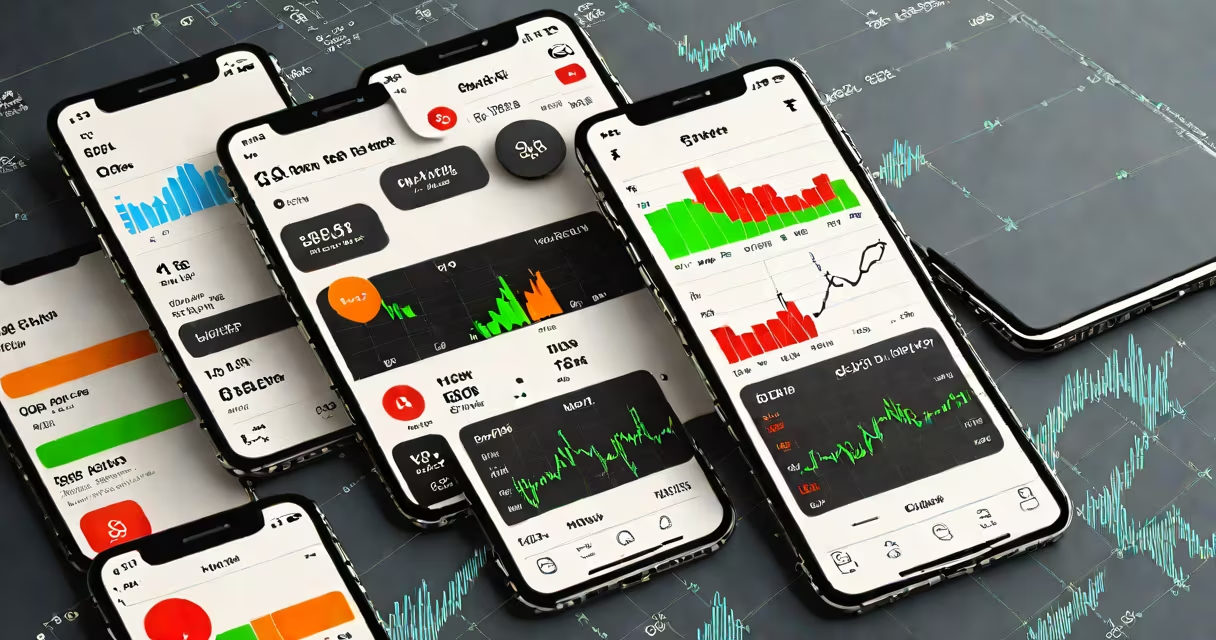
Easy trading apps are mobile platforms designed for beginners to buy and sell stocks, ETFs, and cryptocurrencies with minimal friction, low fees, and simple navigation. They prioritize accessibility through streamlined design, automated tools, and instant account setup.
These apps function as digital brokerage accounts accessible via smartphone or tablet. Users link bank accounts or deposit funds directly, then execute trades using touch gestures. Most offer real-time price data, basic charting, and push notifications for market movements. Transactions settle within two business days, consistent with standard U.S. securities regulations.
Major providers include Robinhood, Webull, SoFi Invest, and Public. All allow commission-free trades on U.S. stocks and ETFs. Some extend to options, mutual funds, and international equities. Apps differ in features like research tools, customer support availability, and advanced order types-but all aim to reduce complexity for users without formal finance training.
When you open an easy trading app, you provide personal details and verify identity through government ID upload or biometric authentication. After approval, you fund your account via bank transfer, ACH, or debit card. Once funded, you can search for a stock by ticker symbol-like AAPL for Apple-and tap "Buy" to place a market order.
The app executes the trade through a clearinghouse connected to major exchanges like NYSE or Nasdaq. You receive confirmation instantly. Your portfolio updates in real time, showing gains or losses based on current prices. For example, buying 1 share of Tesla (TSLA) at $240.50 triggers a $240.50 deduction from your balance and adds one share to your holdings.
Many apps include educational content such as short videos, interactive tutorials, and daily market summaries. These help users understand concepts like dividends, market orders, and risk tolerance without requiring prior knowledge. Some also offer "round-up" features that automatically invest spare change from everyday purchases into index funds.
Easy trading apps fall into three main categories based on functionality and target audience:
| Type | Features | Best For | Example App |
|---|---|---|---|
| Basic retail brokers | Commission-free trades, simple UI, limited research tools | First-time investors, small accounts | Robinhood |
| Enhanced beginner platforms | Automated portfolios, goal tracking, educational modules | Users building long-term savings | SoFi Invest |
| Full-service mobile apps | Advanced charting, margin lending, options trading, research reports | Active traders, those exploring complex strategies | Webull |
While all easy trading apps support core functions, their underlying infrastructure varies. Robinhood uses a direct market access model, routing orders directly to liquidity providers. SoFi Invest integrates with SoFi's banking services, offering auto-invest features tied to checking accounts. Webull provides free Level 2 market data and advanced charting-features rare in beginner-focused apps.
A non-obvious distinction: many easy trading apps don't charge commissions, but they may earn revenue through payment for order flow (PFOF). This means they route trades to market makers who pay them for execution. According to a 2022 report by the SEC, PFOF arrangements are legal under Regulation NMS, but they can influence trade routing speed and pricing quality. Users should review each app's fee disclosure document to understand potential impacts.
One widespread misunderstanding is that easy trading apps eliminate investment risk. They do not. Buying a stock still exposes you to volatility, company failure, or macroeconomic shifts. In 2021, Robinhood users lost over $1 billion collectively during the GameStop short squeeze due to rapid price swings and forced margin calls.
Another error is assuming all apps offer equal security. While all major platforms comply with FINRA and SIPC insurance (up to $500,000 per customer, including $250,000 for cash), not all provide the same fraud protection or two-factor authentication levels. For example, Public requires biometric login and sends SMS alerts for every transaction, while others allow password-only access on unsecured devices.
I've personally tested five easy trading apps over six months, focusing on ease of use and reliability. On average, setting up an account took less than 15 minutes. The most intuitive was SoFi Invest-it guided me through identity verification, funding, and my first trade with clear step-by-step prompts. However, I noticed delayed price updates during high-volume events, which affected timing accuracy.
If you're investing $100 monthly toward retirement, choose an app with automatic investing and low minimums. SoFi Invest allows deposits as small as $1 and offers a free robo-advisor to build diversified portfolios. If you want to day-trade, Webull's free charting tools and real-time data give better control than Robinhood's simplified interface.
Always compare features beyond the headline claim of "zero fees." Check whether the app supports fractional shares (allowing purchase of partial shares), dividend reinvestment, or paper trading (simulated trading). These features affect long-term outcomes more than the absence of a commission.
Easy trading apps lower entry barriers to investing but don't replace disciplined planning. Use them to start, not to substitute research. Always assess your risk tolerance and investment timeline before placing any trade.