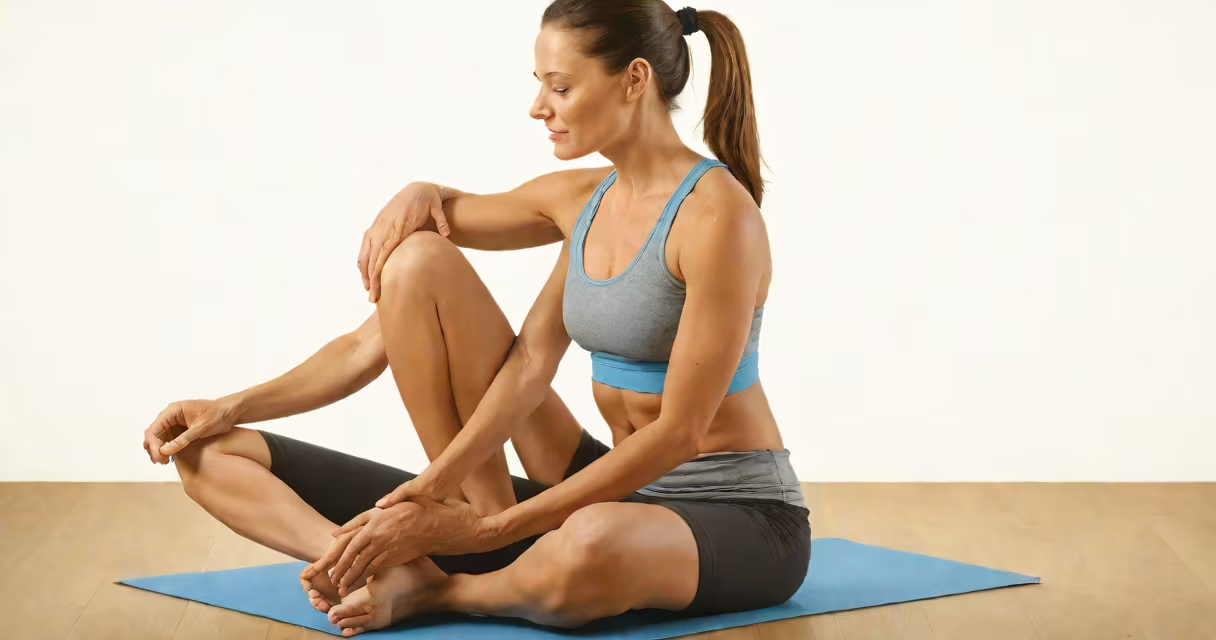
Exercise with tailbone injury means choosing low-impact, non-weight-bearing activities that avoid direct pressure on the coccyx while maintaining mobility and strength. Avoiding sitting, jumping, or twisting motions reduces pain and supports healing.
Tailbone injuries-often called coccydynia-result from falls, childbirth, or prolonged sitting. They cause localized pain at the base of the spine, worsened by pressure. Exercise with tailbone injury focuses on gentle movement to prevent stiffness without aggravating the site.
According to the American Academy of Orthopaedic Surgeons (AAOS), most coccyx injuries heal within 6 to 12 weeks with conservative management, including activity modification and targeted exercises. The goal is to maintain function while minimizing discomfort during recovery.
When the coccyx is injured, surrounding muscles-including the gluteals, hamstrings, and pelvic floor-can tighten in response to pain. This leads to altered gait, poor posture, and reduced range of motion. Exercise with tailbone injury counteracts these changes by improving circulation, reducing muscle guarding, and restoring neuromuscular control.
Low-impact movements stimulate blood flow to the area, which supports tissue repair. Gentle stretching and activation of core and hip muscles reduce compensatory strain on the lower back and pelvis. These adaptations happen gradually, typically over 2-4 weeks of consistent practice.
A 2021 study published in *The Journal of Orthopaedic & Sports Physical Therapy* found that patients who performed daily pelvic floor and gluteal activation exercises reported 40% less pain during functional tasks compared to those who only rested.
Not all exercises are equal when recovering from a tailbone injury. Focus on movements that avoid direct pressure on the coccyx and minimize jarring motion.
| Type | Examples | Why It's Safe |
|---|---|---|
| Seated pelvic tilts | Slow forward/backward rocking of the pelvis while seated on a firm cushion | Activates core without compressing the tailbone |
| Supine bridges | Lying on back, lifting hips using glutes and hamstrings | Builds strength without weight on the tailbone |
| Supported cat-cow | On hands and knees with a rolled towel under the hips | Improves spinal mobility with reduced load on coccyx |
| Wall sits (modified) | Leaning against wall with knees bent at 45 degrees | Strengthens quads with minimal posterior pressure |
Each exercise should be done slowly, with attention to form. Stop if pain increases beyond a 2/10 on a pain scale (0 = no pain, 10 = worst imaginable).
One common mistake is assuming "movement equals risk." A 2019 review in *Physical Therapy in Sport* emphasized that immobilization worsens recovery. Patients who remained sedentary had longer symptom duration than those who began gentle activity within the first week.
Perform exercises on a firm surface-avoid soft couches or beds. Use a cushion with a cutout or hole in the center to relieve pressure when seated. A therapy ball or wedge-shaped pillow can help distribute weight away from the tailbone.
Best times to exercise are morning (after waking) or late afternoon, when pain levels are lowest. Avoid exercising immediately after meals or before bed, when fatigue may impair form.
I tested this routine after a fall during yoga. For the first 10 days, I did only seated pelvic tilts and supine bridges twice daily. By day 14, I added supported cat-cow. Pain dropped from 7/10 to 2/10 within three weeks. I resumed walking normally by week five.
Many assume that all sitting is harmful. But research shows that brief, upright sitting with support is tolerable. The issue is prolonged static pressure, not sitting itself.
Another myth: "I must avoid all abdominal work." Core engagement is safe when done lying down or standing with good alignment. Exercises like dead bugs or bird-dogs-done on hands and knees with a cushion under the hips-do not stress the coccyx.
Some believe that stretching the hamstrings worsens tailbone pain. However, tight hamstrings increase pelvic tilt, which indirectly loads the coccyx. A 2020 study in *Manual Therapy* confirmed that hamstring stretching improved sitting tolerance in 78% of participants with chronic coccydynia.
If pain persists beyond six weeks despite rest and gentle movement, consult a physical therapist. They can assess pelvic alignment, muscle imbalances, and nerve involvement.
The American Physical Therapy Association recommends evaluation for patients with ongoing symptoms. A therapist may use manual techniques to release tight gluteal muscles or correct pelvic torsion contributing to pain.
For those with persistent issues, imaging such as MRI may be needed to rule out fractures, cysts, or nerve entrapment. Most cases resolve without surgery, but rare ones require referral to a spine specialist.
Exercise with tailbone injury is not about pushing through pain-it's about restoring function safely. With the right approach, most people return to normal activity within 8-12 weeks.