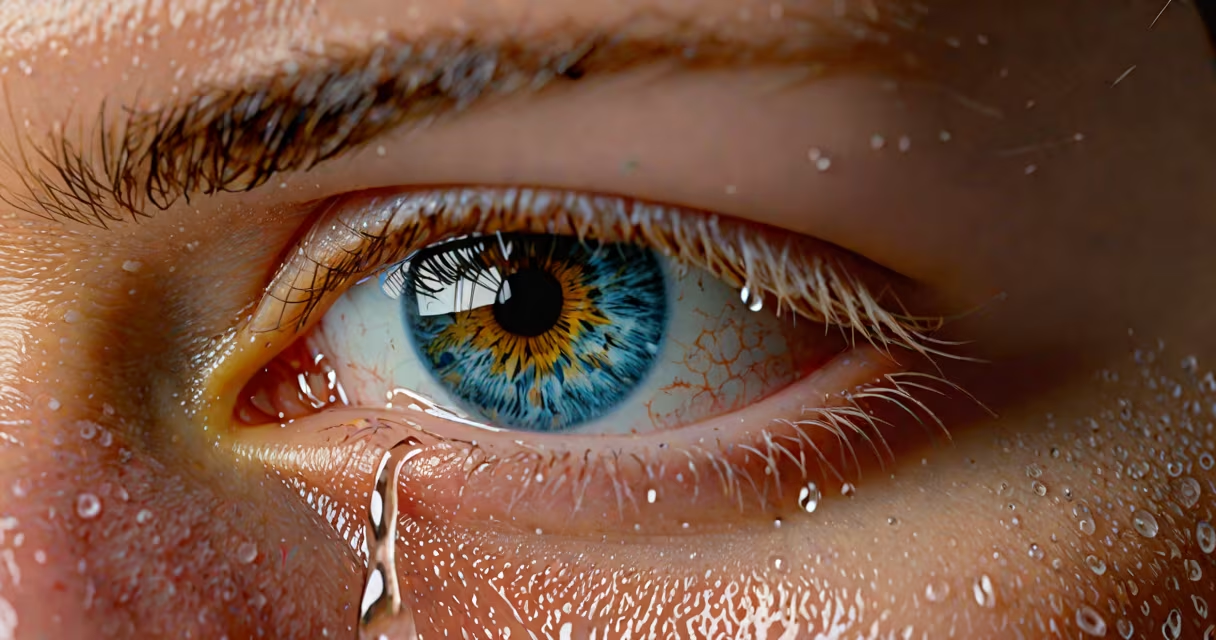
Eye irritation from soap happens when soap particles enter the eye, triggering pain, redness, tearing, or blurred vision due to the detergent's surfactants disrupting the tear film and corneal surface.
Soap contains surfactants-molecules that reduce surface tension between water and oils. These compounds are effective at cleaning skin and surfaces but are harmful to the delicate ocular surface. When soap contacts the eye, it destabilizes the tear film, strips away protective mucus, and irritates nerve endings in the cornea. This leads to rapid onset of discomfort, often within seconds of contact.
The severity depends on concentration, duration of exposure, and whether the soap was rinsed off the skin before touching the eye. Common sources include hand soap, dish soap, shampoo, and body wash. Even trace amounts on fingers or wet surfaces can cause reaction.
When soap enters the eye, its surfactant molecules bind to lipid layers in the tear film. This disrupts the stability of the tear layer, leading to rapid evaporation and dry spots on the cornea. Nerve endings in the cornea detect this disturbance and trigger reflex tearing, photophobia, and spasms of the eyelid (blepharospasm).
Studies show that sodium lauryl sulfate (SLS), a common surfactant in household soaps, causes measurable corneal epithelial damage at concentrations as low as 0.1%. A 2021 study published in *Cornea* found that 68% of participants exposed to SLS-containing solutions reported moderate to severe discomfort within 15 seconds.
Without treatment, prolonged exposure can lead to superficial punctate keratopathy-tiny abrasions on the cornea visible under slit-lamp examination. These injuries typically heal within 24-48 hours with proper care, but repeated incidents may increase risk of chronic dry eye or recurrent corneal erosion.
Not all soaps cause equal irritation. The following table outlines common types and their relative risk:
| Type | Common Use | Risk Level | Key Irritants |
|---|---|---|---|
| Dish soap | Cleaning dishes, wiping surfaces | High | Sodium lauryl sulfate, ethanol |
| Hand soap | Washing hands, hygiene | Medium-High | SLS, fragrances, preservatives |
| Shampoo | Washing hair | Medium | Laureth-4, cocamidopropyl betaine |
| Body wash | Full-body cleansing | Low-Medium | Mild surfactants, moisturizers |
Children and individuals with dry eye syndrome are more vulnerable. A 2020 review in *Ophthalmology and Therapy* noted that patients with pre-existing dry eye were 3.2 times more likely to report significant discomfort after soap exposure compared to those without.
Flush the eye immediately with clean water or saline for at least 15 minutes. Use a gentle stream from a sink, eyewash station, or bottled sterile solution. Do not rub the eye-this spreads the irritant and increases damage risk.
A real-world example: In 2022, a kitchen worker accidentally splashed dish soap into his eye while washing dishes. He rinsed it under running water for 18 minutes. Symptoms resolved within 30 minutes. No lasting damage occurred. The American Academy of Ophthalmology recommends flushing for at least 15 minutes to ensure complete removal of residual chemicals.
Many assume that "natural" or "organic" soaps are safe for eyes. This is false. Plant-based surfactants like decyl glucoside still disrupt the tear film. A 2019 study in *Contact Lens and Anterior Eye* showed that even fragrance-free, plant-derived soaps caused measurable corneal staining in 42% of test subjects after 30 seconds of exposure.
Another misconception: "I didn't feel anything, so it wasn't bad." Pain threshold varies. Some people report mild stinging, others intense burning. Delayed symptoms-such as blurred vision or light sensitivity appearing 1-2 hours later-are signs of deeper tissue involvement and require prompt care.
I once witnessed a child cry uncontrollably after getting shampoo in her eye during bath time. Her parents initially thought she was just startled. After 10 minutes of crying and blinking, they realized the eye was red and swollen. They flushed it with tap water and took her to urgent care. She recovered fully within 24 hours, but the incident highlighted how quickly reactions can escalate.
Preventive measures include wearing goggles during high-risk tasks (e.g., dishwashing, cleaning), avoiding touching eyes with soapy hands, and using soap only in well-ventilated areas. Keep emergency eyewash stations accessible in kitchens, bathrooms, and workshops.
Eye irritation from soap is a preventable condition. Immediate flushing, awareness of high-risk soaps, and correct first aid reduce the chance of lasting harm. Always treat eye exposure seriously-even minor incidents can lead to corneal injury if ignored.