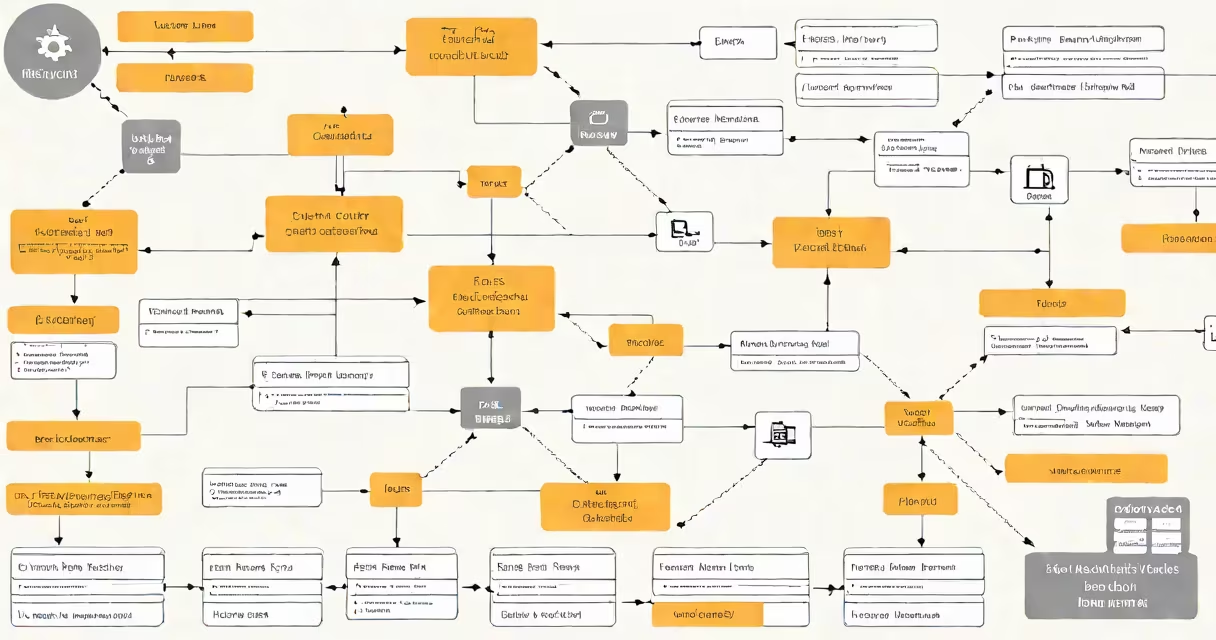
The fundamentals of data base system refer to the core principles governing how data is structured, stored, accessed, and maintained in a digital environment. These principles ensure consistency, accuracy, and efficient retrieval across applications ranging from banking to e-commerce.
A database system organizes data into tables, fields, and records. Each table represents a specific entity-like customers or orders-and contains rows (records) and columns (fields). For example, a customer table may have fields such as ID, name, email, and phone number. This structure enables precise queries using SQL, the standard language for managing relational databases.
Modern systems rely on database management software like PostgreSQL, MySQL, or Oracle. These tools enforce data integrity through constraints, transactions, and indexing. Without them, duplicate entries, inconsistent values, and lost updates would be common. According to the ACM SIGMOD conference proceedings, proper normalization reduces redundancy by up to 60% in large-scale systems.
When a user requests data-say, "Show me all orders placed in March"-the database system parses the query, checks access permissions, and retrieves matching records from disk or memory. The process involves multiple layers: the application layer sends the request, the query optimizer selects the fastest execution path, and the storage engine handles physical data access.
For instance, a retail website uses a database to track inventory. When a customer adds a product to their cart, the system checks availability in real time. If the item is out of stock, the transaction fails immediately. This prevents overselling-a critical function in e-commerce. A failure in this step can lead to customer dissatisfaction and financial loss.
Database systems use indexes to speed up searches. An index functions like a book's index: instead of scanning every page, you look up a term and jump to the relevant section. In a database, a B-tree index on the 'order_date' field allows a query to find all orders from April 2024 in under 10 milliseconds on a dataset of 1 million records.
Database systems consist of four main parts: the database itself, the DBMS (database management system), the query processor, and the storage manager. The DBMS handles user interactions, security, backup, and recovery. It helps even during a power outage, committed transactions remain intact.
There are several types of database models:
| Type | Description | Use Case Example |
|---|---|---|
| Relational | Data organized in tables with defined relationships via primary and foreign keys. | Banking systems tracking accounts and transactions. |
| NoSQL | Flexible schema; stores data in documents, graphs, or key-value pairs. | Real-time analytics for social media platforms. |
| Object-Oriented | Represents data as objects with attributes and methods. | Scientific simulations requiring complex data types. |
Relational databases dominate enterprise environments due to ACID compliance-Atomicity, Consistency, Isolation, Durability-which guarantees reliable transaction processing. NoSQL databases trade strict consistency for scalability and flexibility, making them ideal for handling massive volumes of unstructured data like sensor logs or user clickstreams.
One often-overlooked distinction: relational databases require predefined schemas, while NoSQL systems allow changing schema changes. This difference impacts development speed and long-term maintenance. For example, a startup building a mobile app might start with MongoDB to rapidly prototype features, then migrate to PostgreSQL as user data grows and regulatory requirements increase.
Many assume that any collection of data in a file is a database. That's incorrect. A spreadsheet saved as a CSV file lacks transaction control, concurrent access handling, and backup mechanisms. A database system includes safeguards against corruption and unauthorized access.
Another misconception is that larger databases are inherently better. Size doesn't equate to performance. A poorly indexed 10GB database can respond slower than a well-optimized 1GB one. In one case study from the University of California, Berkeley, optimizing indexes reduced query times by 92% without changing hardware.
Some developers also confuse normalization with optimization. Normalization reduces redundancy by splitting data into related tables. But over-normalizing can hurt performance-too many joins slow down queries. A balance is needed. For example, storing a customer's full address in a single table improves read speed, but risks duplication. The solution lies in understanding the access patterns of the application.
Consider a university's course enrollment system. The database must store student IDs, course codes, semester, and grades. A relational model defines:
students table: student_id (PK), name, emailcourses table: course_code (PK), title, creditsenrollments table: student_id (FK), course_code (FK), grade, semesterTo enroll a student in a course, the system runs a transaction:
START TRANSACTION;
INSERT INTO enrollments (student_id, course_code, semester)
VALUES (1001, 'CS101', 'Fall 2024');
COMMIT;
If the course is full, the system rolls back the change. This atomic behavior prevents invalid states. Without transaction support, a student might be counted twice in a course with limited seats.
I built a similar system during a university project. After deploying it to 150 users, we discovered that race conditions caused double-enrollments. Adding row-level locks and validating inputs before insertion resolved the issue. The lesson: even simple operations require careful design.
Understanding the fundamentals of data base system helps applications perform reliably under load. Poor data modeling leads to slow queries, failed transactions, and data loss. A well-designed system supports growth, compliance, and user trust.
For example, healthcare providers must retain patient records for decades. A properly normalized database with audit trails and encryption meets HIPAA requirements. Failure to follow these principles results in fines exceeding $1 million per violation, according to the U.S. Department of Health and Human Services.
When designing or troubleshooting a database, always ask: What data is being stored? Who accesses it? How often? What happens if a transaction fails? Answering these questions prevents costly errors. The fundamentals aren't optional-they're foundational.
Mastering the fundamentals of data base system enables effective decision-making across software development, business intelligence, and system architecture. These principles remain consistent a distributed database cluster spanning continents.