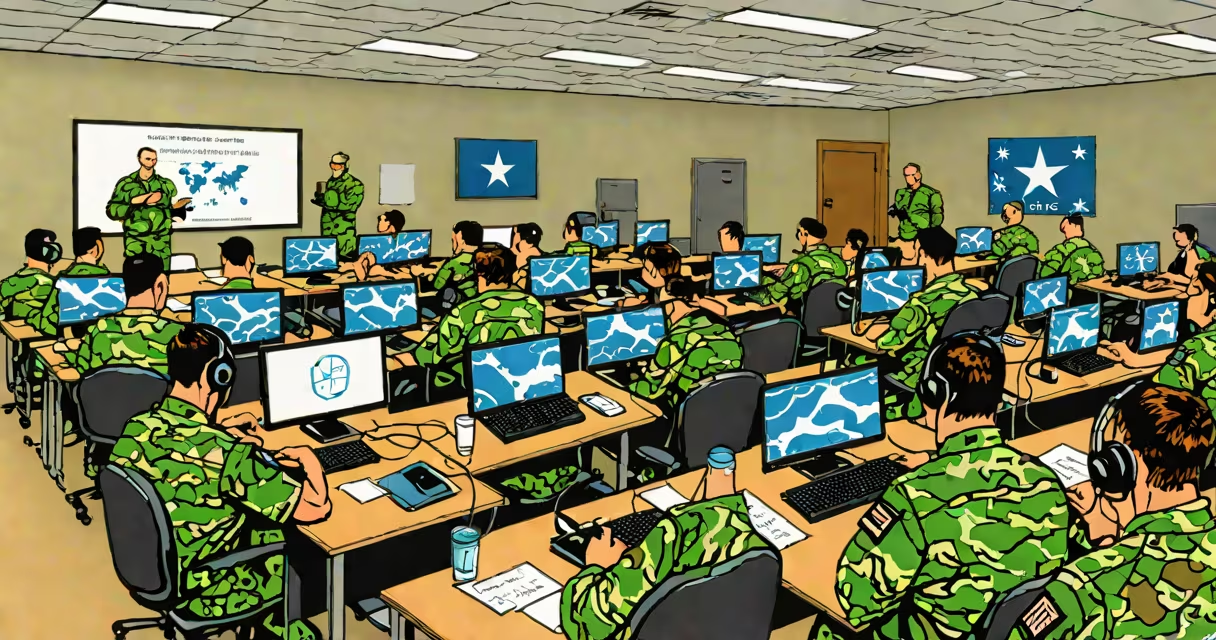
Air Force cyber awareness training is a mandatory annual program that equips U.S. Air Force personnel with the knowledge to recognize, report, and prevent cyber threats targeting military networks and data. It covers phishing, malware, social engineering, and proper handling of classified information across all operational environments.
The training is standardized across all commands and units. It includes interactive scenarios, real-world attack simulations, and assessments based on Air Force Instruction 33-129, which outlines cybersecurity standards for all Airmen. Completion is tracked through the Air Force's central learning management system, accessible via the Air Force Cloud platform.
Each Airman receives a unique training record tied to their individual access credentials. Failure to complete the course within the fiscal year results in restricted access to certain mission-critical systems, including those used for intelligence reporting and logistics coordination.
Cyber awareness training operates through a centralized e-learning portal hosted on the Air Force Cloud. All Airmen must log in using their Common Access Card (CAC) and complete a series of modules tailored to their job specialty (AFSC). The system tracks progress, flags overdue completions, and generates compliance reports for unit leadership.
Modules include simulated phishing emails, password hygiene exercises, and incident response drills. For example, a typical scenario presents a fake email from "Defense Procurement Office" offering a bonus for submitting a form with personal details. Airmen must correctly identify it as malicious and report it through the designated channel.
After completing each module, Airmen take a quiz with 10 multiple-choice questions. A passing score is 80%. Those who fail must retake the module. The entire course takes approximately 45 minutes to complete, though time varies slightly depending on the user's AFSC-specific requirements.
The curriculum is structured around five foundational topics:
| Topic | Key Content | Frequency |
|---|---|---|
| Phishing & Social Engineering | Recognizing spoofed emails, fake login pages, and impersonation tactics used in attacks. | Annually |
| Malware & Ransomware | Understanding how malicious software spreads via USB drives, infected websites, and compromised accounts. | Annually |
| Data Handling & Classification | Proper procedures for marking, storing, and transmitting classified and controlled unclassified information. | Annually |
| Secure Device Usage | Guidelines for using government-issued devices, disabling Bluetooth in sensitive areas, and securing mobile devices. | Annually |
| Incident Reporting | Steps to follow when suspicious activity is detected, including contacting the Cybersecurity Operations Center (CSOC). | Annually |
Each module uses real-world examples drawn from past incidents. In 2022, a phishing campaign targeting Air Force personnel used a forged email claiming to be from the Joint Personnel Support Activity. Over 1,200 Airmen clicked the link before the threat was contained. This event is now used in training to demonstrate how quickly a single click can compromise a network.
Cyber awareness training is required for all active-duty, reserve, and civilian employees with access to Air Force systems. It applies to roles ranging from pilots and mechanics to IT administrators and finance officers. Even personnel in non-technical jobs must complete the training because they often handle sensitive data or interact with external partners.
Units with high-risk missions-such as those operating in space command, cyber operations, or intelligence analysis-receive additional modules focused on advanced persistent threats (APTs) and insider risk. These supplements are delivered quarterly and require higher scores on assessments.
Failure to complete training can result in disciplinary action under Air Force Manual 36-2240. In one documented case, an Airman lost clearance to access the Global Combat Support System after missing three consecutive cycles. The individual was reassigned to a non-sensitive role until compliance was restored.
Many Airmen assume cyber awareness training is only for IT specialists. That's incorrect. The Air Force explicitly states that all personnel, regardless of AFSC, are responsible for maintaining cyber hygiene. A 2023 audit by the Department of Defense Inspector General found that 42% of reported breaches originated from non-technical users who failed to follow basic protocols.
Another misconception is that training is purely theoretical. In reality, it includes hands-on simulations. During a 2023 exercise at Joint Base San Antonio, 37% of participants successfully identified a spear-phishing attempt in a live simulation environment-up from 22% in the previous year, demonstrating measurable improvement from consistent training.
Some confuse air force cyber awareness training with formal cybersecurity certification programs like CompTIA Security+ or CISSP. They are not the same. Cyber awareness training is a baseline requirement for all Airmen. Certifications are advanced qualifications pursued by individuals seeking specialized roles, such as cyber defense analysts or network engineers.
In January 2023, an Airman at Travis Air Force Base received a pop-up notification while working on a classified document. The message read: "Your session has expired. Click here to re-authenticate." The user hesitated, recalled the training, and verified the URL. It did not match the official Air Force authentication site. Instead, it pointed to a domain registered in a country known for cyber espionage.
Following protocol, the Airman reported the incident through the Air Force Cloud's integrated reporting tool. Within 12 minutes, the CSOC flagged the domain and blocked access across the base network. No data was compromised. The Airman later received recognition in the monthly cyber safety newsletter.
This incident illustrates how training translates into real-time protection. Without the 45-minute annual course, the Airman might have entered credentials, leading to a potential breach of sensitive mission data.
Every Airman plays a role in defending national security. Air force cyber awareness training is not a box to check-it's a daily practice in vigilance, responsibility, and collective defense.