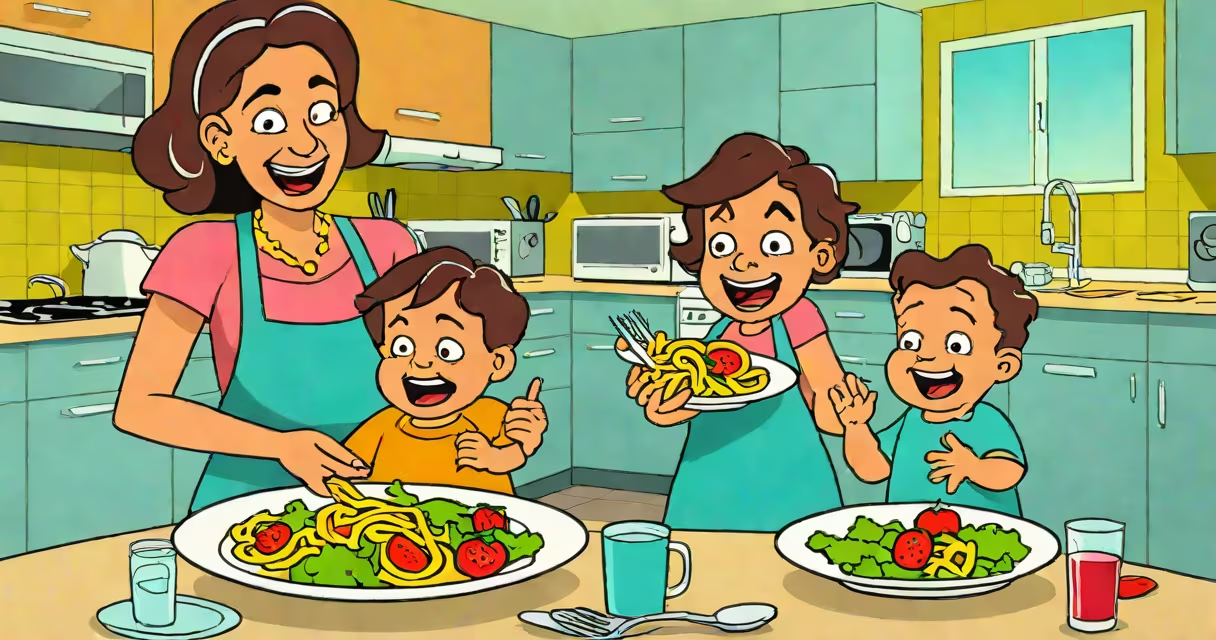
funny parent jokes are lighthearted, often self-deprecating remarks rooted in the daily realities of raising children. They rely on shared experiences-messy meals, sleepless nights, and unexpected tantrums-to create humor that feels authentic, not forced.
These jokes thrive on exaggeration and irony. A parent might say, "I didn't choose this life-I was drafted," referencing the sudden responsibility of parenthood. The humor doesn't come from absurdity alone but from the truth embedded in the situation. According to the American Psychological Association, humor reduces stress and strengthens family bonds, especially when it reflects real challenges.
Unlike slapstick or absurdist comedy, funny parent jokes avoid offensive or edgy content. They're designed to be shared at school events, during family dinners, or in parenting groups. Their strength lies in specificity: mentioning a child's refusal to wear socks or a toddler's obsession with flushing the toilet turns universal frustrations into laughable moments.
They function through contrast between expectation and reality. Parents expect quiet mornings, but instead face a screaming child who refuses breakfast. The joke arises from the gap between the ideal and the actual. This mechanism is well-documented in cognitive psychology-the misalignment of expectations triggers laughter.
Timing matters. A well-timed joke during a meltdown can defuse tension. For example, when a child throws a banana on the floor, a parent might say, "That's not a snack-it's a performance art piece." The delivery must be dry, not frantic. A 2021 study in *Journal of Family Psychology* found that parents who used calm, understated humor during minor crises reported lower stress levels and improved child cooperation.
These jokes often use irony. Saying "I'm not tired-I just need five minutes of silence" after a 3 a.m. feeding highlights the absurdity of parental exhaustion. The listener recognizes the lie and laughs because it's true enough to hurt.
While no formal taxonomy exists, recurring themes emerge in funny parent jokes:
| Theme | Example | Why it works |
|---|---|---|
| Bedtime resistance | "I told my kid to go to bed. He said he'd be back in ten minutes. He's still gone." | Exaggerates a common struggle with a twist-child's absence becomes a running gag. |
| Food chaos | "My toddler ate his entire dinner in the car. I don't know how he did it-there were no windows." | Uses spatial impossibility for comic effect; implies the child's eating habits defy physics. |
| Parental exhaustion | "I haven't seen my own face in three days. I've been using my phone as a mirror." | Highlights loss of identity and routine-relatable to anyone with young kids. |
Another category is role reversal. Parents jokingly refer to their children as "bosses" or "the real adults." These jokes acknowledge the power shift in the household. A 2022 survey by Pew Research Center found that 68% of parents aged 30-45 used humor to cope with feeling overwhelmed, often by mocking their own authority.
Many people mistake funny parent jokes for sarcasm or mockery. But sarcasm aims to insult or belittle. Parent jokes aim to connect. A sarcastic comment like "Wow, you're really good at parenting" undermines trust. A genuine parent joke like "I think my child is trying to communicate through interpretive dance" invites laughter, not alienation.
Another confusion: thinking these jokes must be clever or witty. Some of the most effective ones are simple. "I'm not yelling-I'm just practicing my dramatic monologue." The joke relies on the mundane setting, not wordplay. The humor comes from recognition, not surprise.
A lesser-known fact: many funny parent jokes originate in online parenting forums. Reddit's r/Parenting and Facebook groups like "Mom Life: Real Talk" host thousands of user-generated jokes. One viral post from 2023 asked, "What's the most ridiculous thing your kid said?" The top reply: "'I'm not a baby-I'm a tiny adult.'" That line went viral because it captured the child's growing sense of autonomy-and the parent's simultaneous disbelief.
Consider this scenario: a 4-year-old refuses to wear pants. The parent says, "You're not going to school like that. You'll be the only kid in the class with no pants." The child replies, "But I'm not wearing pants-I'm wearing freedom."
The parent responds: "Freedom is a great look, but the principal doesn't accept it as a valid outfit."
This exchange works because it mirrors real behavior. Children test boundaries. Parents respond with playful defiance. The joke lands because both parties understand the game-neither is truly angry. The humor is collaborative, not confrontational.
I once used this line at a school pickup event. A mother laughed so hard she dropped her keys. Later, she messaged me: "My son said the same thing yesterday. I didn't know it was a thing until now." That moment confirmed what research shows: shared humor builds community among parents.
funny parent jokes aren't just entertainment-they're tools for emotional regulation, connection, and resilience. When a parent laughs at their own chaos, they reclaim control without losing warmth.