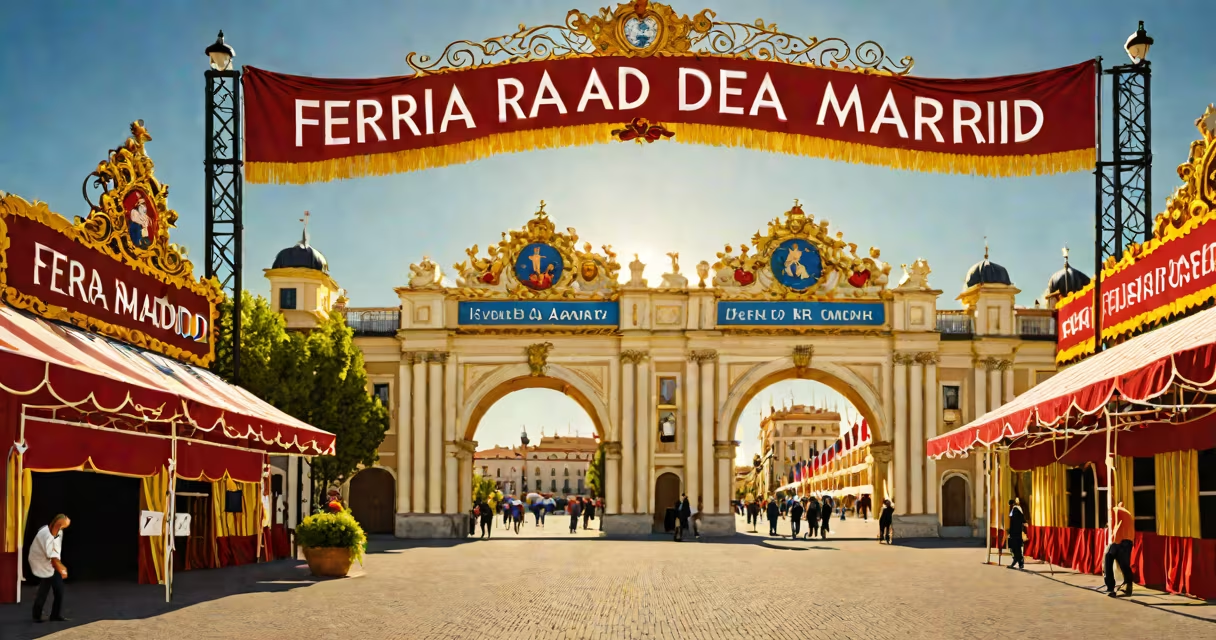
Feria de Madrid is Spain's primary exhibition center located in the southwest of Madrid, hosting large-scale international trade fairs, consumer shows, and cultural events across multiple halls and outdoor spaces. It serves as a central venue for industries including automotive, construction, agriculture, and technology.
The complex spans over 400,000 square meters and includes 16 exhibition halls, 120,000 square meters of outdoor space, and extensive parking and transport access. It is operated by Feria de Madrid S.A., a subsidiary of the Spanish government-owned entity Fomento del Turismo de España (FTE).
Major annual events include the Madrid International Motor Show, the National Agricultural Fair (Ferias Agrícolas Nacionales), and the Madrid Book Fair. The site hosts over 150 events each year, drawing more than 2 million visitors during peak periods.
Feria de Madrid operates under a centralized booking and logistics system managed by the official event organizer. Exhibition spaces are reserved through a formal application process that considers event size, required infrastructure, and date availability. Organizers submit technical specifications, power needs, and layout plans for approval.
Event staff coordinate access control, security, catering, and waste management. All exhibitors must comply with fire safety regulations, electrical standards, and accessibility requirements set by the Madrid City Council and national building codes.
For example, the 2023 Madrid International Motor Show occupied Hall 10 and 11, using 22,000 square meters of floor space. Over 1,200 vehicles were displayed, including electric prototypes and concept cars from manufacturers like BMW, Hyundai, and Tesla. The event ran for 10 days and attracted 280,000 attendees.
Feria de Madrid consists of permanent structures and modular temporary installations. Permanent buildings include the main halls (numbered 1 to 16), the Grand Hall (Hall 1), and the Conference Center. Temporary setups are constructed for seasonal or single-use events.
Each hall has standardized dimensions and load-bearing capacity. Hall 1 measures 120m x 60m with a 12-meter ceiling height and can support up to 15 tons per square meter. Electrical systems are rated for 3-phase 400V supply with 300A capacity per booth.
| Type | Use Case | Example Event | Space Size |
|---|---|---|---|
| Permanent Hall | Annual trade fairs | Madrid International Motor Show | 12,000 m² (Hall 10-11) |
| Outdoor Pavilion | Consumer expos, festivals | Madrid Food & Wine Festival | 15,000 m² (Plaza de los Pinos) |
| Modular Booth | Small business displays | Startup Madrid Innovation Week | 9 m² (standard unit) |
Smaller events often use modular booths designed for quick assembly and disassembly. These units are rented by the square meter and come with basic lighting, flooring, and wall panels. Larger companies may rent custom-built stands with integrated audiovisual systems and climate control.
Feria de Madrid is located in the Ciudad Lineal district, near the M-40 motorway and the Madrid Metro Line 10 (Feria de Madrid station). This location offers direct access from central Madrid (15 minutes by metro), Barcelona (2 hours by high-speed train), and major European cities via Madrid-Barajas Airport (10 km away).
Its strategic position makes it ideal for international events requiring high visitor volume and cross-border logistics. The complex hosts 80% of Spain's B2B trade fairs and 60% of the country's consumer expos. In 2023, it hosted 142 events totaling 3.4 million visitor-days.
One notable use was the 2022 European Green Tech Summit, which brought together 4,500 professionals from 47 countries. The summit focused on sustainable urban development and clean energy solutions. It occupied five halls and included 120 workshops, 32 keynote sessions, and 180 startup pitches.
Feria de Madrid is often mistaken for the nearby IFEMA headquarters, but IFEMA is the administrative body managing the complex, not the physical site itself. The correct term for the venue is Feria de Madrid, while IFEMA is the organization behind operations.
Another common error is assuming all events are public. Many trade fairs require professional registration or business credentials for entry. For example, the 2023 International Construction Expo was restricted to architects, engineers, and procurement officers. General admission was not available.
A lesser-known fact: the complex uses solar-powered lighting in 60% of its outdoor areas. The installation, completed in 2021, generates 1.2 megawatt-hours annually and reduces carbon emissions by 850 tons per year. This system supports the city's goal of achieving carbon neutrality by 2030.
In 2022, I attended the Madrid Book Fair held in Hall 12. The event drew over 150,000 visitors over five days. I observed that book publishers used interactive screens to display digital catalogs, reducing paper waste by 70% compared to previous years. The fair also featured live author readings in designated zones with noise-dampening walls.
Feria de Madrid remains a critical hub for national and international events. With consistent upgrades and sustainability initiatives, it continues to serve as a benchmark for large-scale exhibition centers in Europe. For those organizing or attending events, understanding the site's structure and access protocols ensures efficient planning and execution.