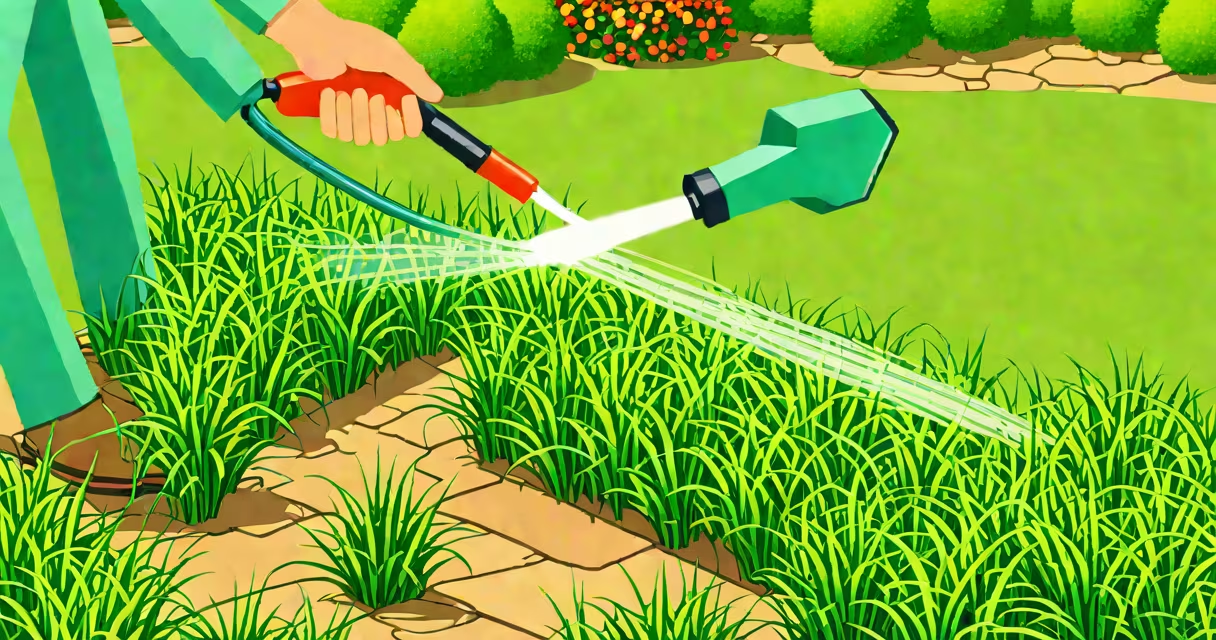
Grass killer spray is a liquid herbicide designed to eliminate unwanted grasses and broadleaf weeds in lawns, gardens, and paved areas. It targets plant cells through foliar absorption, disrupting growth processes and causing death within days. These products are formulated for spot treatment or large-area application, depending on concentration and active ingredients.
Grass killer spray works by penetrating the leaves of target plants and moving through their vascular system. Once inside, active ingredients such as glyphosate or imazapyr inhibit essential enzymes involved in amino acid synthesis. Without these building blocks, the plant cannot grow or repair itself. Within 24 to 72 hours, visible wilting occurs, followed by complete dieback. The process is irreversible and prevents regrowth unless new seeds or rhizomes are introduced.
Most commercial grass killer sprays contain either systemic or contact herbicides. Systemic sprays move through the plant's internal systems, killing roots and preventing regrowth. Contact sprays burn foliage on contact but do not affect underground structures. For persistent weeds like crabgrass or quackgrass, systemic formulations are more effective. According to the Environmental Protection Agency (EPA), glyphosate-based sprays remain among the most widely used due to their low environmental persistence and high efficacy against broadleaf and grassy weeds.
| Type | Active Ingredient | Effect Duration | Best For |
|---|---|---|---|
| Systemic | Glyphosate, Imazapyr | Long-term control (weeks to months) | Perennial weeds, root-invading grasses |
| Contact | Acetic acid, Diquat | Immediate burn, no residual effect | Surface-only weeds, quick kill in patios or driveways |
| Pre-emergent | Prodiamine, Pendimethalin | Weeks to months, prevents seed germination | Annual grasses before they emerge |
Grass killer spray is commonly used in residential lawns, garden beds, driveways, sidewalks, and around foundations. It is especially useful for eliminating invasive species like Bermuda grass spreading into flower beds or dandelions in tightly mowed turf. In urban settings, municipal crews use high-concentration sprays to clear vegetation from storm drains and road shoulders. Homeowners often apply it during spring and early fall when weeds are actively growing and temperatures are between 60°F and 85°F.
A common misunderstanding is that grass killer spray harms only weeds. In reality, it affects any green plant it contacts. Even nearby desirable grass or ornamentals can suffer damage if drift occurs. Wind speeds above 5 mph increase the risk of off-target movement. The EPA recommends applying sprays on calm days and using shielded nozzles to reduce drift. A 2021 study published in *Weed Science* found that 38% of homeowner-reported failures were due to improper timing or wind-related drift, not ineffective chemistry.
One non-obvious fact: many grass killer sprays labeled "selective" still harm certain grasses. For example, products containing 2,4-D may suppress broadleaf weeds but can damage fine fescue and bentgrass species. This confusion leads users to assume selectivity means safety across all turf types. The University of California Cooperative Extension clarifies that "selective" refers only to broadleaf versus grassy plants-not all grasses are safe. Always verify compatibility with your specific turf species before use.
I once used a glyphosate-based spray to clear a patch of volunteer wheatgrass invading a perennial border. The area was dry, and I applied the solution on a still morning with no forecasted rain. Within five days, the grass turned brown and collapsed. I waited 14 days before replanting. The soil showed no residual effects, and new perennials established well. The treatment succeeded because I followed label instructions: correct timing, proper dilution, and no overspray.
Grass killer spray differs from general-purpose weed killer in formulation intent. While both contain herbicidal chemicals, grass killer sprays are optimized to target grass-like plants, including monocots. General weed killers may include additives to handle woody stems or tough leaf textures. Some products labeled "weed killer" fail on grasses because they lack the ability to disrupt cell division in grasses specifically. Always read the label to confirm the product is effective against grasses, not just broadleaf plants.
When selecting a grass killer spray, prioritize products with clear labeling of active ingredients, application rates, and safety precautions. Look for EPA registration numbers and user reviews that cite field performance. Avoid homemade mixtures-vinegar and salt solutions may work temporarily but leave soil unsuitable for replanting due to salinity buildup. Commercial sprays offer consistent results and are backed by regulatory testing.
Grass killer spray remains a practical tool for managing unwanted vegetation. Used correctly, it delivers precise control with minimal impact on surrounding areas. Always follow label directions, wear protective gear, and store out of reach of children and pets. With proper application, it supports healthier lawns and cleaner landscapes.