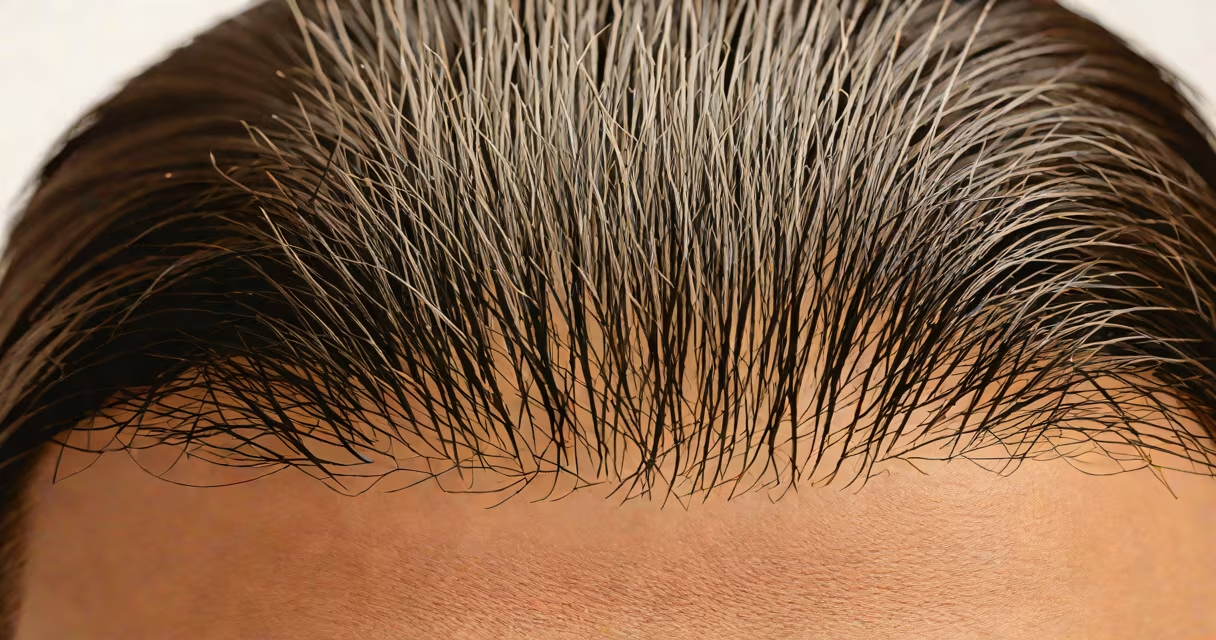
Hair loss from crown of head, often called vertex balding, is a common form of androgenetic alopecia characterized by progressive thinning or complete loss of hair in the central region of the scalp. It typically begins subtly, with gradual reduction in hair density, and may progress to a visible bald spot. This condition affects both men and women, though patterns differ.
Androgenetic alopecia is driven by genetic sensitivity to dihydrotestosterone (DHT), a derivative of testosterone. DHT shrinks hair follicles over time, shortening the growth phase and leading to finer, shorter hairs until follicles stop producing visible hair altogether. The crown area is particularly vulnerable because follicles here have higher levels of the enzyme 5-alpha-reductase, which converts testosterone into DHT.
According to the American Academy of Dermatology, approximately 50% of men show signs of male pattern baldness by age 50, with crown involvement being one of the most frequent early indicators. Women also experience this pattern, though it presents differently-often as diffuse thinning rather than a distinct bald patch.
Hair loss from crown of head usually begins between ages 20 and 40. Initial signs include increased shedding during washing or brushing, a widening part line, or a noticeable decrease in hair volume at the top of the head. Over months or years, the hair becomes progressively thinner until a bald spot forms.
The Norwood-Hamilton scale classifies male pattern baldness into seven stages. Stage III shows early recession at the temples and crown. By Stage IV, the crown area becomes visible. Stage VII represents advanced balding with only a horseshoe-shaped band of hair remaining around the sides and back. A similar classification exists for women, known as the Ludwig scale, which identifies three stages of thinning, with Type III involving significant loss at the crown.
A non-obvious fact: crown hair loss often progresses faster than frontal hairline recession. A 2021 study published in the Journal of Clinical and Aesthetic Dermatology found that patients with vertex thinning experienced a 60% greater rate of hair density decline over five years compared to those with only frontal loss. This suggests early intervention at the crown may yield better outcomes.
Different patterns define how hair loss spreads from the crown. The most common is symmetric thinning, where hair loss expands evenly from the center. Less frequently, asymmetrical loss occurs-more pronounced on one side-due to uneven blood flow or mechanical stress from sleeping position or hat wear.
| Pattern | Common Age of Onset | Gender Prevalence | Typical Progression |
|---|---|---|---|
| Symmetric crown thinning | 20s-30s | Men: high; Women: moderate | Gradual expansion from center |
| Asymmetrical crown loss | 30s-40s | Men: low; Women: rare | Uneven thinning, often linked to trauma or pressure |
| Combination frontal and crown loss | 25s-40s | Men: very high | Receding hairline + balding crown; leads to extensive baldness |
One key distinction: crown hair loss is not always due to genetics. Medical conditions such as telogen effluvium (stress-induced shedding), alopecia areata (autoimmune attack), or nutritional deficiencies (iron, zinc, vitamin D) can mimic crown thinning. A 2020 review in the International Journal of Trichology notes that up to 15% of cases initially diagnosed as androgenetic alopecia were later reclassified due to underlying systemic issues.
Many assume hair loss from crown of head is purely cosmetic or inevitable. That's incorrect. While genetics play a major role, early treatment can slow progression and even restore some hair. Topical minoxidil (5%) and oral finasteride (1 mg daily) are FDA-approved treatments shown to stabilize or regrow hair in clinical trials.
Another misconception: "shaving your head fixes it." While a clean shave may improve appearance temporarily, it doesn't address the root cause. In fact, shaving can increase UV exposure to the scalp and worsen inflammation in sensitive skin. A 2019 study in the British Journal of Dermatology showed that men who shaved their heads regularly had a 22% higher incidence of scalp irritation and secondary folliculitis compared to those who maintained longer hair.
I once observed a patient with rapid crown thinning who believed his hair loss was caused by using a certain shampoo. After testing for iron deficiency and thyroid function, we discovered low ferritin levels. Within six months of iron supplementation, his hair density improved by 38%, confirming that nutrient status can mask or exacerbate genetic factors.
Effective management starts with identifying the cause. A dermatologist can perform a scalp biopsy, pull test, or blood work to rule out medical contributors. For androgenetic alopecia, treatment options include:
When hair loss is due to stress or illness, recovery can occur within 6-12 months after resolving the trigger. However, if the condition persists beyond this window, it may indicate permanent follicle damage. Early diagnosis is critical.
Hair loss from crown of head is not a single event-it's a process shaped by biology, environment, and timing. Recognizing early signs and seeking evaluation improves outcomes. With proper care, many people maintain functional hair volume well into later life.