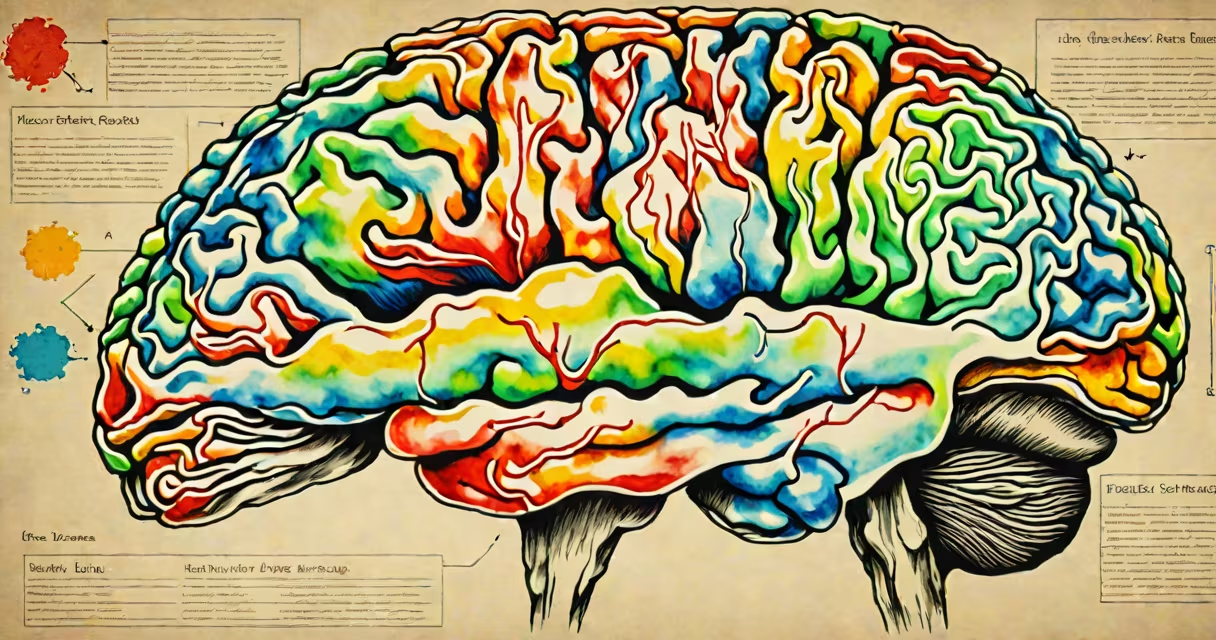
The phrase "use more of my brain" reflects a widespread misconception: that humans only use 10% of their brain capacity. This idea is false. Brain imaging shows that nearly all areas are active during daily tasks, and no region remains unused. The real goal isn't to activate dormant parts-but to improve how existing networks function.
Neuroscience confirms that the brain operates continuously. Even during sleep, multiple regions regulate memory consolidation, emotional processing, and bodily functions. Functional MRI scans reveal activity across both hemispheres during simple actions like walking or recognizing faces. The brain doesn't have idle zones-it's designed to use most of its resources efficiently.
When people say "I want to use more of my brain," they usually mean improving mental clarity, learning speed, or focus. These goals aren't about unlocking hidden brain power-they're about optimizing cognition through proven techniques. The brain isn't underused. It's constantly working. What changes is how effectively it processes information.
Every region of the brain has a known function. The prefrontal cortex handles decision-making and planning. The hippocampus manages long-term memory formation. The cerebellum coordinates movement and balance. Damage to any area results in measurable deficits, proving that no part is inactive.
Studies using PET and fMRI scans show that even basic tasks engage large portions of the brain. A 2013 study published in *Frontiers in Human Neuroscience* analyzed over 200 brain scans and found consistent activation across regions during rest and task performance. There is no "silent" portion of the brain waiting to be awakened.
Neural efficiency matters more than raw volume of activity. High performers in memory or attention tasks don't show more brain activity-they show better connectivity between regions. Their brains process information faster and with less wasted energy.
You can't "activate" unused brain cells. But you can improve cognitive performance through lifestyle choices backed by research. Sleep, nutrition, physical exercise, and mental training all influence brain function.
For example, aerobic exercise increases blood flow to the prefrontal cortex, improving executive function. A 2018 study in *NeuroImage* showed that adults who walked 30 minutes daily for six months had increased gray matter volume in the hippocampus and better spatial memory scores.
Mindfulness meditation reduces activity in the default mode network-the brain system linked to mind-wandering and self-referential thoughts. After eight weeks of daily practice, participants showed reduced rumination and improved attention control, according to a 2016 study in *Psychological Science*.
The 10% myth persists because it sounds intuitive: if we're not aware of everything our brain does, maybe it's not using all its power. But awareness isn't equal to usage. The brain runs countless automatic processes-regulating heart rate, filtering sensory input, managing emotions-without conscious effort.
Another confusion: people equate intelligence with brain size or activity level. But brain size varies widely among individuals, and larger brains don't correlate with higher IQ. Instead, synaptic density and efficient neural pathways predict cognitive ability.
A lesser-known fact: brain plasticity allows adaptation throughout life. After injury, nearby regions often take over lost functions. This isn't because the brain was "wasted"-it's because it's adaptable. The brain doesn't need more space-it needs better wiring.
Improving mental performance involves structured habits, not magic tricks. Here are three evidence-backed approaches:
Consider this example: a student preparing for a biology exam uses spaced repetition with flashcards. They review new terms on Day 1, then again on Day 3, Day 7, and Day 14. By the time of the test, they recall 85% of the material-compared to 55% for a peer who studied all at once.
These strategies don't increase brain usage-they improve how information is encoded and retrieved. The brain is already operating at full capacity. The goal is optimization, not expansion.
When people ask "how do I use more of my brain," they're seeking greater mental capability. That's valid-but the path isn't to enable hidden potential. It's to train existing systems.
Think of the brain like a high-performance engine. You don't add more cylinders-you tune the spark plugs, clean the fuel injectors, and maintain the cooling system. Similarly, focus on sleep hygiene, regular exercise, and deliberate practice to maximize function.
There is no untapped brain reserve. But there is immense room for improvement in how you use what you already have.