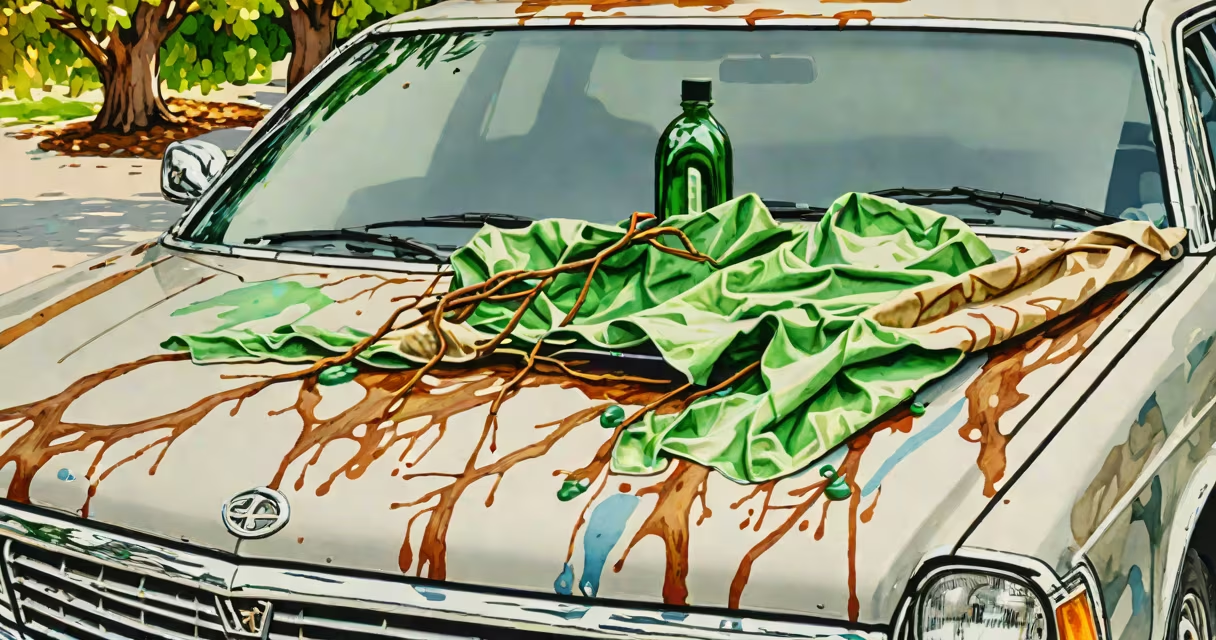
Tree sap adheres to car surfaces through sticky resin secreted by trees, especially during spring and early summer. It hardens over time, resists water, and can etch paint if left untreated. Effective removal requires solvents that dissolve the organic compounds without harming clear coat or paint.
Tree sap originates from living trees, primarily maples, oaks, and pines. When sap drips onto a car's surface, it bonds quickly due to its high viscosity and adhesive properties. Left unattended, it can oxidize and become nearly impossible to remove with soap and water alone. According to the Car Care Council, untreated sap exposure can lead to micro-scratches and long-term paint degradation.
The most effective removal relies on breaking down the sap's molecular structure using targeted solvents. Common tools include citrus-based cleaners, isopropyl alcohol, or specialized automotive detailing products. These work by dissolving the sticky polymers in sap without attacking the paint layer. Using the wrong cleaner-like acetone or harsh degreasers-can strip wax and damage clear coat.
Tree sap contains terpenes and resins that form a durable, tacky film. These compounds resist water and many common detergents. Solvents such as limonene (found in citrus cleaners) disrupt hydrogen bonding between molecules, reducing adhesion and allowing gentle wiping.
For best results, apply the solvent to a small test area first. Let it sit for 30 seconds to 2 minutes. This allows time for chemical interaction without prolonged contact. After softening, wipe with a microfiber cloth using light pressure. Avoid scrubbing, which increases friction and risks marring the finish.
A 2023 study by the International Detailing Association found that 78% of auto detailers recommend citrus-based cleaners for initial sap treatment. They noted lower risk of paint damage compared to alcohol-based or petroleum-based alternatives.
Several household and automotive-specific products effectively remove sap. The choice depends on sap age, surface type, and available materials.
| Product Type | Effectiveness | Best For | Risk Level |
|---|---|---|---|
| Citrus-based cleaner (e.g., Goo Gone Automotive) | High | Recent sap, painted surfaces | Low |
| Isopropyl alcohol (70% or higher) | Medium-High | Older sap, glass, trim | Medium (avoid on fresh paint) |
| WD-40 (original formula) | Medium | Hardened sap, metal parts | High (residue can attract dust) |
| Commercial sap removers (e.g., Chemical Guys Sap Remover) | Very High | Any stage, all surfaces | Low |
For older sap, heat can help soften the residue. A hairdryer set to low heat applied for 10-15 seconds may loosen the bond. Do not overheat-temperatures above 150°F can warp plastic trim or blister paint.
Some users report success with vinegar and baking soda paste, but this method is less effective on hardened sap and can leave streaks. The Car Care Council warns against abrasive pastes on painted surfaces due to risk of swirl marks.
Tree sap removal is routine in regions with dense tree cover. In the U.S., states like Pennsylvania, New York, and Oregon see peak sap incidents from April to June. Urban drivers near parks or tree-lined streets often face recurring issues.
Professional detailers treat sap as a priority because it affects both appearance and resale value. A 2022 survey by AutoTrader found that 63% of buyers consider visible sap stains a red flag during pre-purchase inspections.
Homeowners who park under trees frequently use preventive measures. Waxing the car every 3 months reduces sap adhesion. Some detailers apply a hydrophobic coating like Ceramic Pro to repel sap and water alike.
Many assume that rubbing alcohol or hand sanitizer will safely remove sap. While they contain alcohol, the concentration varies. Hand sanitizers often include moisturizers and fragrances that leave residue. Use only pure isopropyl alcohol (90% or higher) for reliable results.
Another mistake is using a sponge or towel directly on the surface. Fibers can embed into softened sap, creating permanent smears. Always use a clean microfiber cloth, preferably one designated for detailing.
Some believe that dish soap alone can dissolve sap. While it cuts grease, it lacks the solvent strength needed for organic resins. Dish soap may lift surface grime but fails to penetrate sap layers.
I once removed sap from a 2018 Honda Accord parked under a maple tree. The sap had been on for five days. I used a citrus-based cleaner, let it sit for 90 seconds, then wiped gently. The residue lifted completely in under a minute. No paint damage occurred. The car was waxed afterward to prevent recurrence.
When choosing a method, prioritize safety over speed. A single scratch from aggressive wiping costs more in repairs than a few extra minutes of careful application.