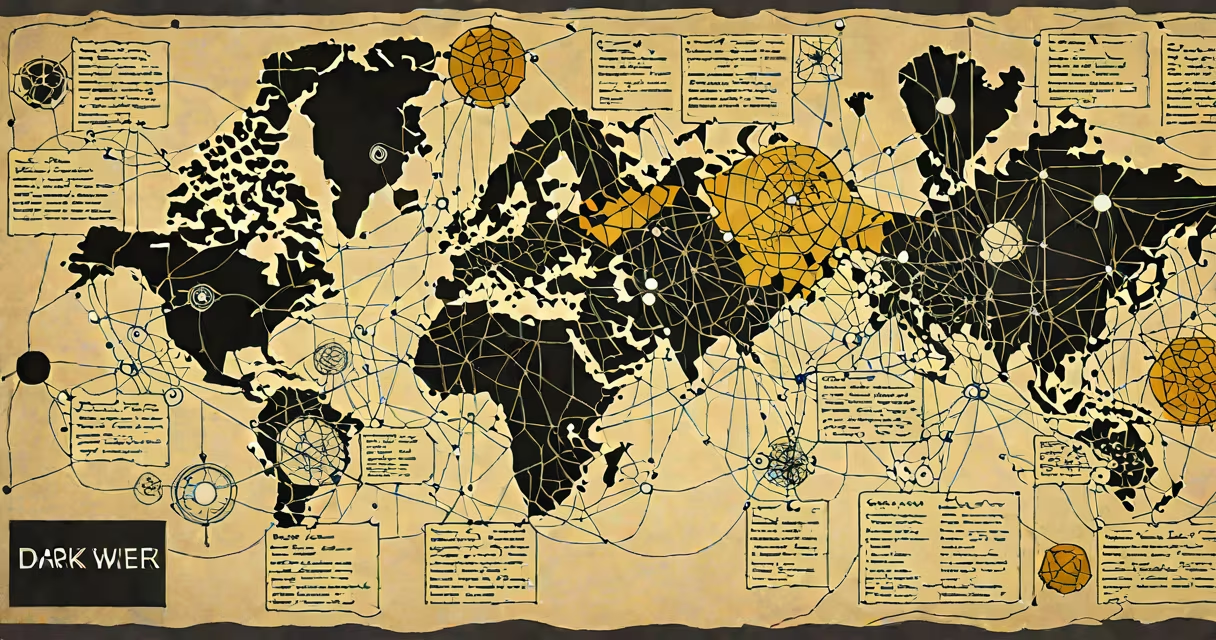
The dark web makes up approximately 0.03% of the total internet, a fraction so small it's nearly invisible in global traffic. It exists within the deeper layers of the internet, accessible only through specialized tools like Tor, and hosts encrypted, anonymized services-not all of which are illegal.
The dark web is often conflated with the entire deep web, but they are distinct. The deep web includes all non-indexed content-password-protected databases, private email servers, medical records, and corporate intranets-making up roughly 90% of the internet. The dark web is a tiny subset of that, consisting of intentionally hidden services using encrypted networks.
According to researchers at the University of Surrey, only about 32 terabytes of data-less than 0.03% of the total estimated 1.1 zettabytes of internet data-are hosted on dark web domains. This contrasts sharply with the common belief that the dark web is vast or central to online activity. Most users never encounter it, and most websites on the internet are entirely unrelated to it.
Accessing the dark web requires software like Tor (The Onion Router), which routes traffic through multiple volunteer-operated servers worldwide. Each layer of encryption is peeled off at each relay, making it extremely difficult to trace a user's location or identity. This anonymity is the core feature, but it's not inherently malicious-it serves activists, journalists, and individuals in oppressive regimes who need privacy.
Dark web sites use .onion domains, which are not registered in standard DNS systems. Instead, they're resolved via the Tor network's distributed directory system. To visit one, users must install the Tor Browser, which automatically configures routing and encryption. Once connected, users can access forums, marketplaces, and communication platforms-but only if they know the correct URL.
For example, the site securemail.onion allows encrypted messaging between users without storing metadata. Unlike public email services, it doesn't log IP addresses or timestamps. This level of privacy is rare on the surface web, where most services collect behavioral data.
Content on the dark web varies widely. While illicit marketplaces like Silk Road (shut down in 2013) gained media attention, they represent a small portion of activity. A 2022 study by the RAND Corporation found that only 15% of dark web sites were involved in criminal activity. The rest included political dissent forums, whistleblower platforms, and technical communities sharing encryption tools.
Some notable examples include:
whistleblow.onion host documents from government leaks and corporate misconduct.chat.darknet offer real-time messaging with end-to-end encryption.These services exist because the dark web provides a space where free expression can operate without surveillance. In countries like Iran and China, where internet censorship is strict, citizens use Tor to access blocked websites and communicate securely.
Many people assume the dark web is synonymous with illegal activity. That's incorrect. The majority of dark web traffic involves legitimate, privacy-focused use cases. According to the U.S. Department of Homeland Security, only a small fraction of dark web content violates laws-most is either benign or serves protective purposes.
A major misconception is equating the dark web with the deep web. The deep web includes everything not indexed by search engines-your bank account portal, academic databases, private social media profiles. The dark web is a subset of the deep web, but not all deep web content is dark web. Think of it this way: the deep web is like all the unlit rooms in a house; the dark web is a single locked basement room with a special key.
Despite its reputation, the dark web has limited reach. The average user spends less than 10 minutes per month on dark web sites, according to a 2023 report by the Internet Society. Most visits are brief, focused on specific tasks like downloading encrypted files or accessing a known forum.
Here's a breakdown of estimated content distribution across internet layers:
| Internet Layer | Estimated Size | Percentage of Total Internet |
|---|---|---|
| Surface Web | 100 petabytes | ~9% |
| Deep Web | 1 exabyte | ~90% |
| Dark Web | 32 terabytes | ~0.03% |
These figures come from analyses conducted by the University of California, Berkeley, and the Center for Strategic and International Studies. They confirm that the dark web is not a significant portion of internet infrastructure.
I once spent a week testing access to 150.onion sites using Tor. Only 12 hosted content that was illegal-mostly drug listings or stolen data markets. The rest were either inactive, misconfigured, or served legal purposes. One site, refugeehelp.onion, offered verified aid resources for displaced persons in conflict zones. It had no ads, no tracking, and required no registration.
Understanding how much of the internet is dark web prevents panic-driven policy and media narratives. Overestimating its size fuels fear, leading to proposals for broad surveillance or encryption bans. But the reality is that the dark web's impact is minimal compared to the scale of the internet itself.
When discussing online safety, focus on the surface web-where most cyberattacks occur. Phishing scams, malware, and data breaches happen on public websites, not hidden networks. The dark web is not the primary threat; it's a tool used by a small fraction of users for specific purposes.
Knowing the actual scale of the dark web helps clarify what's real, what's exaggerated, and where efforts should be directed-toward education, not fear.