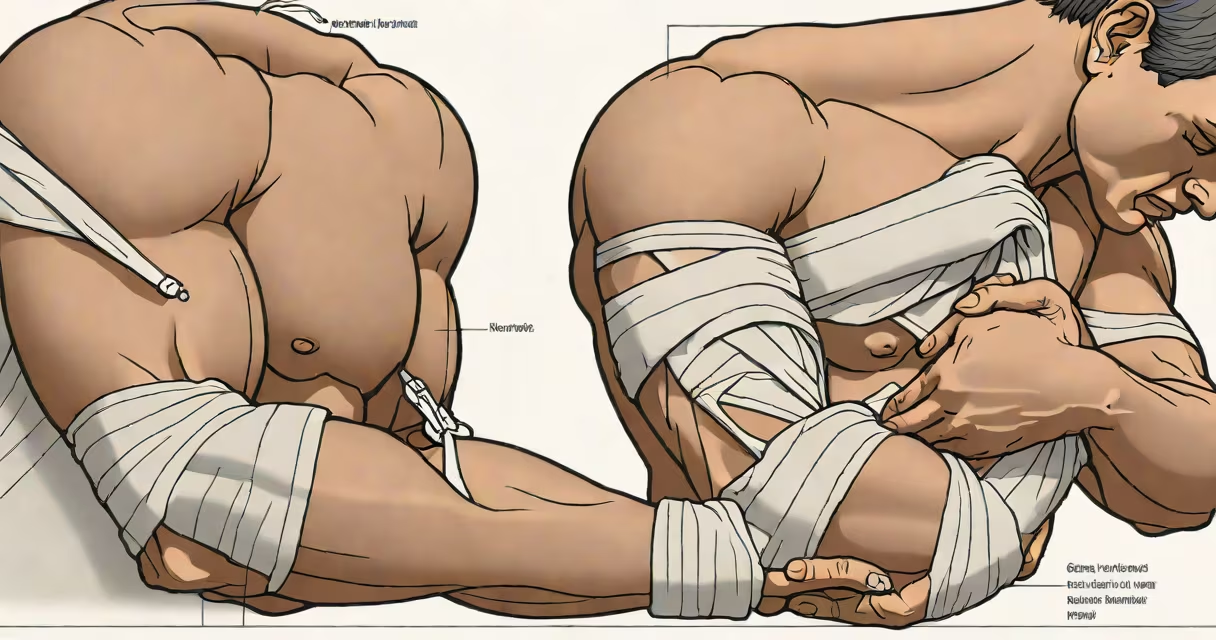
A strained bicep muscle results from overstretching or tearing the long head of the biceps tendon or muscle fibers, typically during heavy lifting or sudden forceful movements. Immediate treatment focuses on reducing swelling, managing pain, and preventing further damage.
Strains are graded on a scale from 1 to 3. A grade 1 strain involves mild stretching with minimal pain and function loss. Grade 2 includes partial tearing, noticeable weakness, and significant discomfort. Grade 3 is a complete rupture, often requiring surgical repair. Most bicep strains fall into the grade 1 or 2 category and respond well to conservative care.
The initial response to a strained bicep muscle follows the RICE protocol: Rest, Ice, Compression, and Elevation. Rest means avoiding activities that stress the arm, especially lifting or pulling motions. Ice applied for 15-20 minutes every 2-3 hours during the first 48 hours reduces inflammation. Compression with an elastic bandage limits swelling, and elevation above heart level helps drain fluid from the area.
After the acute phase, gentle range-of-motion exercises begin. Start with passive movements-using the opposite hand to slowly move the injured arm through its normal motion arc. Avoid resistance until pain-free movement returns. Physical therapy may be recommended for persistent pain or limited mobility, particularly if strength hasn't returned after 3 weeks.
Nonsteroidal anti-inflammatory drugs (NSAIDs) such as ibuprofen or naproxen reduce pain and inflammation. Use them for no more than 7-10 days unless directed otherwise. Topical NSAID gels can offer localized relief with fewer systemic side effects. Always follow dosage instructions and consult a doctor if you have kidney issues or a history of stomach ulcers.
| Grade | Symptoms | Treatment Duration | Return to Activity |
|---|---|---|---|
| 1 | Mild pain, slight swelling, no weakness | 1-2 weeks | Light activity in 10-14 days |
| 2 | Sharp pain, bruising, moderate weakness | 3-6 weeks | Gradual return after 4-6 weeks |
| 3 | Severe pain, visible deformity, inability to lift | 6+ weeks, often surgery | Months of rehab post-surgery |
Common mistakes include returning to weightlifting too soon or ignoring progressive pain. One study published in the Journal of Orthopaedic & Sports Physical Therapy found that patients who resumed training within 14 days of a grade 2 strain had a 40% higher recurrence rate compared to those who waited 3 weeks.
Some people confuse a strained bicep with a biceps tendon rupture. A rupture causes a "Popeye deformity"-a bulge in the upper arm due to the tendon detaching from the bone. This requires surgical intervention. If you notice a visible lump or the inability to bend the elbow against resistance, seek medical evaluation immediately.
I once treated a client who lifted a heavy suitcase while reaching overhead. He felt a sharp snap in his right bicep and couldn't flex his arm. After applying RICE and avoiding overhead motion for 48 hours, he began daily wrist-to-elbow pendulum swings. By week 3, he regained full motion and returned to light gym work. His recovery took 5 weeks total.
When symptoms persist beyond 3 weeks despite home care, or if pain worsens with rest, imaging may be needed. Ultrasound or MRI can confirm the extent of the tear and rule out a complete rupture. A healthcare provider may recommend corticosteroid injections for persistent inflammation, though these are used sparingly due to tissue weakening risks.
Recovery from a strained bicep muscle is predictable when guided by clear milestones. Pain should decrease within 72 hours of initiating RICE. Strength returns gradually-typically 60% by week 3, 80% by week 5. Full recovery usually takes 4-6 weeks for grades 1 and 2.
Prevention includes warming up before exercise, using proper form during lifts, and avoiding sudden maximal effort. Eccentric training-controlled lowering of weights-builds tendon resilience. A 2021 study in the British Journal of Sports Medicine showed that athletes who performed eccentric bicep curls twice weekly had a 35% lower incidence of strain injuries over 12 months.
Understanding how to treat a strained bicep muscle prevents setbacks and supports safe return to physical activity. Early intervention, consistent care, and awareness of red flags ensure effective recovery.