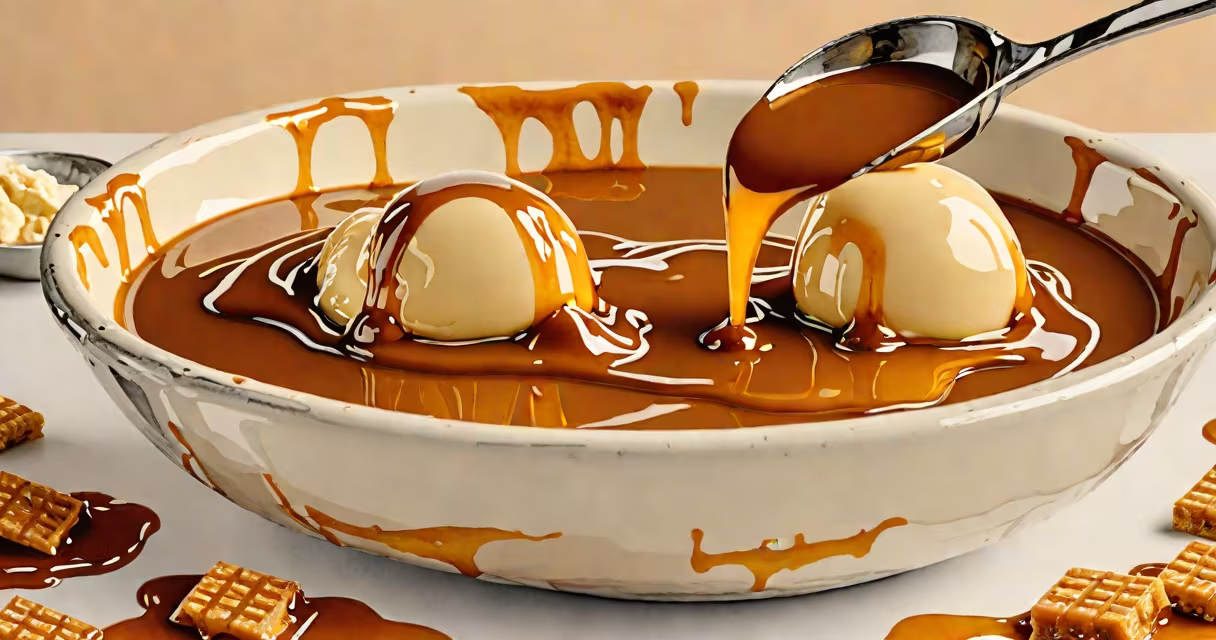
Simple caramel sauce is a smooth, rich, and sweet condiment made by cooking sugar until it melts and turns amber, then combining it with butter and heavy cream. It requires no special equipment and takes under 10 minutes to prepare.
This sauce forms the base of many desserts, from classic crème brûlée to modern milkshakes. Its texture ranges from pourable to thick, depending on cooking time and ingredient ratios. It's not just a topping-it's a flavor enhancer that deepens sweetness and adds complexity to both sweet and savory dishes.
Unlike commercial versions that rely on corn syrup and artificial flavors, simple caramel sauce uses just four core ingredients: sugar, butter, heavy cream, and a pinch of salt. This minimalism makes it easy to customize and control. It's also stable at room temperature for up to five days when stored in a sealed jar.
Caramelization begins when granulated sugar heats to around 320°F (160°C). At this point, the sugar molecules break down and recombine into new compounds that produce a deep amber color and nutty aroma. This process is irreversible-the sugar cannot return to its original state.
Adding butter and cream cools the mixture slightly and introduces fat and water. The fat stabilizes the caramel, preventing crystallization. The water in the cream helps dissolve any remaining sugar crystals. Without this step, the sauce may develop grainy lumps.
Once combined, the sauce must cool for at least 15 minutes before serving. Cooling allows the emulsion to stabilize and prevents the sauce from burning the mouth. A warm sauce spreads better, while a cooled version holds structure on a cake or pie.
The standard recipe calls for 1 cup granulated sugar, ¼ cup unsalted butter, ½ cup heavy cream, and ½ teaspoon sea salt. These proportions yield approximately 1½ cups of sauce. Using dark brown sugar instead of white creates a deeper, molasses-like flavor.
For a richer taste, replace half the cream with evaporated milk. For a lighter texture, use half-and-half-but reduce the heat to avoid curdling. Adding 1 teaspoon of vanilla extract enhances the aroma without altering the base flavor.
Some recipes include a splash of bourbon or rum for a grown-up twist. A single tablespoon adds warmth and complexity. However, alcohol burns off during cooking, leaving behind only flavor notes.
| Ingredient | Role | Substitution Tip |
|---|---|---|
| Sugar | Base for caramelization | Use light brown sugar for a toffee note |
| Butter | Stabilizes texture, adds richness | Use ghee for dairy-free option |
| Heavy cream | Cools and dilutes the caramel | Replace with coconut cream for vegan version |
| Sea salt | Balances sweetness | Use flaky salt for texture contrast |
Simple caramel sauce appears in home kitchens, bakeries, and restaurants. It's used to coat fruits like bananas or apples in a pan-fry, drizzle over cheesecake, or mix into cookie dough for swirls.
It's a staple in American desserts such as banana split sundaes, s'mores bars, and chocolate-dipped strawberries. In French patisserie, it's layered into mille-feuille or used as a glaze for tarte tatin.
A common mistake is pouring hot sauce onto frozen ice cream. The sudden temperature change causes the sauce to seize and form clumps. Always serve at room temperature or slightly warmed.
Many assume that stirring the sugar while it melts prevents burning. This is false. Stirring too early introduces moisture, which causes sugar to crystallize. The correct method is to swirl the pan gently and watch the sugar melt evenly.
Another myth is that adding water to sugar speeds up caramelization. Water delays the process by raising the boiling point. It's safe to add a tablespoon of water to help dissolve sugar, but only if done before heating. Once the sugar starts to melt, water must be avoided.
Some online recipes suggest using a candy thermometer. While useful, it's not necessary. The visual cue-amber color and a faint smell of burnt sugar-is enough for most cooks. Overheating beyond 350°F (177°C) turns the sauce bitter and unusable.
I made simple caramel sauce last winter during a power outage. No oven, no electric stove-just a gas burner and a heavy-bottomed saucepan. I used 1 cup sugar, ¼ cup butter, ½ cup cream, and ½ tsp salt. I heated the sugar over medium heat, swirling the pan every 30 seconds. After 6 minutes, the sugar turned golden amber. I added the butter and cream slowly, watching for bubbles. After 2 minutes, the sauce smoothed out. I let it cool for 20 minutes. The result was glossy, thick, and perfect for drizzling over leftover pumpkin bread.
After cooling, I stored it in a glass jar. It lasted 8 days without separation. The only issue was slight crystallization on the surface-easily fixed by reheating and stirring.
When testing recipes, always start with small batches. A full cup of sugar can burn quickly. Use a ½-cup batch to learn timing and technique before scaling up.
Simple caramel sauce is not just a dessert fix-it's a foundational element in cooking. Its versatility, ease, and depth make it a go-to for beginners and pros alike. With the right technique, it's impossible to fail.