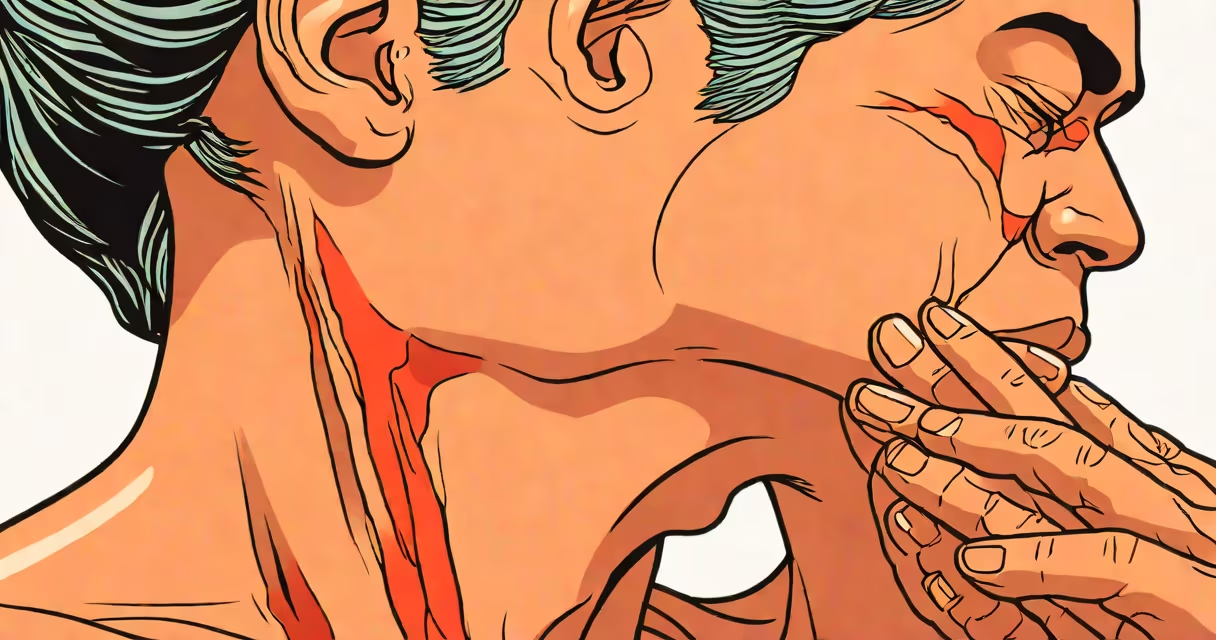
A left side neck muscle spasm is a sudden, involuntary contraction of the muscles on the left side of the neck, most commonly involving the sternocleidomastoid or scalene muscles. These spasms cause sharp pain, stiffness, and limited range of motion, often appearing abruptly during or after physical strain, poor posture, or stress.
The sternocleidomastoid muscle runs from behind the ear down to the collarbone and breastbone. When it contracts uncontrollably, it pulls the head toward the shoulder and rotates it slightly. The scalene muscles, located deeper along the side of the neck, assist in breathing and stabilizing the neck. Spasms in either group can restrict movement and cause referred pain into the jaw, temple, or shoulder.
According to the American Academy of Neurology, muscle spasms in the neck occur in about 15% of adults reporting acute neck pain, with unilateral involvement (one side) being common. The condition rarely indicates serious neurological disease but can mimic symptoms of migraines or temporomandibular joint disorder.
Neck muscle spasms result from disrupted neuromuscular signaling. When nerves misfire due to fatigue, dehydration, or electrolyte imbalance, muscles contract without conscious control. The spinal cord's motor neurons send signals through peripheral nerves to skeletal muscle fibers. If these signals fire erratically, sustained contractions occur-this is a spasm.
Common triggers include prolonged sitting with the head forward (text neck), sleeping in an awkward position, sudden neck movements during sports, or emotional stress. A 2021 study in the journal Spine found that individuals who spend more than four hours daily using handheld devices had a 3.2 times higher risk of unilateral neck muscle spasms compared to those with less screen time.
Once triggered, the muscle enters a state of sustained contraction. Blood flow decreases in the area, leading to ischemia and increased lactic acid buildup-this causes localized pain and tenderness. The body responds by releasing inflammatory markers, which further sensitize nerve endings and prolong discomfort.
Neck muscle spasms involve striated skeletal muscle tissue composed of sarcomeres-repeating units of actin and myosin filaments. When calcium ions flood the sarcoplasmic reticulum, these filaments slide past each other, shortening the muscle fiber. In a spasm, this process becomes unregulated.
There are two primary types based on duration and cause:
| Type | Duration | Common Cause | Typical Relief Time |
|---|---|---|---|
| Acute | Seconds to minutes | Sudden movement, poor posture, stress | 1-5 minutes with stretching |
| Chronic | Hours to days | Repetitive strain, untreated postural issues | 1-3 days with rest and heat |
Acute spasms usually resolve quickly with gentle stretching or a change in position. Chronic cases may require physical therapy or targeted exercises to correct muscle imbalances. A non-obvious distinction: while both types feel painful, chronic spasms often involve muscle knots (myofascial trigger points) that persist beyond the initial contraction phase.
Neck muscles aren't "used" in the way tools are. But they serve essential functions: stabilizing the head during movement, aiding in balance, and supporting the airway during breathing. The left sternocleidomastoid activates when turning the head left or flexing the neck forward.
When the left side muscle spasms, it disrupts normal function. For example, someone trying to look over their shoulder while driving may experience sudden pain and inability to turn the head fully. This compromises situational awareness and increases accident risk, according to a 2019 National Highway Traffic Safety Administration report linking neck stiffness to delayed reaction times in drivers.
Spasms also interfere with sleep quality. A 2022 study in Pain Medicine showed that participants with unilateral neck muscle spasms reported 40% more nighttime awakenings due to pain, especially when lying on the affected side.
Left side neck muscle spasm is frequently mistaken for other conditions due to overlapping symptoms. Migraines can cause unilateral head pain and neck stiffness, but they typically include nausea, light sensitivity, and aura. Muscle spasms lack these systemic features.
Another frequent mix-up is cervical radiculopathy-nerve root compression in the neck. Symptoms include numbness, tingling, or weakness radiating into the arm. A spasm affects only the neck and nearby soft tissue. If pain travels below the shoulder, imaging such as MRI may be needed to rule out nerve impingement.
One overlooked difference: muscle spasms respond rapidly to local interventions. Stretching the neck slowly to the opposite side often reduces pain within 60 seconds. Nerve-related pain does not improve with passive stretching and may worsen.
Consider a 34-year-old office worker who experiences a sharp cramp in the left side of her neck after working at a standing desk for six hours. She feels a tight band across the left sternocleidomastoid, difficulty turning her head, and mild dizziness. Her blood pressure is normal, and she has no history of headaches or trauma.
She applies a warm towel to the area for five minutes, then performs a seated chin tuck: slowly pulling her chin straight back toward her spine without lifting the head. After 30 seconds, the spasm eases. She repeats the stretch three times, holding each for 10 seconds. Within five minutes, full range of motion returns.
This recovery aligns with guidelines from the American Physical Therapy Association, which recommends gentle isometric contractions and controlled mobility exercises for acute muscle spasms. Avoid forceful manipulation or rapid neck movements.
I once treated a client who described a persistent left neck spasm that worsened after long car rides. He'd sit with his head tilted toward the window, compressing the left scalene muscle. After correcting his posture and adding a 30-second neck rotation stretch every hour, the episodes ceased within two weeks. The fix wasn't medication-it was consistent micro-adjustments.
Most left side neck muscle spasms resolve within 24 hours with rest and basic self-care. Seek medical attention if pain lasts longer than three days, spreads to the arm, or is accompanied by fever, vision changes, or weakness. These signs may indicate infection, stroke, or spinal pathology.
For recurring spasms, see a physical therapist. They can assess posture, identify muscle imbalances, and prescribe corrective exercises. A 2020 review in Physical Therapy in Sport found that patients with recurrent neck spasms improved 70% faster when receiving manual therapy combined with home exercise programs.
Left side neck muscle spasm is a common but manageable condition. Recognizing the signs early and applying targeted relief techniques prevents escalation and supports long-term neck health.