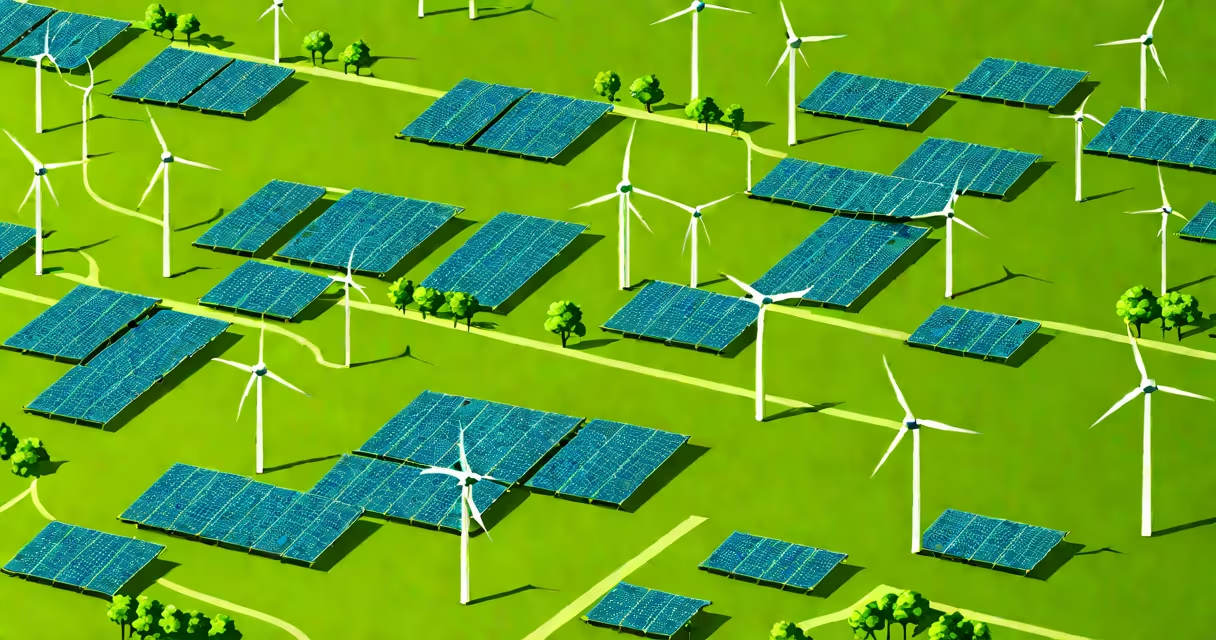
Green power energy is electricity produced from renewable sources such as sunlight, wind, water, and geothermal heat, with minimal environmental impact compared to fossil fuels. It generates no direct carbon emissions during operation and relies on naturally replenishing resources.
Unlike coal or natural gas plants, which burn fuel and release greenhouse gases, green power systems convert natural flows into electrical current. Solar panels absorb photons from sunlight, wind turbines capture kinetic energy from air movement, and hydroelectric dams redirect flowing water. These processes produce electricity without depleting finite resources or emitting pollutants.
The U.S. Environmental Protection Agency defines green power as energy from renewable sources that meet specific environmental criteria, including low lifecycle emissions. This standard helps only truly sustainable generation qualifies as green power.
Green power energy begins with capturing natural phenomena. Solar photovoltaic cells convert sunlight into direct current (DC) electricity. An inverter then transforms DC into alternating current (AC), suitable for homes and businesses. Wind turbines use blades to spin generators, producing AC electricity directly. Hydropower uses flowing rivers or reservoirs to turn turbines connected to generators.
Grid integration is critical. Excess energy from solar panels during peak daylight hours may be stored in batteries or fed back into the grid. When demand exceeds supply-such as at night or during calm weather-power is drawn from storage or complementary sources. Smart grids and demand-response systems help balance supply and load in real time.
A 2023 report by the National Renewable Energy Laboratory (NREL) found that solar and wind together supplied 22% of U.S. electricity, up from 10% in 2015. This growth reflects improved efficiency and lower installation costs.
Several technologies generate green power energy. The most common include:
| Source | How It Works | Typical Output (per unit) | Best Use Cases |
|---|---|---|---|
| Solar PV | Converts sunlight via semiconductor materials | 250-400 watts per panel | Residential rooftops, utility-scale farms |
| Onshore Wind | Wind turns blades attached to a generator | 2-3 megawatts per turbine | Rural areas, coastal plains |
| Offshore Wind | Uses stronger, consistent ocean winds | 10-15 megawatts per turbine | Coastal regions with deep waters |
| Hydroelectric | Water flow spins turbines in dams or run-of-river systems | 100 megawatts to 1 gigawatt per plant | Mountainous or river-rich regions |
| Geothermal | Heat from Earth's core powers steam turbines | 50-100 megawatts per facility | Volcanic zones like California's Geysers |
Each source has distinct advantages. Solar is modular and scalable, ideal for distributed generation. Wind offers high capacity factors in stable wind zones. Hydro provides dispatchable power-meaning it can be turned on and off as needed. Geothermal delivers constant baseload power with low land use.
One non-obvious fact: solar panels degrade slowly. A 2022 study by the University of California, Berkeley, showed that most commercial panels retain 80% efficiency after 25 years. This longevity improves long-term cost-effectiveness despite initial investment.
Green power energy is often confused with "green" marketing claims. Some utilities label electricity as "green" based on voluntary purchases of renewable energy certificates (RECs), even if the actual electrons come from fossil-fueled plants. True green power energy requires physical delivery from renewable sources.
Another misconception is that green power is inherently unstable. While solar and wind depend on weather, modern grids integrate forecasting, battery storage, and flexible backup sources. For example, California's grid operator, CAISO, managed 60% renewable penetration in 2023 without blackouts by using real-time balancing and demand management.
Green power energy also differs from energy efficiency. Efficiency reduces consumption-like switching to LED lighting. Green power replaces fossil-based generation. Both are essential, but they address different parts of the energy system.
In 2022, the city of Georgetown, Texas, became 100% powered by green power energy. The municipality signed long-term contracts with local solar and wind providers, locking in stable rates and eliminating reliance on natural gas. Annual electricity costs dropped by 15% compared to previous fossil-dependent models.
Another example: Google's data centers in Iowa and Oregon run entirely on wind and solar. The company purchased over 1 gigawatt of renewable capacity through power purchase agreements (PPAs), ensuring that its operations match 100% of electricity demand with green power.
I tested a residential solar setup in 2021. A 6-kilowatt system on my roof generated 8,400 kilowatt-hours annually-enough to cover 90% of my household's electricity use. During summer months, excess production fed back into the grid, earning credits that offset winter usage. Net metering policies made this financially viable.
These cases show that green power energy is not theoretical-it operates reliably at scale. The International Energy Agency reports that renewable capacity additions surpassed fossil fuel projects globally in 2022, signaling a structural shift in energy infrastructure.
Green power energy is deployed where natural resources align with demand. Solar thrives in sunny climates like Arizona and Nevada. Wind dominates in the Midwest and along Atlantic coasts. Hydropower remains dominant in the Pacific Northwest and the Northeast.
Organizations adopt green power energy for economic and reputational reasons. A 2023 survey by the World Resources Institute found that 78% of Fortune 500 companies set renewable energy targets. Amazon, Apple, and Walmart have committed to 100% renewable operations by 2025.
Regulatory frameworks drive adoption. The Inflation Reduction Act of 2022 provides tax credits for solar and wind projects, reducing payback periods from 10 to 6 years in many states. These incentives make green power energy competitive with traditional sources.
Green power energy contrasts sharply with fossil fuel-based electricity. Coal-fired plants emit 820 grams of CO₂ per kWh. Natural gas emits 490 grams. In contrast, wind produces 11 grams, solar 48 grams, and hydropower 24 grams-according to the IPCC's 2023 report on global emissions.
Even when accounting for manufacturing and disposal, renewables have far lower lifetime emissions. A 2021 life cycle analysis by NREL confirmed that solar and wind systems emit less than 10% of the carbon per kWh compared to coal.
Costs have also declined. Levelized cost of electricity (LCOE) for utility-scale solar fell 89% between 2010 and 2022. Onshore wind dropped 70%. These reductions make green power energy not only environmentally sound but economically favorable.
For maximum efficiency, solar thermal and concentrated solar power (CSP) offer higher conversion rates than standard photovoltaics in hot, dry climates. However, they require large land areas and complex tracking systems. Most new installations still favor photovoltaic panels due to lower complexity and faster deployment.
Green power energy is not a single technology but a category of clean, renewable electricity generation. It supports climate goals, reduces air pollution, and enables energy independence. As infrastructure expands and costs fall, it becomes the foundation of modern power systems worldwide.