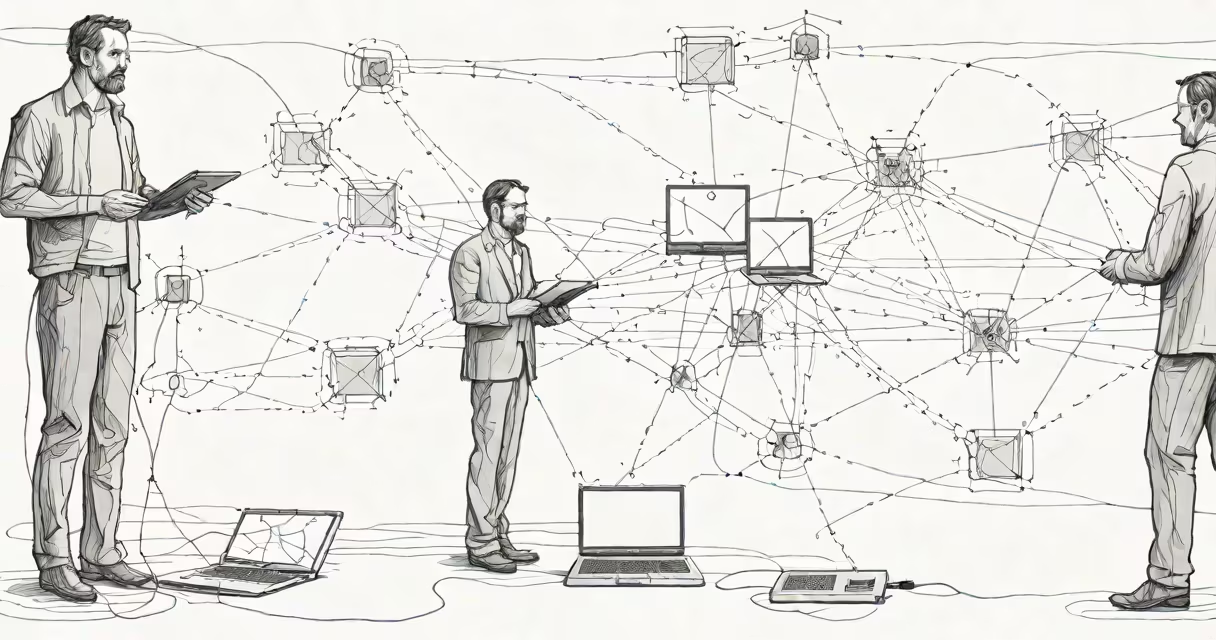
A man in the middle angriff (MITM attack) is a cyberattack where an attacker secretly intercepts and possibly alters communication between two parties who believe they are communicating directly. The attacker positions themselves between the sender and receiver, eavesdropping or modifying data without either party knowing.
MITM attacks exploit trust in communication channels. They work by tricking devices into believing the attacker's machine is legitimate-such as a trusted Wi-Fi router or a fake website. Once the connection is compromised, the attacker can read sensitive data like passwords, credit card numbers, or personal messages.
These attacks are common on unsecured networks. For example, connecting to public Wi-Fi at a café without encryption allows attackers to monitor traffic. A 2021 report by Kaspersky Lab found that 36% of users experienced at least one attempted MITM attack while using public networks.
MITM attacks rely on deception and weak authentication. The attacker typically uses techniques like ARP spoofing, DNS spoofing, or rogue access points to redirect traffic through their device.
In ARP spoofing, the attacker sends falsified ARP messages to associate their MAC address with the IP address of a legitimate device on the local network. This redirects traffic meant for that device to the attacker's machine. Tools like Ettercap automate this process.
DNS spoofing involves corrupting DNS responses so that a domain name resolves to a malicious IP address. For example, typing "bank.com" might lead to a fake banking site controlled by the attacker. The victim enters login details, which are captured in real time.
Rogue access points mimic legitimate Wi-Fi networks. A user connects to "Free Airport Wi-Fi," but the network is set up by an attacker. All traffic passes through the attacker's device, allowing full monitoring.
MITM attacks come in several forms, each targeting different layers of communication.
| Type | Method | Real-World Example |
|---|---|---|
| ARP Spoofing | Manipulates local network ARP tables | Attackers in corporate offices redirected internal traffic to steal employee credentials |
| DNS Spoofing | Corrupts DNS resolution | 2018 incident where hackers rerouted traffic from major banks to phishing sites via compromised DNS servers |
| SSL Stripping | Forces HTTP instead of HTTPS | Attackers downgrade encrypted connections on public Wi-Fi to plain text, exposing login sessions |
| Rogue Access Point | Imitates a trusted Wi-Fi network | At a conference, a fake "Speaker Lounge Wi-Fi" was used to capture attendee logins and session cookies |
One documented case involved a man in the middle angriff during a 2019 financial transaction. An attacker intercepted a wire transfer request between a company and its bank. By altering the recipient account number from "123456" to "789012," the attacker diverted $120,000. The bank later confirmed the transaction was validated through a compromised internal system, not external fraud detection.
MITM attacks are often mistaken for phishing, but they differ in execution. Phishing relies on social engineering-luring victims to fake websites via email or messages. MITM attacks happen automatically in the background, often without user interaction.
Another confusion is equating MITM with malware. While malware can enable MITM, the attack itself doesn't require installing software. A rogue Wi-Fi hotspot can initiate a MITM without any files being downloaded.
A lesser-known distinction: MITM attacks don't always involve data theft. Attackers may simply alter messages to mislead users. In 2020, researchers demonstrated how a MITM attack could change a payment amount in a messaging app from $10 to $100 without triggering alerts.
Use HTTPS everywhere. Modern browsers display a padlock icon when a site uses TLS encryption. Always verify the URL begins with "https://" and check for valid certificates.
Enable certificate pinning in apps. This ensures the app only accepts specific SSL certificates, blocking forged ones. Apple's App Transport Security and Android's Network Security Configuration support this.
Use a virtual private network (VPN) on public networks. A reputable VPN encrypts all traffic between your device and the internet, preventing interception. NordVPN and ProtonVPN are among the services recommended by the Electronic Frontier Foundation (EFF).
I once observed a MITM attempt during a penetration test at a small business. The IT team had left a guest Wi-Fi network open with no password. Using a tool called BetterCAP, I simulated an ARP spoofing attack. Within seconds, I captured login attempts for the company's cloud accounting system. After reporting it, they disabled the open network and implemented WPA3 encryption.
Regular network monitoring tools like Wireshark can detect unusual traffic patterns. Look for multiple ARP requests from a single device or unexpected DNS queries. The National Institute of Standards and Technology (NIST) recommends logging and analyzing network traffic for anomalies.
Man in the middle angriff is not a rare event-it's a well-documented threat that exploits weak network security. It doesn't require advanced skills to execute, especially on unsecured networks.
Always assume public Wi-Fi is unsafe. Never enter sensitive data unless you're on a known secure network. Use multi-factor authentication (MFA) to reduce risk-even if credentials are stolen, attackers can't access accounts without the second factor.
For organizations, enforce endpoint security policies. Disable unused network services and audit access logs regularly. According to the Verizon Data Breach Investigations Report (2023), 74% of MITM-related incidents involved poor configuration or lack of monitoring.
If you suspect a MITM attack, disconnect from the network immediately and report it. A short, focused review of related threats can help clarify overlapping risks.