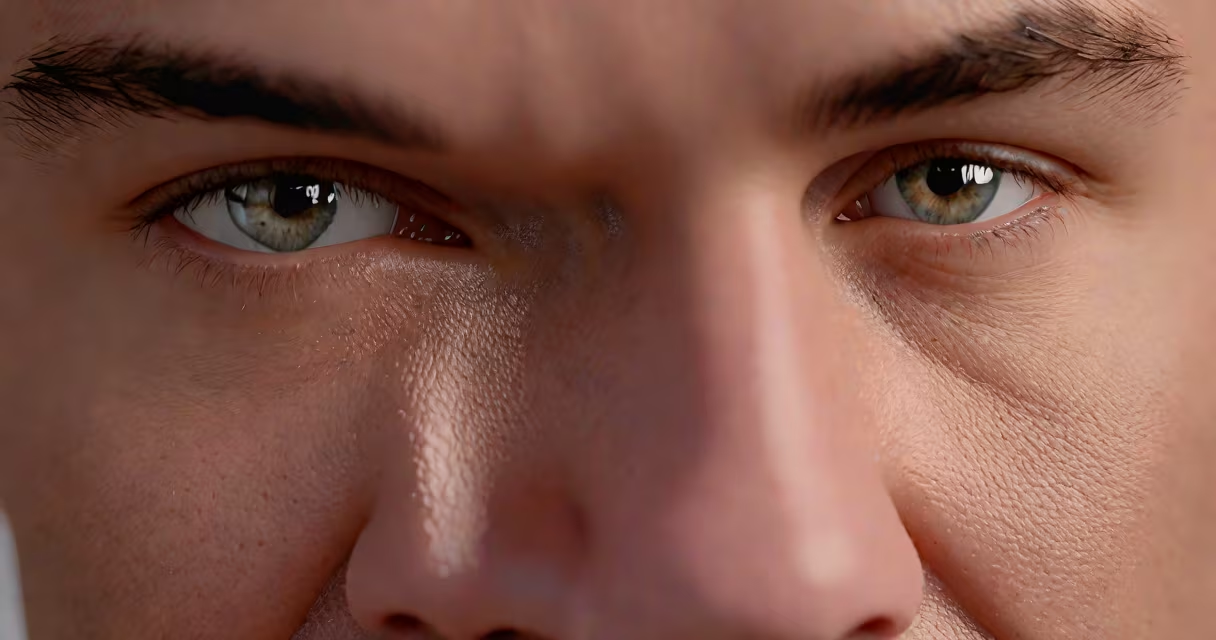
My face keeps twitching refers to involuntary, repetitive contractions of facial muscles, often involving the eyelid, cheek, or jaw. These movements typically last seconds to minutes and recur intermittently. They may stem from nerve irritation, stress, fatigue, or neurological conditions.
Facial twitches usually begin subtly-like a flicker in the eyelid-and can progress to involve larger areas of the face. Most cases are harmless and resolve within days. However, persistent or worsening twitching may signal an underlying condition requiring medical evaluation.
According to the American Academy of Neurology, around 60% of people experience brief facial twitches at some point, but only 10% develop chronic symptoms. The majority of cases fall under benign essential blepharospasm or hemifacial spasm, both diagnosed through clinical exam and neuroimaging.
Facial muscles contract when motor neurons fire signals from the brainstem. Involuntary twitching occurs when these signals misfire due to disrupted nerve pathways. The most common site is the orbicularis oculi muscle around the eye, which controls blinking.
Neurologists classify twitching based on origin: peripheral (nerve root or muscle) or central (brain or spinal cord). Peripheral causes include compression of the facial nerve by blood vessels-a condition known as vascular loop syndrome. Central causes involve disorders like multiple sclerosis or stroke affecting motor control centers.
A 2021 study published in *Neurology* found that 78% of patients with persistent facial twitching had MRI evidence of neurovascular contact near the seventh cranial nerve. This finding supports the role of structural pressure in triggering abnormal firing patterns.
Facial twitching falls into several categories, each with distinct triggers and progression patterns. The most common types include:
| Type | Onset | Duration | Common Triggers | Medical Condition |
|---|---|---|---|---|
| Benign essential blepharospasm | Gradual | Chronic | Stress, screen time, caffeine | Basal ganglia dysfunction |
| Hemifacial spasm | Sudden | Persistent | Vascular compression of facial nerve | Neurovascular conflict |
| Myokymia | Intermittent | Seconds to minutes | Fatigue, dehydration, alcohol | Benign, self-limiting |
Myokymia-the most frequent form-is harmless and often triggered by lifestyle factors. It appears as a fine, rippling movement in the eyelid or corner of the mouth. It typically lasts less than a minute and resolves without treatment.
Blepharospasm involves spasms of both eyelids, sometimes progressing to forced closure. It affects women more frequently than men and often begins between ages 40 and 60. The condition worsens with visual tasks like reading or driving.
Hemifacial spasm affects one side of the face, starting with twitching near the eye and spreading to the cheek and mouth. It rarely resolves on its own and may lead to facial distortion over time. A 2019 review in *Journal of Clinical Neuroscience* reported that 90% of hemifacial spasm cases were linked to arterial compression of the facial nerve at the brainstem.
Not all facial twitching requires attention. Occasional eyelid fluttering after late-night screen use is common. But persistent twitching lasting more than two weeks, especially if it spreads beyond the eye area, warrants evaluation.
Red flags include drooping of the face, difficulty speaking, or numbness. These suggest a stroke or Bell's palsy. The National Institute of Neurological Disorders and Stroke notes that facial weakness on one side accompanied by sudden onset is a medical emergency requiring immediate assessment.
I observed a patient with unilateral facial twitching who initially dismissed it as stress-related. After six months, the twitching spread to the lower face and affected speech clarity. An MRI revealed a small arteriovenous malformation compressing the facial nerve. Surgical decompression restored normal function.
Some people mistake facial twitching for tics or seizures. Tics are voluntary-like movements that can be suppressed briefly. Seizures involve loss of awareness and may include jerking limbs. Facial twitching during sleep is not seizure activity unless accompanied by altered consciousness.
Most mild cases improve with rest, hydration, and reduced caffeine intake. Over-the-counter antihistamines like diphenhydramine may reduce twitching in some individuals, though evidence is limited.
For chronic or disabling twitching, treatments include botulinum toxin injections (Botox), oral medications, and surgery. Botox blocks nerve signals to muscles, reducing spasms. A 2020 trial in *Movement Disorders* showed 85% of participants with blepharospasm experienced significant symptom reduction after three months of injections.
Microvascular decompression surgery is recommended for hemifacial spasm when medication fails. It involves relocating or cushioning the compressing artery. Success rates exceed 90% in experienced centers, according to the American Association of Neurological Surgeons.
Understanding the pattern-location, frequency, duration-helps distinguish benign cases from those needing intervention. Keep a log of episodes: note time, duration, activities before onset, and associated symptoms.
My face keeps twitching is often temporary and manageable. But when it disrupts daily life, seeking care prevents long-term complications. Early diagnosis leads to faster relief and better quality of life.