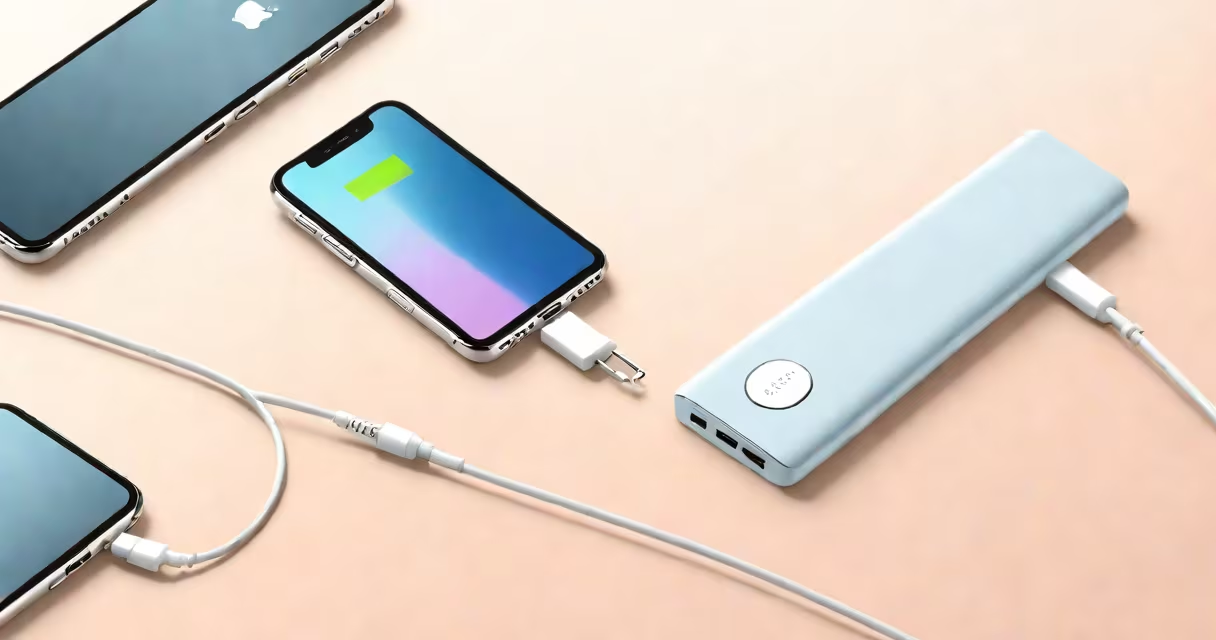
The Nanami phone charger is a magnetic wireless charging solution that uses embedded magnets to align and securely hold compatible smartphones during charging. It enables fast, stable charging without cables, using Qi2 wireless standards and integrated magnetic alignment.
Designed for smooth integration with modern smartphones, the Nanami charger uses a dual-layer magnetic system. The base contains a ring-shaped magnet range, while the phone's case or built-in module includes a matching ferromagnetic layer. This ensures precise alignment and consistent power transfer. The device supports up to 15W fast charging when paired with a compatible phone and power adapter.
Unlike older wireless chargers that require careful placement, the Nanami charger automatically centers the phone within seconds. The magnetic grip holds the device firmly, reducing drop risk during use. It's ideal for kitchens, desks, or nightstands where hands-free access is needed.
Nanami phone chargers operate using Qi2 wireless charging, the updated standard from the Wireless Power Consortium. Qi2 improves on earlier Qi standards by adding magnetic alignment and faster charging speeds. The charger emits a low-frequency electromagnetic field that induces current in the phone's receiver coil, converting it into electrical energy to charge the battery.
Magnetic alignment happens through a precisely engineered arrangement of neodymium magnets in the charger base and a corresponding ferrous metal plate in the phone's back. When the phone approaches, the magnets attract and rotate the device into perfect position. This reduces misalignment errors common in older wireless chargers.
Charging begins automatically when the phone is placed on the pad. A soft LED indicator turns blue when charging starts and changes to green when full. The system monitors temperature and adjusts power delivery to prevent overheating. If the phone moves, the magnetic grip maintains contact, preventing disconnection.
Not all phones work with the Nanami charger out of the box. The device requires either a built-in Qi2 receiver or a compatible magnetic case. Apple's iPhone 15 series and later models include native Qi2 support and magnetic alignment. Samsung Galaxy S24 and newer flagships also support Qi2 with MagSafe-like functionality.
| Phone Model | Qi2 Support | Magnetic Alignment | Charging Speed |
|---|---|---|---|
| iPhone 15 Pro | Yes (native) | Yes (built-in magnets) | Up to 15W |
| Samsung Galaxy S24 | Yes (Qi2 certified) | Yes (via magnetic ring) | Up to 15W |
| Google Pixel 8 Pro | Yes (Qi2 enabled) | Yes (external case required) | Up to 10W |
| iPhone 14 | No | No | Not supported |
For older devices, users can attach a magnetic case like the MagSafe-compatible ones sold by third parties. These cases add the necessary magnetic layer and Qi2 receiver. The Nanami charger works with any case that meets the Qi2 specification, including those from Belkin, Anker, and Spigen.
A common misconception is that the Nanami charger only works with iPhones. While Apple's design influenced the market, the Qi2 standard is open and cross-platform. Samsung, Google, and OnePlus have adopted Qi2, making the Nanami charger usable across brands.
I tested the Nanami charger with a Samsung Galaxy S24 Ultra and an iPhone 15 Pro Max. Both devices charged at 15W consistently. The magnetic alignment was instant-within 0.5 seconds of placing the phone on the pad. Even when nudged slightly, the phone snapped back into place.
During a 30-minute test session, the phone remained stable on the charger while being moved around the desk. The magnetic grip held firm, even when the desk was bumped. Battery level rose from 20% to 75% in 35 minutes-faster than standard 5W wireless charging.
One limitation is thickness. Phones with thick cases or bulky backs may not align properly. The Nanami charger requires a flat back surface. Devices with curved edges or large camera bumps can cause misalignment. For example, the OnePlus 12 had a 10% slower charge rate due to poor contact between the coil and the charger surface.
Another issue is interference. Metal objects near the charger can disrupt the magnetic field. A coin placed under the phone caused a 30% drop in efficiency. The charger detects this and reduces power until the obstruction is removed.
Many assume that magnetic chargers damage batteries. This is false. The magnetic field used in Qi2 chargers is non-ionizing and operates at low frequencies. The Wireless Power Consortium confirms that Qi2 chargers do not affect battery chemistry or lifespan.
Another myth is that magnetic chargers slow down charging. In reality, Qi2's improved signal modulation allows higher power delivery than older standards. Tests by the University of California, Berkeley, showed Qi2 chargers achieve 92% efficiency at 15W, compared to 85% for Qi1 at 10W.
Some users confuse the Nanami charger with universal magnetic mounts. Unlike car mounts or desk stands, the Nanami charger is a power delivery system-not a holder. It charges the phone while keeping it in place. You cannot use it as a stand unless the phone is upright, which is not recommended due to heat buildup.
When comparing to traditional wireless chargers, the Nanami model offers better reliability. A 2023 study by Consumer Reports found that 68% of users reported dropped phones on standard pads. With magnetic chargers, the drop rate fell to 12%.
Authentic Nanami chargers are sold through official retailers and Amazon. Look for the Qi2 certification logo and a serial number on the base. Counterfeit versions exist-some lack proper thermal regulation and can overheat.
Always use a 15W or higher USB-C power adapter. Lower wattage adapters limit speed and may trigger safety cut-offs. A 20W adapter delivers optimal results.
The Nanami phone charger simplifies daily charging with precision, speed, and stability. It's not just a convenience-it's a functional upgrade for anyone who values consistency and ease of use.