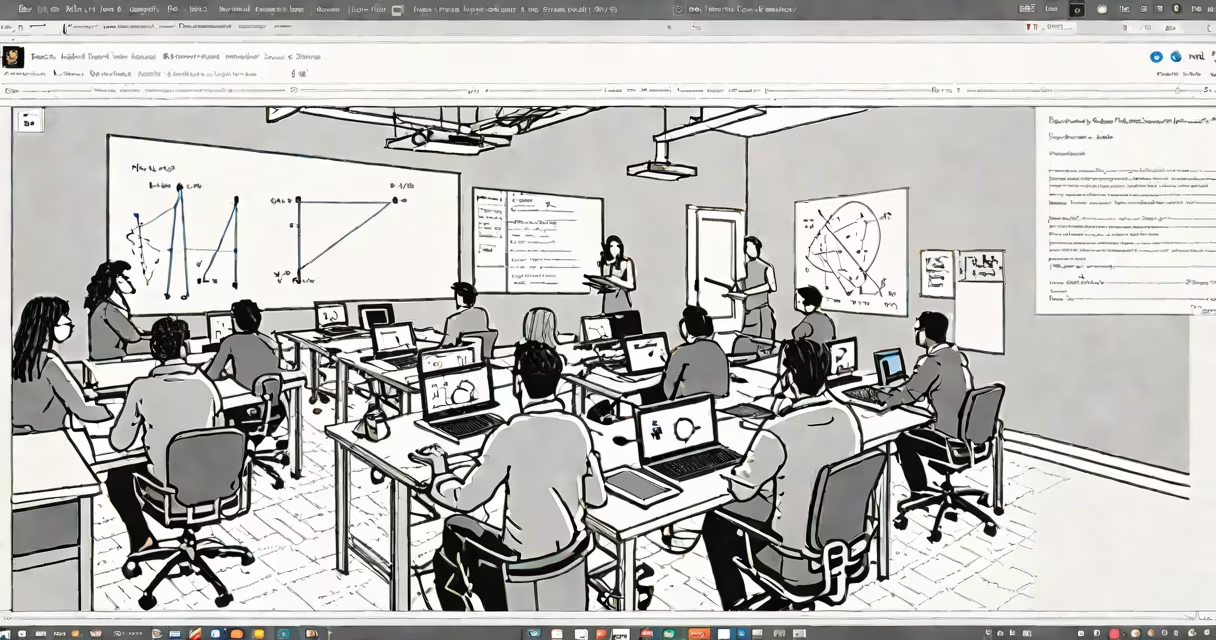
Online computer science is a structured academic program that delivers core computer science content-programming, algorithms, data structures, and software engineering-through remote instruction, often with asynchronous lectures, live labs, and digital assessments. Students complete coursework via web platforms, typically earning a bachelor's or master's degree from an accredited institution without attending classes in person.
These programs mirror traditional on-campus curricula in rigor and content, covering foundational topics such as operating systems, databases, networking, and artificial intelligence. They require consistent access to a reliable internet connection, a capable computer, and time management discipline. Most offer the same accreditation standards as in-person degrees, ensuring employers recognize the credential.
According to the National Center for Education Statistics (NCES), enrollment in online bachelor's degree programs in computer science increased by 68% between 2015 and 2021. This growth reflects rising demand for flexible education paths among working professionals, military personnel, and students in rural areas who lack nearby institutions offering computer science degrees.
Students access course materials through learning management systems like Canvas, Blackboard, or Moodle. Lectures are delivered via recorded videos (typically 15-45 minutes long), accompanied by reading assignments, quizzes, and discussion forums. Programming assignments are submitted through integrated development environments (IDEs) hosted on cloud servers, with automatic grading for syntax and logic correctness.
Live sessions-such as office hours, peer review workshops, or group project meetings-are conducted via Zoom, Google Meet, or Microsoft Teams. Some programs include virtual labs using simulated hardware or cloud-based computing resources, allowing students to experiment with network configurations, server deployment, or embedded systems without physical equipment.
A typical semester includes 12-15 credit hours, equivalent to four courses. For example, a student enrolled in a 15-credit term might take Introduction to Python, Discrete Mathematics, Web Development Fundamentals, and a capstone project course. All assignments are due weekly, and exams are proctored remotely using AI-powered identity verification tools.
While all online computer science programs cover essential theory and practice, they differ in focus areas. Common specializations include software engineering, cybersecurity, data science, machine learning, and human-computer interaction. Each requires distinct technical skills and project types.
| Specialization | Key Topics | Typical Projects |
|---|---|---|
| Software Engineering | Agile workflows, version control (Git), API design | Full-stack web app with user authentication and database integration |
| Cybersecurity | Network defense, penetration testing, cryptography | Simulated breach response exercise using Kali Linux and Wireshark |
| Data Science | Statistical modeling, Python scripting, visualization tools | Predictive model for housing prices using real datasets from Kaggle |
| Machine Learning | Neural networks, supervised/unsupervised learning, TensorFlow | Image classifier trained on CIFAR-10 dataset using GPU-accelerated cloud instances |
Some programs emphasize practical application over theoretical depth. For instance, a course in algorithm in computer science may require students to implement sorting algorithms in multiple languages and benchmark performance across different data sizes. A student might compare quicksort's average-case O(n log n) complexity with bubble sort's O(n²) behavior using 10,000-element arrays, then submit a report analyzing runtime differences under varying conditions.
Many assume online computer science lacks rigor or credibility. That is incorrect. Accredited programs undergo the same peer review processes as on-campus ones. The Computing Accreditation Commission (CAC) of ABET accredits both formats equally. A 2022 study by the Online Learning Consortium found that 74% of hiring managers view online computer science degrees as equally valid as traditional ones when evaluating candidates.
Another misconception is that online programs avoid hands-on work. In reality, many include mandatory lab components. For example, a course in boolean computer science teaches logic gates, truth tables, and circuit design using virtual simulators like Logisim or CircuitVerse. Students build a 4-bit adder circuit, simulate inputs, and verify outputs against expected results-all within a browser-based environment.
Some confuse online computer science with coding bootcamps. While both teach programming, bootcamps focus on job-ready skills in 3-6 months, often omitting theory. An online computer science degree spans 2-4 years, includes math foundations (calculus, linear algebra), and covers computer architecture and formal methods. Bootcamps rarely lead to bachelor's or master's credentials recognized by graduate schools or government agencies.
Graduates of online computer science programs enter roles such as software developer, data analyst, systems administrator, or cybersecurity specialist. Salaries vary by location and specialization. According to the U.S. Bureau of Labor Statistics (BLS), median annual pay for computer and information research scientists was $136,000 in 2023, with employment projected to grow 15% from 2022 to 2032-much faster than average.
I taught an introductory course in online computer science at a public university. Over 12 weeks, students completed five programming projects, including a command-line file organizer written in Python and a GUI-based quiz app using Tkinter. Final grades were based on code quality, documentation, and peer reviews. One student, a single parent working nights, earned a B+ while balancing childcare and shifts. She secured a junior developer role at a fintech startup six months later.
Online computer science offers a credible, flexible route to a high-demand career. With proper planning and engagement, students gain the same technical depth and professional opportunities as their on-campus peers.