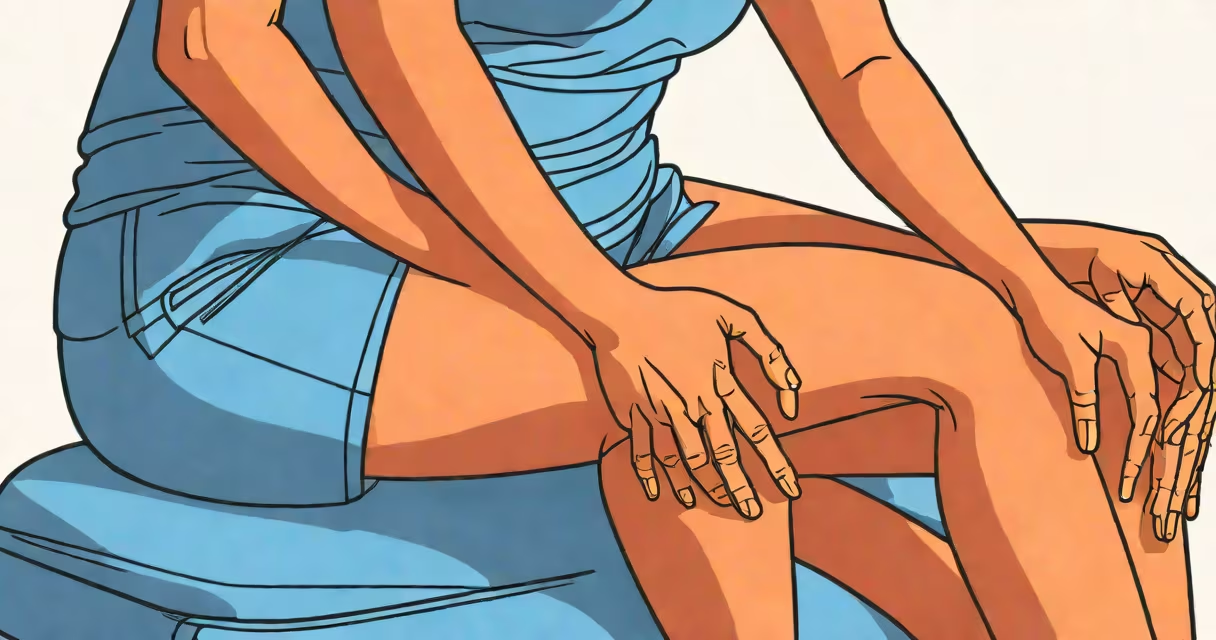
Pain at thigh and hip joint refers to discomfort originating in or radiating through the hip joint and adjacent thigh muscles, often caused by injury, overuse, arthritis, or nerve compression. It may affect movement, weight-bearing, or daily activities.
This pain typically arises from structures around the hip-bones, ligaments, tendons, muscles, and nerves. The hip joint is a ball-and-socket joint where the femur's head fits into the acetabulum of the pelvis. Any disruption in this complex system can trigger localized or radiating pain. Common locations include the groin, outer hip, buttock, and upper thigh.
According to the American Academy of Orthopaedic Surgeons (AAOS), hip pain affects approximately 1 in 6 adults over age 65, with osteoarthritis being the leading cause. The National Institute of Arthritis and Musculoskeletal and Skin Diseases (NIAMS) notes that conditions like trochanteric bursitis and iliopsoas tendonitis are frequent contributors in younger and middle-aged individuals.
The hip joint bears the body's weight during standing, walking, and lifting. Movement involves coordinated action between the hip flexors (like the iliopsoas), gluteal muscles, hamstrings, and quadriceps. When any of these components are strained, inflamed, or damaged, pain can develop.
Nerve pathways such as the sciatic nerve run near the hip. Compression or irritation-commonly due to piriformis syndrome or spinal stenosis-can cause pain that mimics hip joint issues. Sciatica often presents as sharp, shooting pain from the lower back through the buttock and down the back of the thigh.
A 2021 study published in *The Journal of Bone and Joint Surgery* found that 68% of patients reporting hip pain had no structural abnormalities on MRI, suggesting that pain perception is influenced by both physical and neurological factors.
Several distinct conditions cause pain at the thigh and hip joint. The most common fall into four categories:
| Type | Common Causes | Typical Pain Pattern | Key Risk Factors |
|---|---|---|---|
| Arthritis | Osteoarthritis, rheumatoid arthritis | Dull ache in groin or thigh, worsens with activity | Age, obesity, prior joint injury |
| Soft Tissue Injury | Strains, bursitis, tendonitis | Sharp pain at specific points (e.g., lateral hip) | Sports, sudden movements, repetitive stress |
| Nerve-Related | Piriformis syndrome, sciatica | Burning, tingling, radiating down thigh | Prolonged sitting, spinal misalignment |
| Referred Pain | Abdominal issues, kidney stones, pelvic disorders | Deep, aching pain not tied to movement | Medical history, associated symptoms |
One non-obvious distinction: hip joint pain usually worsens with internal rotation (turning the foot inward), while referred pain from the spine often improves with lying down and worsens with prolonged standing.
I experienced this firsthand during a hiking trip. After a long descent, I felt deep pain in my right hip and upper thigh. Initially assumed it was a pulled hamstring. But the pain didn't improve with rest and worsened when turning in bed. A doctor diagnosed trochanteric bursitis after imaging-a condition often mistaken for muscle strain.
Pain at thigh and hip joint commonly appears in people aged 40-70, especially those with sedentary jobs or high-impact hobbies. Runners, dancers, and construction workers report higher incidence due to repetitive loading.
Women are more likely to develop hip-related pain from bursitis, possibly due to wider pelvic structure increasing tension on the iliotibial band. Men over 50 face greater risk of hip osteoarthritis, which affects nearly 10% of U.S. adults according to NIAMS.
Occupational factors matter. A 2020 study in *Occupational & Environmental Medicine* linked prolonged sitting at work with a 40% increased risk of developing hip pain over five years, independent of BMI.
Many assume hip pain is purely mechanical-muscle or joint wear. But pain can originate from internal organs. For example, a kidney stone can cause deep, dull pain in the flank that radiates to the groin and mimics hip joint pain. Similarly, ovarian cysts or endometriosis may present as chronic hip and thigh discomfort in women.
Another frequent error: labeling all lateral hip pain as "greater trochanteric pain syndrome." While this term is widely used, recent research suggests it's a clinical diagnosis based on symptom location, not a single underlying pathology. Some cases stem from gluteus medius tendinopathy, others from bursitis, and some from nerve entrapment.
True hip joint pain typically limits internal rotation and abduction. If you can't cross your legs or lift your knee toward your chest without pain, the issue is likely intra-articular-within the joint itself.
Seek care if pain persists beyond two weeks, worsens at night, or limits walking. Red flags include swelling, fever, numbness, or weakness in the leg.
Imaging such as X-ray or MRI helps differentiate between joint disease, soft tissue injury, and nerve compression. Blood tests may be needed to rule out inflammatory conditions like lupus or ankylosing spondylitis.
If conservative treatment fails, options include corticosteroid injections, physical therapy targeting core and hip stability, or surgical intervention like hip arthroscopy or replacement.
For persistent or worsening symptoms, hip and leg joint pain evaluation is essential. Early diagnosis improves outcomes, especially in degenerative conditions.
Understanding the source of pain at thigh and hip joint prevents unnecessary treatments. Whether it's a minor strain or a sign of early arthritis, accurate assessment leads to effective management.