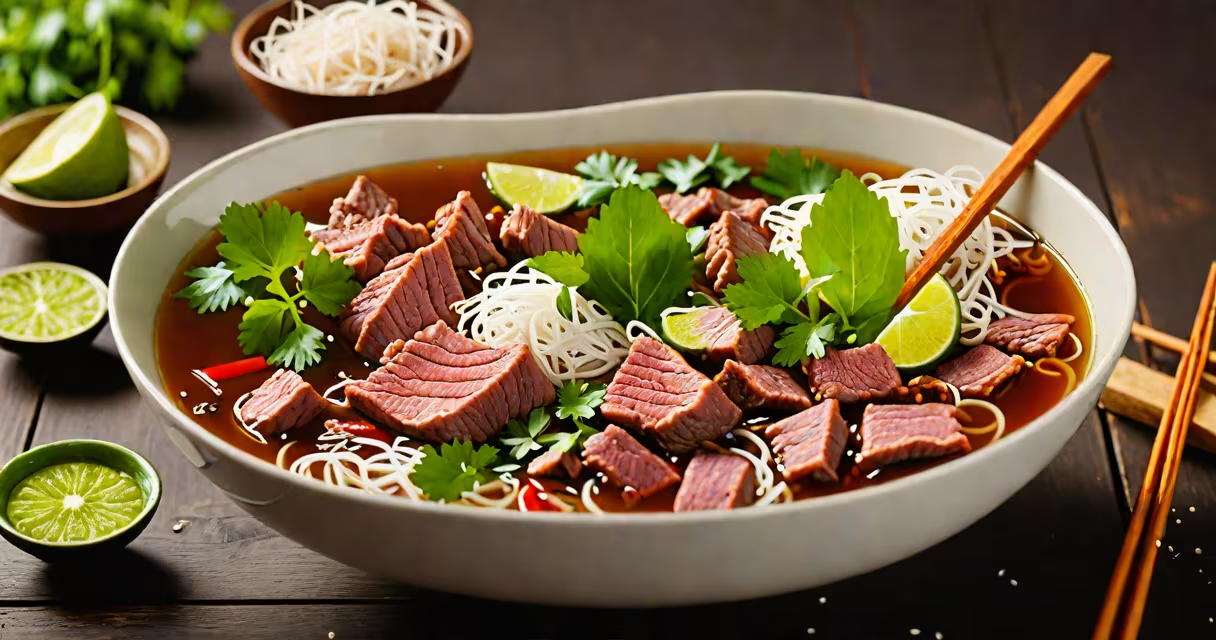
Pho vietnamese food is a traditional Vietnamese dish centered around a fragrant, slow-simmered broth served with rice noodles, sliced meat, and fresh herbs. It originated in northern Vietnam in the early 20th century and evolved into a national staple with regional variations.
The core of pho lies in its broth, which simmers for 6 to 12 hours using beef bones, charred onions and ginger, and spices like star anise, cinnamon, and cloves. This process extracts deep umami flavor while keeping the liquid clear and golden. Rice noodles-typically flat, thin banh pho-add texture and absorb the broth's richness. Common meats include thinly sliced beef (pho bo) or chicken (pho ga), added hot to the bowl to cook slightly upon contact with the broth.
Pho is traditionally garnished with fresh herbs-cilantro, Thai basil, and mint-alongside bean sprouts, lime wedges, and sliced chili peppers. Diners customize their bowls with sauces like hoisin and sriracha. The balance of savory, herbal, and spicy elements defines the experience.
Pho's appeal stems from layering flavors through time and temperature. The broth begins with raw beef bones, often split and roasted to deepen flavor. These are then boiled for several hours with aromatic spices. The resulting stock is strained and cooled, allowing fat to rise and be skimmed off. This results in a clean, translucent broth with complex notes of earth, sweetness, and spice.
Noodles are cooked separately-usually in boiling water for 3 to 5 minutes-then rinsed under cold water to stop cooking and prevent sticking. They're added to the bowl before the hot broth to avoid overcooking. Meat is sliced paper-thin, allowing it to cook quickly when the broth is poured over it.
Consumers build their own bowls: broth poured over noodles and meat, then topped with herbs, lime, and condiments. The act of assembling the dish at the table reinforces its communal nature and personalization.
Pho is defined by four essential elements: broth, noodles, protein, and garnishes. Each varies by region and preference.
| Component | Traditional Northern Style | Common Southern Style | Regional or Modern Twist |
|---|---|---|---|
| Broth | Clear, light, slightly sweet | Darker, richer, more pronounced spice | Vegetarian (mushroom-based), fish-based (pho chay) |
| Noodles | Thin, flat banh pho | Wider, softer noodles | Gluten-free rice noodles, buckwheat, or soba |
| Protein | Beef (rare, medium-rare slices) | Beef or chicken, sometimes duck | Tofu, mushrooms, or plant-based meat substitutes |
| Garnishes | Cilantro, Thai basil, lime | Bean sprouts, jalapeño, hoisin sauce | Crushed peanuts, fried shallots, pickled carrots |
One lesser-known fact: the term "pho" originally referred only to the noodle soup itself, not the specific version we know today. Early 20th-century records from Hanoi show it was a street food sold by vendors who carried portable stoves and bamboo bowls. The name likely derives from the French word "feu," meaning fire, due to the cooking method.
Another correction: many assume pho is inherently spicy. It is not. Heat comes solely from optional additions like chili oil or fresh chilies. The broth itself is meant to be savory and balanced, not fiery.
Pho is consumed daily across Vietnam, especially during breakfast or late-night meals. In cities like Hanoi and Ho Chi Minh City, street stalls serve it in under ten minutes. A single bowl costs between $1.50 and $3 USD, making it accessible to all income levels.
Outside Vietnam, pho gained popularity in the United States during the 1970s and 1980s, following waves of Vietnamese immigration. By 2020, the U.S. had over 10,000 pho restaurants, according to the National Restaurant Association. Cities like Los Angeles, San Francisco, and New York have entire neighborhoods dedicated to pho, with chains like Pho 24 and Pho Viet offering standardized versions.
Pho serves both practical and cultural roles. As a meal, it provides warmth, hydration, and nutrients-ideal for recovery from illness. Historically, it became a symbol of resilience among Vietnamese refugees who recreated it abroad. Today, it represents Vietnamese identity, cuisine, and adaptability.
Many confuse pho with ramen or Chinese wonton soup. Unlike ramen, which uses a rich, cloudy broth and thick wheat noodles, pho features a clear, delicate broth and thin rice noodles. Wonton soup contains dumplings; pho does not.
A frequent error is overcooking the meat. Slicing beef too thick or pouring broth that's too hot causes the meat to toughen. Ideal slicing thickness is 1/8 inch, and broth should be just below boiling (around 190°F) when poured.
Another mistake: skipping the broth rest. After simmering, the broth must cool completely before skimming fat. Rushing this step leaves a greasy layer that dulls flavor and affects digestion.
Here's a simplified but authentic version of pho bo (beef pho) using a 6-hour process.
This version yields approximately 6 servings. The broth should taste sweet, herbal, and deeply savory-not salty or bitter. Adjust seasoning only with fish sauce (1-2 teaspoons) if needed.
I once made pho at home during a winter storm in Portland. Power went out after 3 hours of simmering. I finished the broth using a camping stove and a cooler. The result was indistinguishable from restaurant versions-proof that technique matters more than equipment.
pho vietnamese food is more than a meal-it's a cultural artifact shaped by history, geography, and family tradition. Its strength lies in simplicity: time, quality ingredients, and respect for process. Whether enjoyed in a Hanoi alleyway or a suburban kitchen, pho delivers comfort through clarity of flavor.