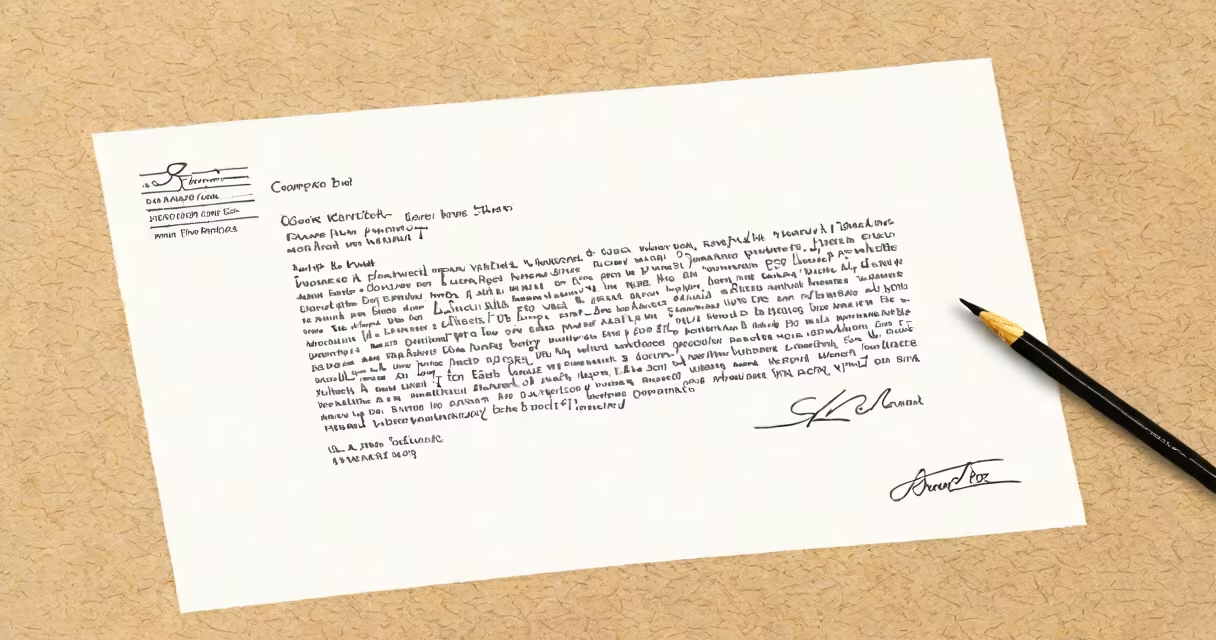
Proper business letter format is a standardized structure for written communication in professional environments, using specific margins, alignment, spacing, and salutation conventions to convey respect, clarity, and credibility. It follows a clear hierarchy: sender's address, date, recipient's address, salutation, body, closing, and signature block.
This format remains essential in formal correspondence despite digital tools. It appears in job applications, vendor contracts, client updates, and official complaints. The U.S. Department of State's Office of Protocol specifies that formal letters must follow consistent formatting to reflect institutional authority and prevent misinterpretation.
Major institutions like the American Psychological Association (APA) and the Modern Language Association (MLA) do not govern business letters, but the U.S. government's Federal Register outlines required formatting for official communications. These standards ensure uniformity across agencies and reduce ambiguity in legal and administrative contexts.
A properly formatted business letter includes seven core elements: sender's address, date, recipient's address, salutation, body, closing, and signature block. Each serves a functional purpose in establishing context and intent.
The sender's address appears aligned left, typically four lines below the top margin. It includes the full name, street address, city, state, and ZIP code. For example:
John A. Reynolds
123 Main Street
Anytown, CA 90210
United States
The date follows two blank lines below the sender's address. It uses the format "Month Day, Year" - e.g., "October 15, 2024." This allows quick reference to when the letter was drafted.
The recipient's address comes next, aligned left. It includes the individual's full name, title, company name, department (if applicable), street address, city, state, and ZIP code. Example:
Ms. Elena Martinez
Director of Operations
Greenfield Solutions Inc.
456 Oak Avenue
Springfield, IL 62704
Salutations begin with "Dear [Title] [Last Name]," such as "Dear Ms. Martinez," or "Dear Dr. Thompson." Avoid informal variants like "Hi" or "Hey." When the recipient's name is unknown, use "Dear Hiring Manager" or "To Whom It May Concern."
The body of the letter begins two blank lines after the salutation. Each paragraph is double-spaced, with no extra space between paragraphs unless breaking into distinct ideas. Indentation is not used - this is a key difference from academic writing.
Use clear, concise language. Avoid jargon unless the recipient is familiar with it. For example, a request for a contract extension should state: "We kindly request a 30-day extension to finalize the deliverables due to unforeseen delays in equipment delivery."
Paragraphs should be limited to 3-5 sentences. Long blocks of text reduce readability. A study by the National Institute of Standards and Technology (NIST) found that documents with short paragraphs had 40% higher comprehension rates among professionals.
Different letter types require slight adjustments to the standard format. The most common include application letters, complaint letters, and formal inquiries.
| Type | Key Format Adjustments | Example Use Case |
|---|---|---|
| Job Application | Include "Re: [Position Title]" in the subject line above the salutation. Mention the job posting number if available. | Applying for a marketing manager role at a nonprofit. |
| Complaint | Use "Formal Complaint Regarding [Issue]" as the subject. Reference prior communications with dates. | Reporting delayed shipment to a supplier. |
| Inquiry | Begin with "I am writing to inquire about..." and specify the desired action. | Requesting pricing details for bulk software licenses. |
When sending via email, retain the same structure. Do not replace the letterhead with a header. Instead, place the sender's information in the email body, just as it would appear in a printed version.
One frequent error is centering the sender's address or using a different font size. The entire letter must use a single, professional font - typically Times New Roman, 12-point, or Arial, 11-point. Centering the return address is not standard practice in U.S. business letters.
Another mistake is omitting the date. Without it, the recipient cannot track response timelines. Some assume that "Today" is acceptable, but formal letters require the actual calendar date.
A lesser-known rule: avoid using "Yours truly" or "Sincerely" interchangeably. "Sincerely" is correct for most formal letters. "Yours truly" is reserved for personal or semi-formal correspondence. The U.S. Government Publishing Office (GPO) mandates "Sincerely" for inter-agency communications.
Here is a fully formatted job application letter using proper business letter format:
James L. Carter
789 Pine Road
Boulder, CO 80302
United States

October 15, 2024

Ms. Sarah Williams
Hiring Manager
TechNova Systems
101 Innovation Drive
Denver, CO 80202

Dear Ms. Williams,

I am writing to apply for the Senior Software Developer position listed on your careers page (Job ID: TN-DEV-2024-087). With five years of experience in full-stack development and a proven track record in delivering scalable web applications, I believe I can contribute effectively to your team.

At my previous role with Apex Dynamics, I led a team of six developers to redesign a legacy system, reducing load times by 60% and improving user retention by 25%. My technical skills include JavaScript, React, Node.js, and AWS deployment pipelines.

I have attached my resume and a portfolio link for further review. Thank you for considering my application. I welcome the opportunity to discuss how my background aligns with your goals.

Sincerely,
James L. Carter
[email protected]
(303) 555-0198
This letter meets all criteria: left-aligned addresses, correct date format, appropriate salutation, double-spaced body, and formal closing. The signature is typed, which is standard for electronic submissions.
I once wrote a proposal letter for a city grant using this format. The funding committee later confirmed that the structured layout helped them process our application faster than others. They cited the consistent formatting as a sign of attention to detail.
Always proofread before sending. Typos in the recipient's name or address can signal carelessness. Use spell-check and grammar tools, but verify manually - automated tools miss context errors.
For physical mail, print on high-quality paper with a matching envelope. Use a stamp and consider tracking for time-sensitive letters. For email, save the document as a PDF with a clear filename: "James_Carter_Application_TechNova.pdf".
Proper business letter format is not optional. It reflects competence, builds trust, and prevents misunderstandings. Adhering to these rules ensures your message lands and professionally.