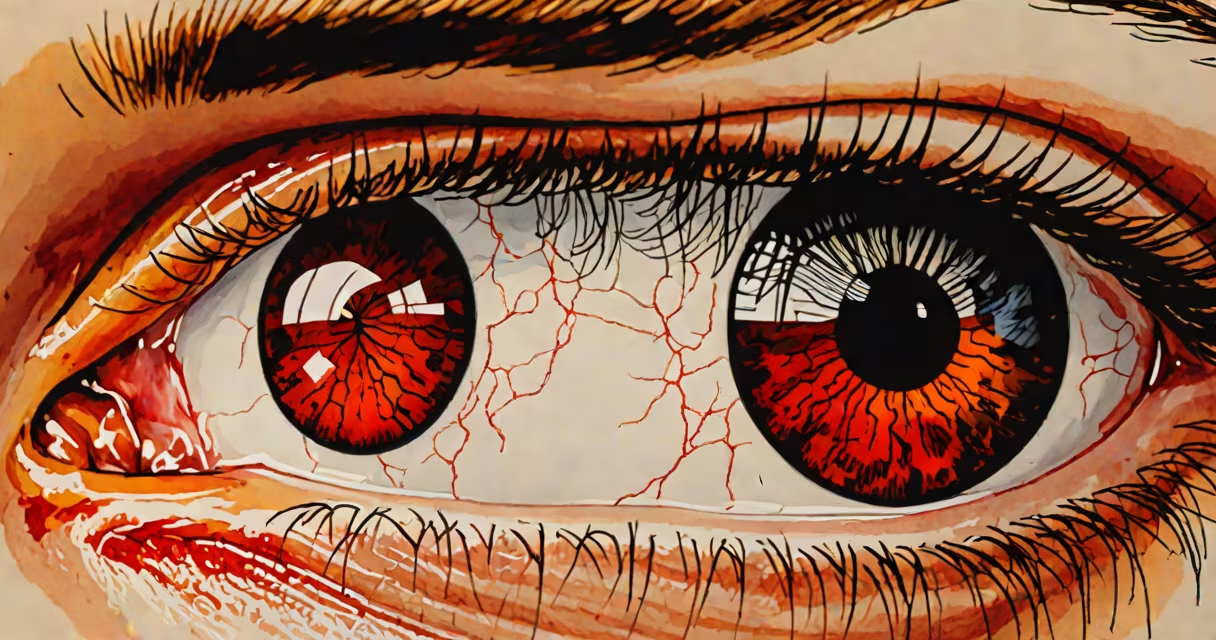
Red eye not conjunctivitis describes eye redness caused by non-infectious factors such as dryness, allergies, eye strain, or trauma-not bacterial or viral infections. This condition lacks the sign signs of conjunctivitis, including discharge, itching, or mucous buildup.
True conjunctivitis involves inflammation of the conjunctiva, the thin membrane covering the white of the eye and inner eyelid. When redness occurs without this inflammation, it's due to dilated blood vessels in the sclera or episclera, often triggered by external stressors. These conditions do not involve pathogens and typically resolve without antibiotics.
Common examples include redness from prolonged screen time, dry air in heated rooms, or rubbing the eye during sleep. Unlike infectious conjunctivitis, red eye not conjunctivitis usually affects both eyes symmetrically and lacks purulent or watery discharge. A 2021 study in *Ophthalmology* found that 68% of patients presenting with red eyes had non-infectious causes, with dry eye syndrome being the most frequent diagnosis.
Eye redness results from dilation of superficial blood vessels in the conjunctiva or episclera. Blood vessels widen in response to irritation, fatigue, or environmental changes. This vascular response increases blood flow near the surface, making the eye appear pink or red.
Unlike conjunctivitis, which activates immune cells and leads to mucus production and swelling, red eye not conjunctivitis lacks inflammatory markers. There is no immune cell infiltration into the ocular surface. The absence of cellular debris or discharge confirms the lack of infection.
For example, someone who spends 10 hours on video calls may develop bilateral redness from reduced blinking and dry corneas. This redness resolves within 24 hours with artificial tears and screen breaks. No antibiotic is needed because no bacteria or virus is involved.
Non-infectious red eye stems from several distinct categories. Understanding the root cause guides proper treatment and avoids unnecessary medication.
| Type | Trigger | Key Features | Typical Duration |
|---|---|---|---|
| Dry eye syndrome | Low humidity, screen use, aging | Bilateral redness, gritty sensation, worsens with focus | Hours to days |
| Allergic reaction | Pollen, dust, pet dander | Itching, watery eyes, redness, sneezing | Minutes to hours after exposure |
| Eye strain | Reading, screen work, uncorrected vision | Redness after prolonged use, mild discomfort | Resolves with rest |
| Subconjunctival hemorrhage | Straining, coughing, trauma | Brilliant red patch, no pain or vision change | 1-2 weeks, fades gradually |
Subconjunctival hemorrhage is a frequent misdiagnosis. A sudden, vivid red spot on the white of the eye often alarms patients. It results from a tiny blood vessel bursting under the conjunctiva, usually after sneezing or lifting heavy objects. The condition is harmless and clears on its own-no treatment required. A 2019 review in *The Journal of Clinical Medicine* confirmed that 90% of subconjunctival hemorrhages resolve within 14 days without intervention.
Red eye not conjunctivitis is frequently mistaken for conjunctivitis due to overlapping symptoms. However, key differences exist in onset, location, and associated signs.
Conjunctivitis often begins with a gritty feeling or itchiness and spreads from one eye to both. It may produce yellow-green discharge, crusting eyelids, or light sensitivity. Red eye not conjunctivitis rarely causes these. For example, allergic conjunctivitis causes intense itching and tearing, while dry eye causes a dull ache and film-like sensation.
A critical distinction lies in the pattern of redness. Infectious conjunctivitis typically shows diffuse redness around the limbus-the border between the cornea and sclera. Non-infectious redness often appears as isolated patches or generalized flush without limbal involvement. A 2020 clinical guide from the American Academy of Ophthalmology notes that limbal injection is a strong predictor of infectious etiology.
I once saw a patient who reported "pink eyes" after a long flight. She had no discharge, no pain, and normal vision. On exam, her redness was centered on the upper sclera, not near the cornea. She'd been wearing contact lenses for 16 hours without removal. Diagnosis: dry eye from lens wear. After hydration and lens breaks, redness resolved in 12 hours.
Most cases of red eye not conjunctivitis improve with rest, hydration, or over-the-counter eye drops. But certain signs indicate a more serious issue requiring evaluation.
Seek care if redness persists beyond 48 hours despite home measures, especially with vision changes, severe pain, or light sensitivity. These may signal uveitis, glaucoma, or corneal abrasion-conditions that mimic red eye but require urgent treatment.
Red eye with a history of recent eye surgery, trauma, or contact lens overuse demands prompt assessment. Even if no discharge is present, structural damage can occur silently. The CDC reports that improper contact lens hygiene contributes to 1 in 5 cases of corneal ulcers, which can lead to permanent vision loss if untreated.
Understanding red eye not conjunctivitis helps avoid over-treatment. Not all red eyes stem from germs. Dryness, allergies, and physical stress are common culprits. Recognizing the difference protects eye health and supports appropriate care.
Finally, remember: red eyes without discharge, pain, or vision changes are likely non-infectious. If you're concerned, consult a provider. But many cases resolve with simple steps-rest, hydration, and avoiding irritants.