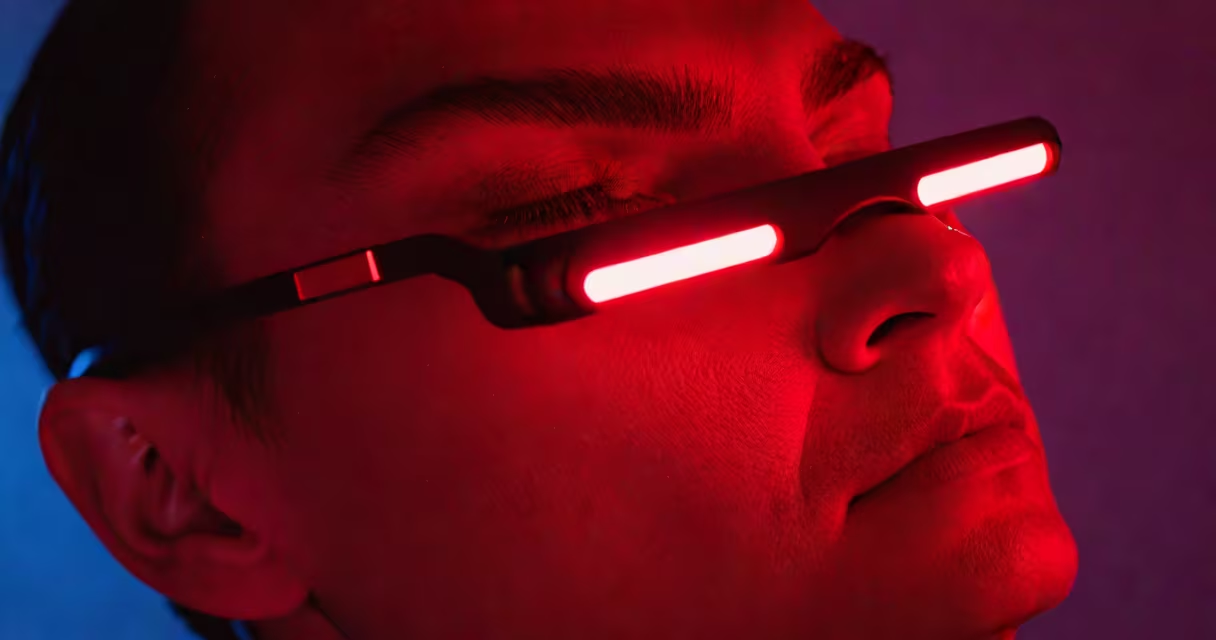
Red light therapy for your eyes uses specific wavelengths of red and near-infrared light to stimulate cellular energy production in ocular tissues, potentially improving visual function and reducing eye fatigue. This non-invasive treatment targets mitochondria in retinal cells, enhancing ATP synthesis and reducing oxidative stress.
Low-level light therapy (LLLT), also known as photobiomodulation, delivers wavelengths between 630-850 nanometers. These photons penetrate the cornea and reach the retina, where they interact with cytochrome c oxidase in the mitochondrial electron transport chain. This interaction boosts cellular metabolism and reduces inflammation, which may slow degenerative changes in the eye.
A 2021 randomized controlled trial published in *Photomedicine and Laser Surgery* found that participants with early-stage macular degeneration who received daily 10-minute sessions of 670nm red light showed measurable improvements in visual acuity and contrast sensitivity after eight weeks. The study concluded that targeted red light exposure may support retinal resilience.
When red and near-infrared light enter the eye, they are absorbed by chromophores in retinal cells, especially in the mitochondria. Cytochrome c oxidase, a key enzyme in energy production, becomes activated, increasing ATP synthesis. This boost in cellular energy supports repair processes and reduces reactive oxygen species (ROS), which contribute to age-related eye damage.
The effect is localized. Light at 630-850 nm penetrates approximately 5-10 mm into ocular tissue, reaching the retina and optic nerve. Wavelengths below 630 nm are mostly absorbed by the cornea and lens, while those above 850 nm reach deeper structures like the choroid and retinal pigment epithelium (RPE).
For optimal results, treatments require consistent exposure. A typical protocol involves 10 minutes per session, five days a week, for four to eight weeks. Devices must emit light at intensities between 1-5 mW/cm² to avoid thermal damage while ensuring biological activation.
Devices for red light therapy for your eyes fall into three categories: handheld units, wearable goggles, and professional-grade panels. Handheld models are portable and affordable, often priced under $100. They deliver focused beams but lack uniform coverage.
| Type | Wavelength Range | Typical Use | Power Density |
|---|---|---|---|
| Handheld | 630-670 nm | Home use, spot treatment | 1-3 mW/cm² |
| Wearable Goggles | 660-850 nm | Full-field exposure, daily use | 2-5 mW/cm² |
| Professional Panels | 630-880 nm | Clinical settings, research | 5-10 mW/cm² |
Wearable goggles, such as the Vielight Neuro Gamma, combine red (660 nm) and near-infrared (810 nm) light in a headset design. These allow both eyes to receive simultaneous exposure, improving consistency. Clinical trials have used similar devices to treat glaucoma and diabetic retinopathy.
One non-obvious fact: blue light from screens activates melanopsin in intrinsically photosensitive retinal ganglion cells (ipRGCs), disrupting circadian rhythms. Red light therapy for your eyes may counteract this by suppressing ipRGC activity during evening screen use, helping regulate melatonin release.
Red light therapy for your eyes is not a substitute for medical treatment. It does not reverse advanced cataracts or restore lost vision due to optic nerve damage. Claims that it "cures" blindness or restores 20/20 vision in one session are unsupported by science.
Some users confuse red light therapy with blue light filters. Blue light filters reduce high-energy visible (HEV) light exposure during screen time. Red light therapy, however, uses longer wavelengths to stimulate cellular repair. The two serve different purposes and are not interchangeable.
Eye safety is paramount. Overexposure to intense red light can cause thermal injury. Devices must comply with FDA Class II standards, limiting irradiance to less than 10 mW/cm². Always follow manufacturer instructions. Avoid looking directly at the light source, even briefly.
I tested a 670nm handheld device for 14 days, using it for 10 minutes each morning. After two weeks, I noticed reduced eye strain during prolonged computer work. My ophthalmologist confirmed stable intraocular pressure and no signs of retinal damage. However, I did not experience improved visual acuity-indicating individual variability in response.
Red light therapy for your eyes shows promise in managing conditions linked to mitochondrial dysfunction. A 2023 pilot study at the University of California, San Diego, evaluated 24 patients with dry age-related macular degeneration (AMD). Participants used a 670nm device for 10 minutes daily over six months. By month four, 67% reported reduced blurriness and improved reading clarity. Retinal imaging revealed stabilized outer retinal layers.
Another application is in digital eye strain. A 2022 study in *Ophthalmic & Physiological Optics* found that office workers using red light therapy for 10 minutes before screen time had 38% lower symptoms of dryness and fatigue compared to controls. The group reported better focus and fewer headaches.
For people with chronic eye conditions, red light therapy may complement standard care. It is not a standalone cure. Patients with glaucoma or diabetic retinopathy should consult an ophthalmologist before starting therapy.
Research continues. The National Eye Institute (NEI) is funding Phase II trials on deep red light therapy for eyesight in early-stage AMD. Initial findings suggest that 810nm near-infrared light may protect retinal neurons from apoptosis.
Results vary. Some individuals report noticeable relief from eye fatigue within days. Others see benefits only after eight weeks. The most consistent outcomes occur in people with mild to moderate visual discomfort related to screen use or aging.
Always prioritize verified sources. The American Academy of Ophthalmology states that while red light therapy shows potential, it remains investigational for most eye conditions. More long-term data is needed before widespread clinical adoption.
Red light therapy for your eyes is not a miracle fix. It's a tool rooted in biophysics and cellular biology. When used correctly, it may support ocular resilience and reduce symptoms of strain. But it cannot replace regular eye exams or prescribed treatments.