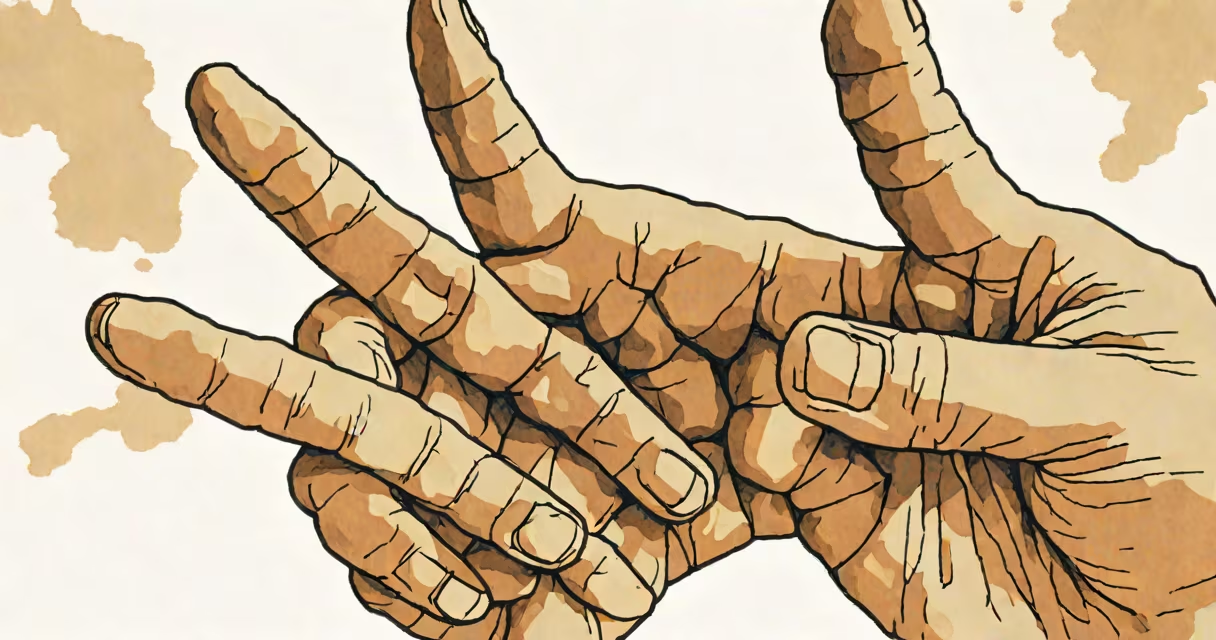
The meaning of middle finger is a universally recognized gesture of insult, contempt, or defiance, typically formed by extending the middle finger while keeping the other fingers closed. It functions as a nonverbal signal of disrespect across many cultures, though its interpretation and social weight vary by context.
Historically, the gesture dates back to ancient Rome, where it was known as the "digitus impudicus" or "impudent finger." Roman satirists like Juvenal referenced it as a symbol of mockery and sexual provocation. The gesture was used in public performances and graffiti to shame individuals, particularly those perceived as arrogant or boastful.
In modern times, the meaning of middle finger remains consistent: it communicates disdain, frustration, or rejection. It is frequently used in moments of anger, protest, or playful irreverence. Despite its widespread recognition, the gesture is not legally protected speech in most countries and may result in disciplinary action or criminal charges depending on the setting.
The middle finger is the longest digit on the human hand, making it visually prominent when raised. Its central position between the index and ring fingers gives it symbolic weight-it sits at the center of the hand, representing a focal point of rebellion or disruption.
To perform the gesture, the hand is extended palm-outward, the middle finger is raised vertically, and the remaining fingers are curled into a fist. The orientation matters: the finger must face upward to convey the intended meaning. A downward-facing middle finger may be interpreted as a different gesture, such as a reference to genitalia in certain contexts, but it lacks the standardized insult function.
Studies in nonverbal communication confirm that the middle finger gesture is decoded faster than most other hand signals. According to research published in *Body Language* by Dr. Allan Pease (2006), people recognize the gesture within 0.3 seconds of exposure, even when viewed briefly in low-light conditions. This rapid processing underscores its role as a primal form of social signaling.
While the meaning of middle finger is widely understood in Western cultures, its reception varies globally. In many parts of Europe and North America, it is seen as a direct insult. In Japan, however, the gesture is less common and often misunderstood due to differing norms around physical expression. A 2018 study by the University of Tokyo's Department of Social Psychology found that 68% of Japanese respondents failed to identify the gesture correctly when shown in isolation.
In some Middle Eastern countries, the gesture is considered extremely offensive and may lead to legal consequences. In Saudi Arabia, for example, public displays of the middle finger can result in fines or imprisonment under laws related to "public indecency" and "insulting national dignity."
Conversely, in parts of South America and sub-Saharan Africa, the gesture is sometimes used humorously or ironically among friends. In Brazil, it is occasionally mimicked during football matches as a way to mock opposing fans, though it still carries risk if misused in formal settings.
A key distinction lies in intent and context. The meaning of middle finger is not inherently aggressive-it becomes hostile only when directed at someone with the intent to offend. A person might raise their middle finger during a traffic jam not out of malice, but as a release of frustration. The same gesture, when aimed at a specific individual during a confrontation, carries greater emotional weight.
| Culture/Region | Common Perception | Legal Risk |
|---|---|---|
| United States | Highly offensive; often grounds for arrest | Yes-some states classify it as disorderly conduct |
| Japan | Misunderstood; rarely used | Low-though public display may draw police attention |
| Saudi Arabia | Extremely offensive; punishable by law | High-fines or jail time possible |
| Brazil | Used playfully among peers | Low-except in formal or official settings |
One frequent misunderstanding is that the middle finger gesture originated in the Vietnam War. While it became popularized through military culture and later media, its roots extend far earlier. The term "giving the finger" predates World War II and appears in British slang from the 1800s.
Another myth is that the gesture is universally offensive. In reality, its impact depends heavily on context. A teenager flipping the middle finger at a parent during an argument may be expressing teenage rebellion rather than deep-seated hatred. Similarly, in comedy routines, comedians often use the gesture for comedic effect without intending to harm anyone.
There is also confusion between the middle finger and other hand signs. For example, the "peace sign" (index and middle fingers raised) is associated with victory or peace, especially in photos. The middle finger, in contrast, is always isolated and raised alone. Confusing the two can lead to unintended offense, especially in international settings.
In 2022, a man in Manhattan raised his middle finger at a police officer during a traffic stop. The incident was captured on dashcam footage and quickly went viral. The officer did not respond physically but reported the behavior. The man was later cited for "disorderly conduct" under New York Penal Law § 240.30, which includes "offensive gestures" in public spaces.
This case illustrates how the meaning of middle finger is treated legally in urban environments. Even if no physical contact occurred, the gesture was deemed disruptive enough to warrant citation. The court upheld the decision, stating that "the act of raising the middle finger in a public setting constitutes verbal and nonverbal hostility under established precedent."
Each finger carries distinct symbolic meanings beyond the middle finger. The index finger often represents authority or pointing blame. The ring finger is linked to marriage and commitment in many cultures, especially in Western traditions where wedding bands are worn there. The pinky is associated with secrecy or discretion-"pinky promise" being a well-known idiom.
The meaning of middle finger is not just about anatomy-it's about power, expression, and social boundaries. It remains one of the most potent nonverbal signals in human interaction, carrying centuries of history and cultural weight in a single raised digit.